The state of Kentucky has passed a law requiring authorities to contact Chabad before cremating an unclaimed deceased individual.
The bill, sponsored by Republican state Senator Greg Elkins, allows coroners to cremate bodies but requires them first to work with religious organizations that volunteer to provide burial for anyone of their faith.
While earlier versions of the bill referenced Chabad specifically, the final law broadened to include any religious organization willing to assume responsibility. Chabad has already offered to cover all costs for any Jewish person in need of burial.
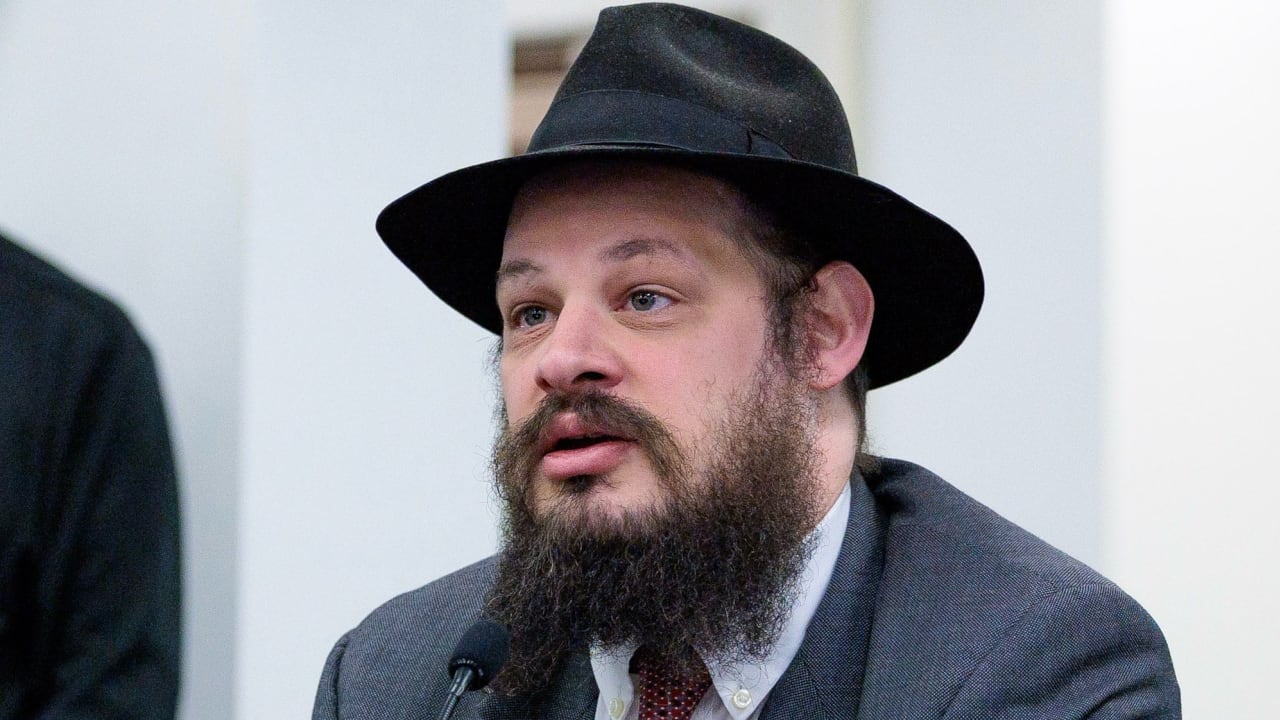
Rabbi Shlomo Litvin, Director of Chabad of the Bluegrass and Chairman of the Kentucky Jewish Council, who helped with the legislation, praised the bill's expansion, saying "this was never about credit, it’s about helping people."
Burial with dignity rather than cremation against their beliefs
"If someone can be buried with dignity, and according to Jewish Law, instead of being cremated against their beliefs, that’s what matters. And hopefully this creates a model that can be copied in other jurisdictions.”

Existing Kentucky state law mandates that one must obtain a permit before cremating the body. Jewish law, however, prohibits cremation and is unequivocal that the dead must be buried in the earth. Cremated remains cannot typically be interred in a Jewish cemetery, and the traditional laws of mourning are not observed after the passing of an individual whose body was cremated.
The requirement to bury is grounded in two specific passages of the Torah: "For dust you are, and to dust you shall return" (Genesis 3:19) and "You shall surely bury him" (Deuteronomy 21:23).
The process of passing the legislation
There are 120 counties in Kentucky, and therefore 120 county coroners. Some of these coroners deal with many cases of unclaimed bodies every year. This can be because the deceased had no family, or no one claimed their body. Ultimately, if there is no one to take care of arrangements for them, this falls on the state.
Recently, the state of Kentucky began modernizing old legislation on unclaimed bodies, allowing coroners to cremate (which is cheaper than burial) should no family be found.
Litvin instantly saw the problem.
"If there is, God forbid, a Jew who doesn't have family, or they are homeless, or it could be an older person who passes away in the old age home and there's no one to bury them, they would, God forbid, be cremated," he told The Jerusalem Post on Tuesday.
Litvin called up the senator and told him he was deeply concerned about the situation.
"And he immediately said, 'So what's the solution here?' I said, 'The solution is I'll pay for the burial, and that if there's any reason to think the person's Jewish, have them contact me, have them contact Chabad, and we will pay, we'll arrange transport, we'll arrange a grave in a Jewish cemetery.'"
While many bodies are unclaimed, it is very rare that these are random people, Litvin explained to the Post. Mostly, they are people in the community with a name and identity, but simply have no one to take care of arrangements. For example, it could be a Jewish resident of an old people's home who passes away and has no one to take possession of the body.
He hopes this will have a knock-on effect on other states' legislation.
"The fact that I did it already encourages others. There are efforts already in three states in the Northeast, states that have very large Jewish communities," he said.
He hopes it will have a knock-on effect on other states' legislation.
"The fact that I did it already encourages others. There are efforts already in three states in the Northeast, states that have very large Jewish communities," he said.
Of course, the process of covering burial expenses will be costly and will be sourced purely from donations to Chabad, but this does not deter Litvin.
"In the same way that if one more Jew wants to come for Shabbos, I'll find money to make it happen. In the same way, the Rebbe wanted a Shaliach in Lexington, Kentucky, so that no Jew would be left behind.
"If it saves one Jew, it's worth all the effort," Litvin concluded.