It is too early to know how the International Court of Justice (ICJ) ruling on the Myanmar genocide case will affect Israel’s own case. But it can already be said that the ICJ’s verdict has partially harmed Israel’s ability to mount a defense by lowering the standard of proof needed to determine genocide against a country.
This past May, South Africa asked the ICJ for an 18-month extension to reply to the Israeli defense team’s latest legal brief in the genocide case, which it brought against Israel in late 2023. South Africa was expected to file an update in Spring or Summer 2026 with additional charges relating to 2025, and Israel would likely need to respond by Spring 2027.
Instead, South Africa will have until November 22, 2027, to respond to Israel and file any updates, while Israel will have until May 22, 2029, to reply. This means that additional court hearings will likely be delayed until late 2029.
Israel's Gaza genocide defense faces fresh scrutiny
Israel’s brief was viewed by its government’s lawyers as one of the most momentous international-law and war-defense documents in its history, with its 1,000-page legal brief to the ICJ systematically dissecting South Africa’s claims.
In addition to the main brief, which confronted the charges relating to the 2023-2024 period of the Israel-Hamas War, the document included about 4,000 pages of exhibits. South Africa has yet to make a detailed attack on the IDF’s conduct in 2025.

According to IDF sources, some of its top officials are more concerned about the threat that the ICJ poses to Israel than that of the International Criminal Court (ICC).
South Africa’s June tactics, however, could betray its concerns that its case will fall apart under the burden of evidence and the high legal standard for genocide cases.
South Africa opted for a long delay that will likely benefit Israel, as it puts off the verdict for at least four years. This essentially removed some of the immediate pressure on Israel. Even if Israel ultimately wins the case, the delays have removed the possibility of legal, diplomatic, or economic consequences as a result of court hearings on the issue.
At the time, several Israeli sources told The Jerusalem Post they feared South Africa did not ask for the delay simply to gather evidence. Rather, some sources said South Africa might intend to return to the ICJ in 2029 once US President Donald Trump is no longer in office. South Africa likely hopes that the next US president will be more favorable to its position, which could assist its case with the ICJ.
While confronting the ICJ, several IDF officials said their job has not been made easier by the government’s lack of organized, coherent, and systematic global messaging. IDF sources said the Israeli government’s messages are often chaotic and undermine the military’s hard work to build trust and credibility worldwide.
While these sources did not name specific officials, National Security Minister Itamar Ben-Gvir and Finance Minister Bezalel Smotrich have been banned by many democratic countries, and both may be on the ICC’s arrest list.
Defense Minister Israel Katz has not been publicly banned, but he has angered other countries and even members of the Trump administration with some of his statements.
In the early weeks of the war in 2023, then-defense minister Yoav Gallant and other officials, who were usually far more cautious, also made provocative statements. Israel had to explain that their statements did not reflect its actual actions.
What is the bad news about the ruling?
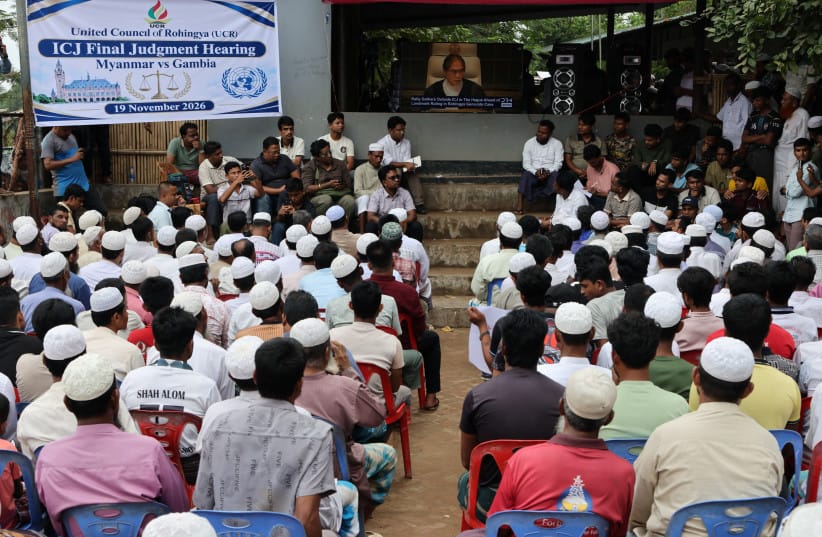
The ICJ’s ruling on Myanmar goes far beyond the traditional focus of a genocide analysis from Article 2a of the Convention on the Prevention and Punishment of the Crime of Genocide (Genocide Convention) of 1948, which exclusively looks at how many people were intentionally massacred. Instead, the ICJ’s examined Article 2b, namely, causing bodily and mental harm.
Furthermore, the ICJ found that widespread destruction of housing can become evidence in a genocide case.
In addition, the ICJ ruled that Myanmar’s killing of 1.2% of the Rohingya population – 10,000 out of 815,000 – is sufficient grounds for genocide. This is significantly downscales the definition of genocide, given its previous applications to the Holocaust, in which six million Jews were killed, or Rwanda, where more than 800,000 people were killed.
The Srebrenica genocide of about 8,000 people had previously opened the door to a downscaled number. Until now, however, it has stood as an exception due to the clear evidence and genocidal intent established in that case.
Even then, in two cases relating to Serbian genocide, the ICJ did not rule that it was a genocide. Instead, the ICJ ruled that it was a failure to prevent genocide.
Moreover, the ICJ said if part of the group being attacked had committed acts of terrorism, the counterattack by the other side can still constitute genocide. The ICJ also found that acts committed by others, even if they were not part of the military, can be held against a country if it fails to stop them.
When examining acts of incitement, the ICJ used a relatively low standard to analyze provocative speeches to conclude that they were evidence of intent to commit genocide.
The ICJ also moved from its usual strict standards to a more lenient one. In this case, the ICJ, rather than establishing a pattern of conduct, looked at the broader circumstances connected with the killings.
There is another major problem: The ICJ attributed more credibility to the UN’s reports than to Myanmar’s.
Notably, Myanmar is not a democracy that respects the rule of law. It may have had every intention of carrying out a massacre. Even so, Israel will find it difficult to convince the ICJ to view its evidence as more credible than the UN’s, which has been historically biased against Israel.
The genocide allegations against Israel are preposterous. The Israeli counteroffensive against Hamas after the terrorists slaughtered more than 1,200 Israelis and took 251 hostages are night and day compared with Myanmar’s widespread persecution and massacre of the Rohingya.
Given the heavily biased playing field, however, the ICJ’s findings could be used, albeit unfairly, against Israel. Biased actors will highlight individual violations and ignore the broader circumstances, such as Hamas’s systematic use of human shields and booby-trapped homes.
What is the good news about the ruling?
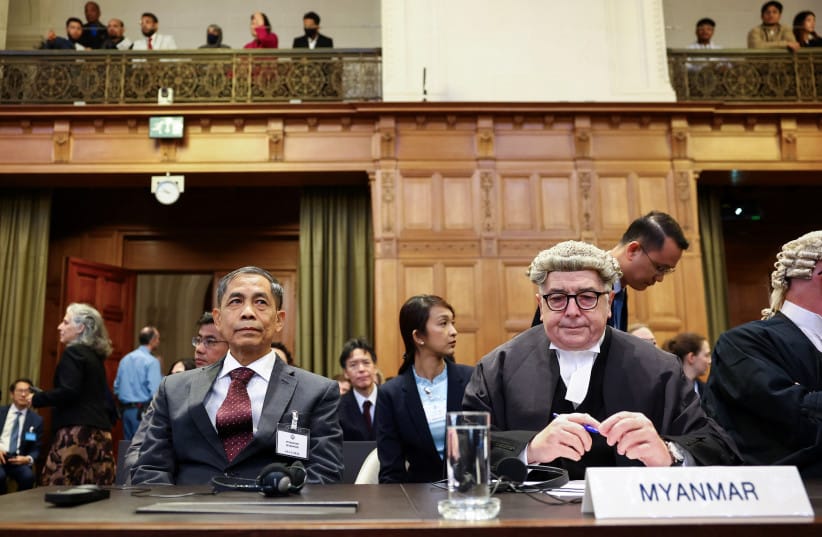
Much of the Myanmar case made it clear how drastically different its circumstances are from Israel versus Hamas.
Articles 2d and 2e of the Genocide Convention, which the ICJ used against Myanmar, relate to preventing births and forcible displacement out of a territory and resettlement of that territory with its own population.
No one can argue that Israel is doing this in Gaza, given that the vast majority of more than two millions Gazans have remained in the Gaza Strip, and no one has imposed, or would even think to impose, anti-marriage or anti-birth laws.
Likewise, Myanmar’s widespread rape of the Rohingya is exclusive to its own case.
While Smotrich has wanted to resettle Gaza, the Israeli government has blocked that at every stage.
Likewise, the ICJ ruled against Myanmar partially because it systematically attacked fleeing civilians and did not organize safe corridors for them.
In stark contrast, the IDF used various means – such as flyers, phone calls, and texts – to repeatedly evacuate Gazans from areas it was going to attack. The IDF also established clear safety zones.
While there were a small number of attacks on fleeing civilians, these did not compare to the sheer amount of successful evacuation operations. Regarding this, the ICJ found that genocide cannot be concluded from negligence or even gross negligence.
This is probably the most important ruling.
Israel has had cases of proven negligence and gross negligence in Gaza. Israel has admitted as much to the World Central Kitchen, International Red Crescent (the Paramedics Case), and many others. The IDF has probed 150 cases of misconduct by Israeli soldiers. That these cases cannot be used as evidence of genocide is a big deal.
Next, the ICJ rejected the application of Article 2c against Myanmar. Article 2c means deliberately inflicting on the group conditions of life calculated to bring about its physical destruction in whole or in part. If the ICJ rejected this for Myanmar, it is fairly obvious that it will reject this for Israel as well.
Finally, the finding that genocidal intent must be “the only reasonable inference” from the evidence should help Israel beat some or all of the allegations. Israel, even when it failed, clearly tried to avoid civilian harm in the vast majority of cases.
Nevertheless, several questions remain for Israel’s genocide case. Many officials made provocative statements at the beginning of the war, and Katz did so later down the line.
In addition, there is the widespread destruction and the cumulative number of Gazan deaths. Several officials said they wanted Gazans to emigrate (although this never happened for the most part).
There is also the question of whether certain activities in the West Bank will be brought up, particularly when Jewish settlers took over certain Palestinian areas over the past year or so.
In any normal court of law, none of these issues would get anywhere near genocide, because Hamas used human shields, booby-trapped houses, and systematically turned hospitals, schools, and mosques into command centers.
But any normal court would have immediately discarded the genocide case against Israel.
Given how much time and energy the ICJ is putting into the genocide allegations against Israel, its latest case against Myanmar will pose potential major problems for Israel’s defense.