
After the October 7 massacre, Israel established an elite task force to track down and kill or capture every Hamas terrorist who participated or planned the attack, from the most minor participants to their leadership, The Wall Street Journal reported on Wednesday.
The task force is called NILI, an acronym of "Netzach Yisrael Lo Yeshaker" ("The Eternal One of Israel does not lie"), signifying that no victim of the attack would be forgotten.
“The clear message to all future enemies is to think again about the price of a terrorist operation like that,” said Shalom Ben Hanan, a former senior official in the Shin Bet (Israeli Security Agency).
NILI has a list of "thousands of names" of terrorists involved in the massacre, the WSJ reported, of which many have already been crossed off. No individual is too insignificant or too powerful to be targeted - the WSJ describes a man who drove a tractor through the border fence being killed in an air strike two years afterward, while walking down a narrow urban street, as well as the recent assassination of Izz ad-Din al-Haddad, whom IDF Chief of Staff Lt.-Gen. Eyal Zamir was called "one of the chief perpetrators of the October 7 massacre and the head of Hamas’ military wing."
Current and former Israeli officials said that, once two pieces of evidence are found that an individual took part in the October 7, they are marked for death without trial.
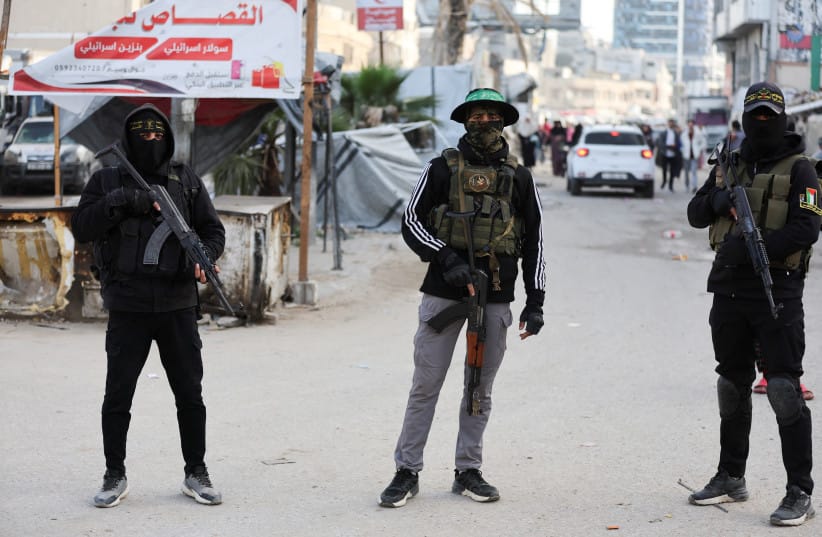
Among the methods used to identify and locate terrorists are facial recognition programs based on videos posted on their social media pages, cellphone location data, and the interrogation of Gazan detainees.
'Revenge is an important part of the discourse'
Michael Milstein, a former senior Israeli military intelligence officer on Palestinian affairs, said that "revenge is an important part of the discourse" in the Middle East.
"It is about how serious anyone in your environment sees you," he explained. "Unfortunately, this is the language of this neighborhood.”
In addition to striking terrorists in Gaza, the task force has also assassinated Hamas leaders in Iran and Lebanon.
One security official told the WSJ that the task force prioritized terrorists whose deaths would console victims' family members, in what they called "treatment for the soul."
The WSJ reported that, since the ceasefire with Hamas began, the task force has been reduced to a small number of operatives who pass information on targets to commanders responsible for operations in Gaza.