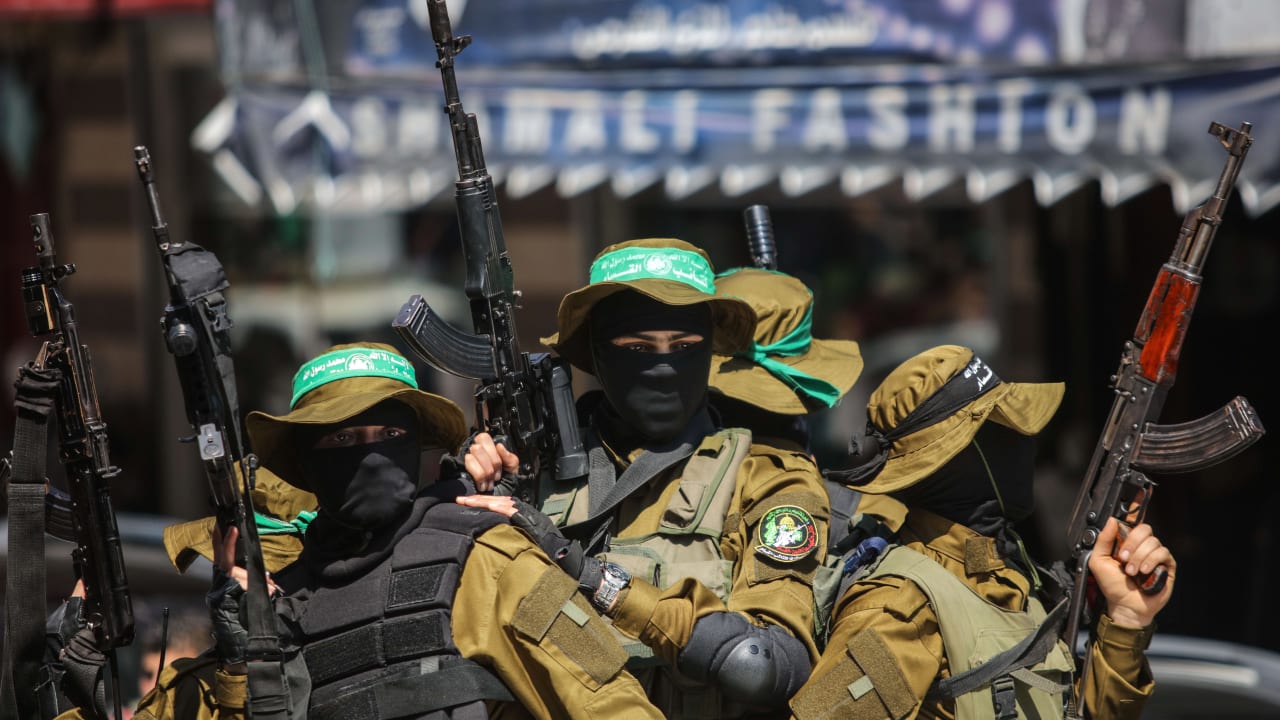
The Board of Peace’s proposed agreement to disarm Hamas would leave Israel restricted in its ability to deal with immediate and emerging threats, while allowing Hamas to remain armed with “personal weapons,” according to an assessment by Dr. Igal Shiri published by the Meir Amit Terrorism and Intelligence Research Institute last week.
The 15-point plan, which was rejected by Prime Minister Benjamin Netanyahu on Sunday, notably failed to see Hamas relinquish its weapons, only seeing the National Committee for the Administration of Gaza store the weapons and decommission them under point 8.
Shiri noted that a political crisis or the collapse of the NCAG, or a similar armed takeover of storage facilities like the one seen during Hamas’s 2007 takeover of Gaza, could result in Hamas being rearmed.
Additionally, Shiri warned that it remained unclear whether a complete inventory of Hamas’s weapons production facilities, tunnels and other infrastructure would be handed over, and whether these structures would be dismantled or completely destroyed under the supervision of parties not allied with Hamas, rather than only by Turkey and Qatar.
Unclear whether IDF expected to withdraw before or after Hamas disarmament
It also remains unclear whether the IDF would be expected to withdraw before or after Hamas disarms.
Critically, under the ninth point of the agreement, Hamas members would be allowed to retain “personal weapons” registered and licensed with the NCAG.

Shiri said such a process would do little to ensure the complete dismantlement of Hamas’s military wings or prevent current and former Hamas police members from rearming, particularly if they are allowed to integrate into the new security forces.
Netanyahu said on Sunday he would not allow a deal that promises only “fictitious disarmament,” where Hamas is allowed to continue holding arms.
“When I say Hamas is disarmed, that means the heavy weapons, the less heavy weapons – all the weapons,” he said.
Shiri also pointed to Hamas’ declaration that it would continue to work to “liberate all of the land from the occupation on all fronts,” as reflective of the group’s continued commitment to armed jihad against Israel.
He argued that Hamas therefore had no intention of implementing the agreement in the spirit in which it was written, but instead could use it as an opportunity to reorganize and raise resources.
Fate of Hamas operatives unclear per the agreement
As to the fate of Hamas’s current commanders and terrorist operatives, including those who participated in the October 7 massacre, the agreement is also vague. It is unclear whether they will be allowed to stay in the Gaza Strip, though point seven would allow those in the Palestinian police who do not pass vetting to be offered alternative civilian roles.
“None of those shall be deprived of their financial rights, particularly due to political affiliation,” the agreement promised.
Finally, Shiri warned that the restrictions on the IDF’s use of force threaten its ability to respond to immediate and emerging threats because it fails to address Israel’s right to self-defense, only demanding its withdrawal in point 13.