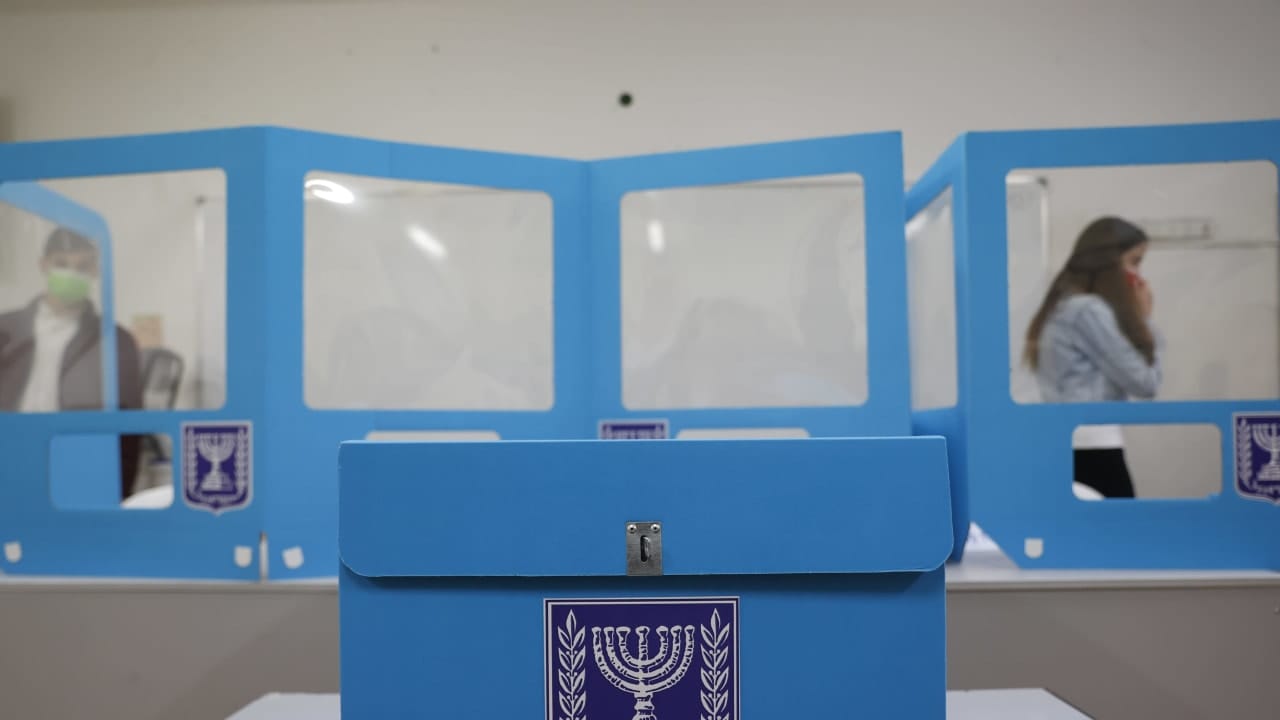
Election season in Israel has officially begun, and the 25th Knesset will be the first since 1988 to hold elections after a full four-year term.
Here are the important dates you need to know before the big day.
July 17: Knesset dissolves
On Friday, the 25th Knesset will dissolve and end its term. However, this doesn’t mean that no one will be working. Knesset members must continue to serve until the first session of the newly elected Knesset takes place.
Similarly, the government will continue to serve until a new one is established.

July 19: The final day for civil servants to resign if they want to run for Knesset
July 19, which is 100 days before the election, is the last day for senior civil servants to resign from duty if they want to run for the 26th Knesset.
Civil servants are state employees governed by the Civil Service Commission, and include employees of government ministries and agencies, police officers, and state prosecutors. By law, they are restricted from running for Knesset while working in these positions. They also cannot publicly attack or insult the Knesset or government via social media or public forums.
July 20, July 26, August 4: Major parties hold primaries
Three prominent Israeli parties have confirmed that they will hold primaries ahead of the general election.
Yair Golan’s Democrats party will hold primaries on July 20; Finance Minister Bezalel Smotrich’s Religious Zionist Party will hold primaries on July 26; and Prime Minister Benjamin Netanyahu’s Likud will hold primaries on August 4.
Only registered party members are eligible to vote in primaries, and the results will determine the order of the parties’ final lists for the general election.
September 9: The final day to submit completed party lists to the Central Elections Committee
On September 9, all parties intending to run for the 26th Knesset must have submitted finalized party lists to the Central Elections Committee. This will allow voters to know the order of each party’s members.
The party list dictates the order in which candidates will join the Knesset, which corresponds with the number of mandates won in the election.

For example: if a party received only one mandate, only its leader would have a seat in the Knesset. If the party received two mandates, the party leader and the person listed second on the list would have seats in the Knesset. This continues to the third, fourth, and so on.
October 13: Election campaign broadcasts begin on television and radio
Under Israel’s election law, campaign broadcasts are only allowed to air in the 21 days immediately preceding the election.
Before this, parties typically run ads on social media platforms such as YouTube, X/Twitter, and Instagram. However, these ads are paid for by individual campaigns and may not be shown on Israeli TV or radio outside of the allotted three weeks.
During the official window for election broadcasts, content is produced by the parties, but aired as official election programming. Each party is allotted time for its content in accordance with statutory formulas.
While the formula allows every party the same amount of time – even if it’s brand new – parties represented in the outgoing Knesset receive additional airtime based on the number of MKs they currently have.
October 20: Elections officially begin, as Israel’s diplomatic missions abroad begin to vote
On October 20, Israel’s diplomatic missions abroad will begin casting their votes.
This is not open to all Israelis living abroad, as the state does not allow absentee voting for the general population.
Early voting for Israelis abroad is intended for embassy employees and their families, military officials stationed overseas, and representatives of national institutions serving abroad under the law.
<br><strong>October 27: General elections for 26th Knesset take place across Israel</strong>
The election will be held on October 27, with polling booths being opened across the country throughout the day.
Election day is considered a national holiday. However, public transport will continue to operate normally.
Most polling stations will be open from 7:00 a.m. to 10:00 p.m., with smaller communities, hospitals, and prisons staying open from 8:00 a.m. to 8:00 p.m.
If you arrive at a polling station and are still in line when it closes, you remain entitled to vote if you stay in line.
November 4, November 18: Publication of official election results
On November 4, the results of the 26th election will be officially confirmed.
Once the results are made public, appeals can be submitted until November 18. An appeal can be submitted by any member of the Central Elections Committee or a Regional Elections Committee, any party represented in the outgoing Knesset, any individual MK, any approved candidate or candidate list that participated in the election – even those that failed to cross the electoral threshold – and the attorney-general.
If an appeal were filed, it would likely take until early November for the results to be submitted and for the court’s response. However, it is exceptionally rare for successful appeals to alter Knesset election results.