
The Knesset plenum passed in a preliminary reading on Wednesday a bill to establish a state commission of inquiry into the October 7 massacre in 2023.
The bill passed its preliminary reading with 65 lawmakers voting in favor and 50 against. It was sponsored by MK Orit Farkash-Hacohen and will now return to a Knesset committee for further deliberation. The bill still must pass three additional readings to be enacted.
The bill’s passage comes after the bloc led by Gadi Eisenkot secured a parliamentary majority over Prime Minister Benjamin Netanyahu’s bloc following the October 27 election.
More than three years after the massacre, neither a state commission of inquiry nor a probe into government failures on October 7 has been established, because of ongoing disputes over the nature of the potential investigation that should be conducted, and who should lead it.
Eisenkot promises to establish commission of inquiry
One of the Eisenkot bloc’s key campaign promises during the election was to establish a state commission of inquiry.
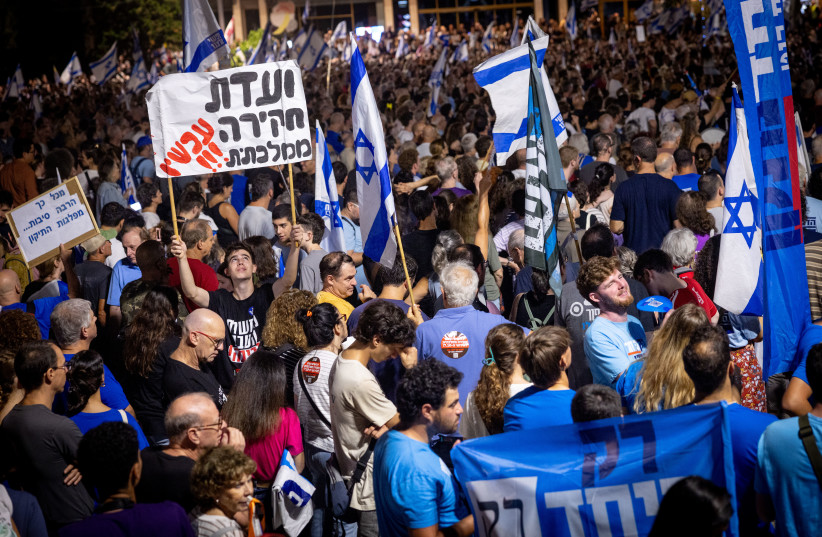
The bill proposes that a five-member commission investigate the factors that led to the massacre and the subsequent war. Its investigation would cover the period from the end of Operation Protective Edge on August 26, 2014, until January 26, 2026, when the body of the last slain hostage kidnapped by Hamas was returned.
Netanyahu’s outgoing coalition repeatedly blocked efforts to establish a state commission of inquiry into the events surrounding the October 7 attacks, despite polls showing substantial public support for such an investigation.
Amid the ongoing rift between the government and the judiciary, Netanyahu has consistently opposed having judicial officials oversee the investigation.
The outgoing coalition instead advanced legislation to establish a new, politically appointed investigative framework that would diverge from the existing state commission of inquiry mechanism, under which the commission’s members are appointed by the president of the Supreme Court.
A state commission of inquiry is considered the most traditionally authoritative and investigative mechanism under Israeli law. It is intended to operate outside the political echelon, with its members appointed by the Supreme Court president, and has the authority to subpoena witnesses and issue personal recommendations regarding individuals.
The October Council, which represents a large portion of victims and bereaved family members of the October 7 attacks, welcomed the bill’s passage in its preliminary reading. Family members gathered in the Knesset plenum gallery during the vote.
'Families deserve to know what led to the October 7 massacre'
“We welcome the vote and thank the members of Knesset who promised to support the bill and followed through,” the October Council stated.
“We now expect them to advance the bill and complete the legislative process as soon as possible.”
“The families, and the public as a whole, deserve to know what led to the October 7 massacre, who bears responsibility, and what needs to be fixed to ensure that such a disaster never happens again,” the statement added.
The advancement of the bill comes as the Eisenkot-led bloc has gained greater control over the Knesset’s parliamentary agenda.
Meanwhile, bills brought forward by Netanyahu’s bloc were unable to pass after they failed to secure a majority, with parties in Eisenkot’s bloc voting against them.
Among the bills that the Eisenkot bloc did not support was legislation sponsored by MKs from the haredi parties seeking to freeze the arrests of haredi (ultra-Orthodox) draft evaders. The vote came despite ongoing coalition talks with the haredi parties, Shas, and United Torah Judaism.
The Sephardi haredi Shas party denounced Eisenkot, Yisrael Beytenu leader Avigdor Liberman, and “their associates in the left-wing bloc” for voting against the bill on Wednesday.
They “made grand promises about their intention to regularize the status of yeshiva students,” but “chose to continue mistreating those who study Torah, holding them hostage for political purposes,” Shas said.
Last week, the Knesset plenum voted to remove Knesset Speaker Amir Ohana of the Likud party and to appoint Yashar MK Matan Kahana as his replacement, handing the bloc greater control over parliamentary proceedings, even as Netanyahu remains in office as head of a caretaker government.
The Eisenkot-led bloc has since advanced key legislation in the Knesset with the support of the Arab parties, although no government has yet been formed.
Eisenkot received the mandate to form the next government on November 8, giving him roughly two more weeks to do so, with the option of requesting a 14-day extension.
The Knesset plenum passed a series of bills in preliminary readings last week seeking to repeal key components of the judicial overhaul enacted by Netanyahu’s outgoing coalition. The bills returned to Knesset committees for further deliberations and will each require three additional readings to be enacted.