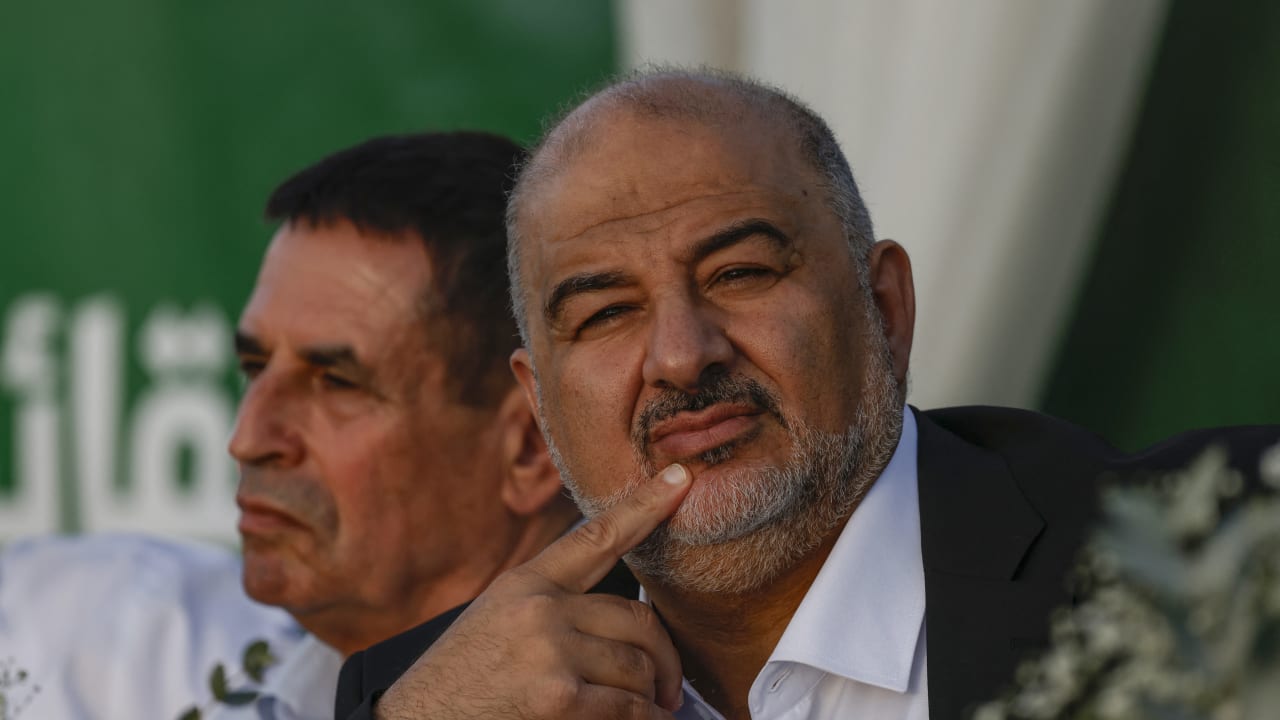
Ra’am chairman MK Mansour Abbas claimed on Thursday that a government headed by Yashar chairman Gadi Eisenkot would include both Ra’am and United Torah Judaism (UTJ), with the Joint List providing parliamentary support from outside the coalition.
Speaking in an interview with Radio Makan amid intensifying coalition negotiations, Abbas claimed that the bloc seeking to replace Prime Minister Benjamin Netanyahu was close to forming a government.
Despite repeated statements by members of the bloc that a government would be formed without the Arab parties, Abbas insisted that both Ra’am and UTJ would join the prospective coalition.
"A government will be formed comprising the parties of the change bloc and United Torah Judaism, with the participation of Ra’am and the support of a parliamentary safety net from the Joint List," Abbas said.
Abbas clarified: "We are talking about the change bloc, the four lists, in addition to United Torah Judaism and the United Arab List (Ra’am)."
Abbas also addressed the initiatives he intends to advance as chairman of the parliamentary committee tasked with combating crime in Arab society.
"Through the parliamentary committee to combat crime, which I chair, we are working to present a five-year plan soon. This is our first step toward turning the committee into a significant and influential body," he said.
Eisenkot pushes to form government as coalition negotiations intensify
Efforts to form an alternative government have intensified, with Eisenkot’s Yashar party indicating that it aims to establish a government as early as next week without requesting an extension of its mandate from President Isaac Herzog. However, the Arab parties were reportedly expected to remain outside the coalition.
Eisenkot and Yisrael Beytenu chairman Avigdor Liberman reached a preliminary coalition agreement on Wednesday evening, under which Yisrael Beytenu was earmarked for several significant ministerial portfolios, including the Defense, Justice, and Aliyah and Integration ministries.
Liberman has thus far staunchly opposed forming a government with the Arab parties, stating that he would not join a coalition that cooperated with them.
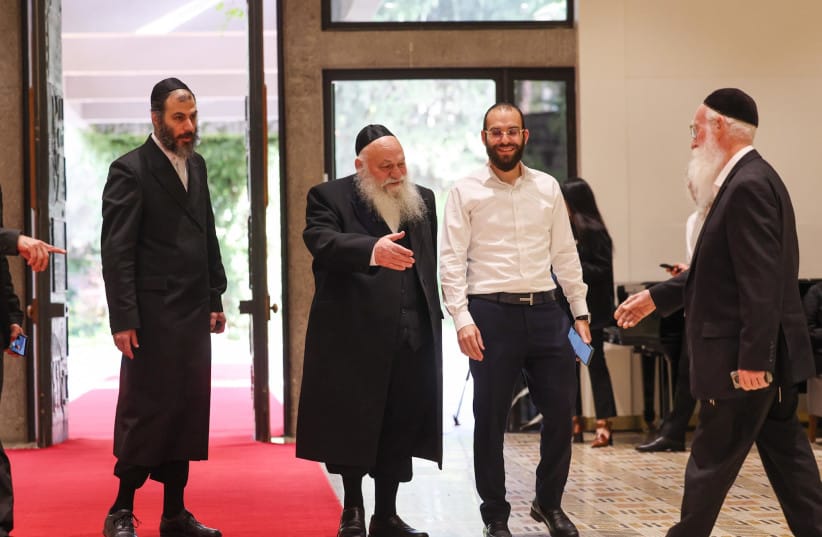
Meanwhile, negotiations between the bloc and the haredi (ultra-Orthodox) parties have also progressed in recent days.
According to reports, UTJ is nearing agreements with Eisenkot and Liberman on several issues, including maintaining the status quo on religion-state matters and establishing a temporary arrangement to prevent the arrest of draft evaders until military conscription legislation is passed.
A senior Likud official also estimated that the haredi parties could join an alternative government even without comprehensive conscription legislation, provided a solution to the issue of arrests was found.
Negotiations between Yashar and the Democrats resumed on Thursday following a public rift between the two parties, with intensive discussions aimed at securing a coalition agreement.