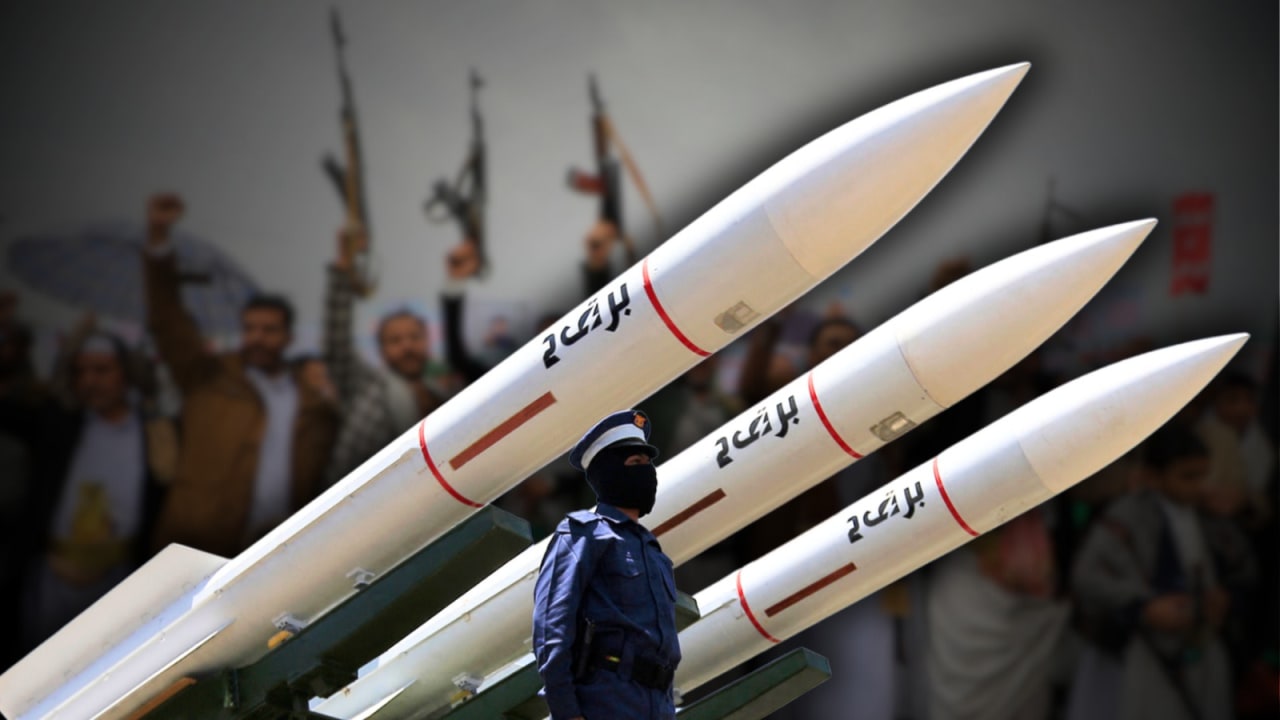
A ballistic missile was launched from Yemen toward Israeli territory on Saturday morning, marking the first such attack by the Iran-backed Houthis since Operation Roaring Lion began a month ago, the IDF has confirmed.
Air defense systems were activated to intercept the threat, the military said, as sirens sounded across Beersheba and surrounding Negev communities. There were no reports of casualties or damage.
The Houthis confirmed the attack several hours later, saying they had targeted Israel in response to continued Israeli strikes across Iran, Lebanon, Iraq, and the West Bank, and warned that their operations would continue until their “objectives are met.”
The Houthis have previously stated that they want an end to the attacks on the “axis of resistance,” which includes Iranian-backed groups in Iraq and Lebanon.
An Iran-backed proxy based in Yemen, the Houthis have previously threatened to target Israel in coordination with other Iranian proxies in the region.
However, this marks the first confirmed missile launch toward Israeli territory from Yemen since the war began on February 28.

Despite repeated strikes, the group has shown little sign of being deterred
Arab News reported that “the group has shown an ability to strike targets far beyond Yemen and disrupt shipping lanes around the Arabian Peninsula and the Red Sea, as they did in support of Hamas in Gaza after October 7, 2023.”
The Houthis have previously demonstrated their capacity to halt maritime traffic in the Red Sea, an outcome that could further strain the global economy.
With the Strait of Hormuz already largely restricted, additional disruption along the Red Sea corridor, which feeds into the Suez Canal, would compound pressure on global trade. Tensions across the region remain high.
In 2015, Saudi Arabia led a coalition alongside the United Arab Emirates and Egypt to prevent the Houthis from advancing toward Aden. In response, the group escalated by launching ballistic missiles and drones toward Riyadh.
These earlier attacks are now widely viewed as a precursor to Iran’s current regional strategy. The Houthis have steadily expanded their capabilities, acquiring long-range Shahed-136 drones as early as 2021 and maintaining stockpiles of ballistic missiles, many of which are believed to be concealed in fortified underground sites.
Despite repeated US and Israeli strikes, the group has shown little sign of being deterred.
In an interview with Al-Masirah TV following Houthi Brig.-Gen. Yahya Saree’s announcement of Yemen’s first ballistic missile strike on Israeli targets, a Houthi-affiliated analyst outlined the group’s strategic aims.
What are the Houthis' objectives?
Houthi Brig.-Gen. Omar Ma’rabouni said Yemen’s entry into the war was a response to what he described as US and Israeli actions.
The move is intended to “complicate the scene for the Americans and Israelis, which is already complex,” he said, citing Yemen’s geographic position as a key factor.
Ma’rabouni pointed to what he described as Yemen’s leverage over critical maritime routes, including “the Red Sea, the Arabian Sea, the Gulf of Aden, and the Bab al-Mandab Strait,” according to Almasirah media network.
Such positioning, he argued, directly impacts “military navigation movement” and constrains the operational flexibility of US and Israeli forces in the region.
Separately, Almasirah reported that Saba’een Square in Yemen’s Houthi-controlled capital was the scene of a mass rally on Friday, described as a “million-strong march” under the slogan “steadfast with Palestine, Lebanon, and Iran... ready for all options,” marking what organizers called the “National Day of Resilience.”
Houthis say they have a plan to prevent passage of Israeli ships through Bab al-Mandab
Following Saturday’s strike from Yemen, a senior Houthi advisor cited by Al Araby TV said, “We have developed a plan to prevent the passage of Israeli ships through the Bab al-Mandab Strait.”
The threat came days after Iran said it would “take action” in the vital waterway.
During the war in Gaza, the Houthis repeatedly attacked shipping vessels in the Red Sea, triggering an international shipping and trade crisis.
In an interview on Yemen’s Houthi-run television channel, a supporter argued that Saturday’s strike would complete a “ring of fire” against “US-Israeli operations.”

Houthis issue final warning before joining the war
According to Arab News in Saudi Arabia, the “Houthis can strike targets far from Yemen.” The report noted similar language to that appearing in Houthi statements.
Though the Houthis had so far avoided joining the war, a Houthi leader told Reuters on Friday that the group was ready to get involved and potentially support Tehran’s war efforts in the Red Sea.
Saturday morning’s attack could signal the opening of another front in the current conflict, which would likely deepen the global oil and economic crisis brought on by the ongoing war.
“We stand fully militarily ready with all options. As for other details having to do with determining zero hour, they are left to leadership, and we are monitoring and following up with the developments and will know when the suitable time is to move,” the Houthi leader said, anonymously, this week.
“Until now, Iran has been doing well and is defeating the enemy every day, and the battle is going in its direction. If anything contrary to this happens, then we can assess,” he added.
On Wednesday, Iran had said that it would “take action” in the Bab al-Mandab Strait, which connects the Red Sea to the Gulf of Aden and the Indian Ocean, “if provoked,” raising fears that Tehran could use its Yemen-based proxy to carry out such actions.
The Bab al-Mandeb Strait lies between Yemen, Djibouti, and Eritrea, with the Houthis on the Yemeni side.