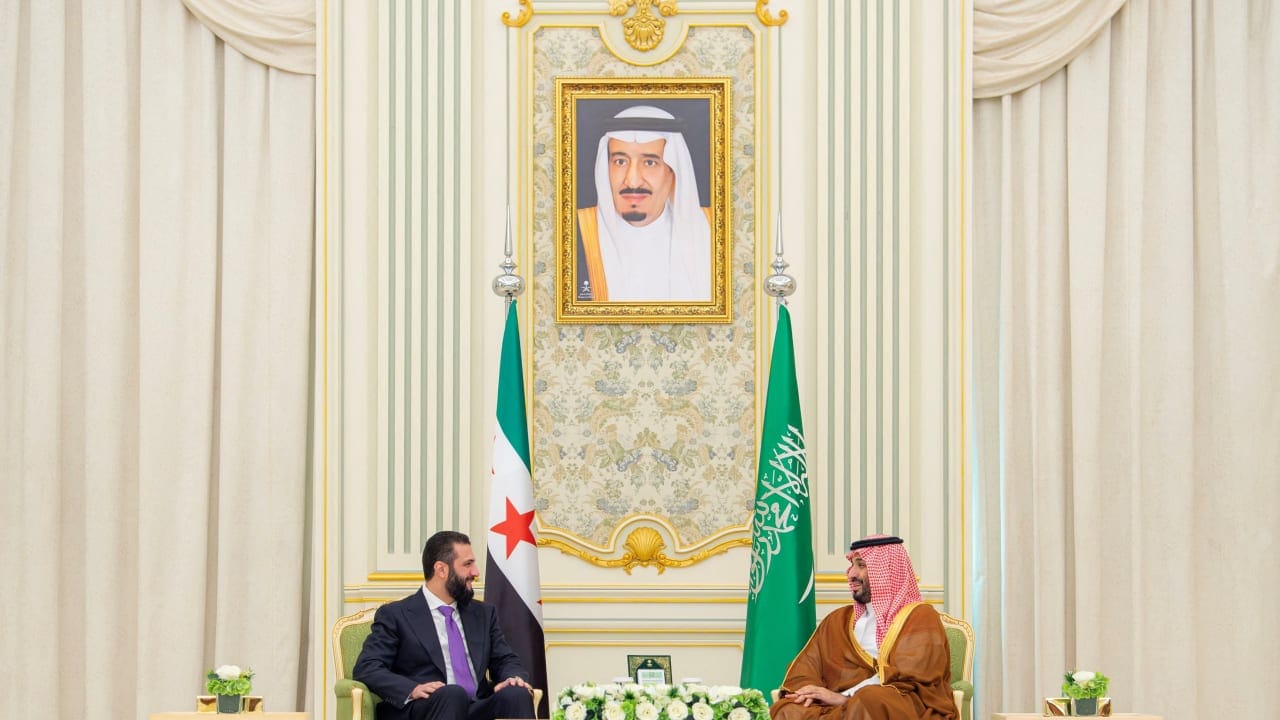
Over the past week, a number of reports, while differing over the numbers involved, have indicated that Syria is sending forces to Saudi Arabia. Reuters, Agence France-Presse and now the Associated Press have all published such reports. However, it’s not clear whether the aim of these forces is to help Saudi Arabia with training and advice, or whether they will be deployed to Yemen to fight the Houthis. There are other questions as well, such as whether this is part of the Syrians also receiving training from Riyadh.
The latest report from AP said that “Syria is preparing to send fighters to Saudi Arabia to deploy along its border and potentially help it fight Iranian-backed rebels in neighboring Yemen, three officials with knowledge of the plans told the Associated Press.” It added that “Syrian military advisers have already deployed to Saudi Arabia,” but that they have not been sent to Yemen
The AP report noted that “a Syrian official said that an initial force of about 600 Syrian special forces fighters is expected to be deployed to Saudi Arabia in the coming week… The official said that a Syrian delegation led by Khaled Khattab, commander of the 82nd Division, had recently made a two-week visit to Saudi Arabia.”
There are already several dozen Syrians in Saudi Arabia, and these are described as “advisors.”
A net gain with Riyadh as Saudi Arabia becomes a leader
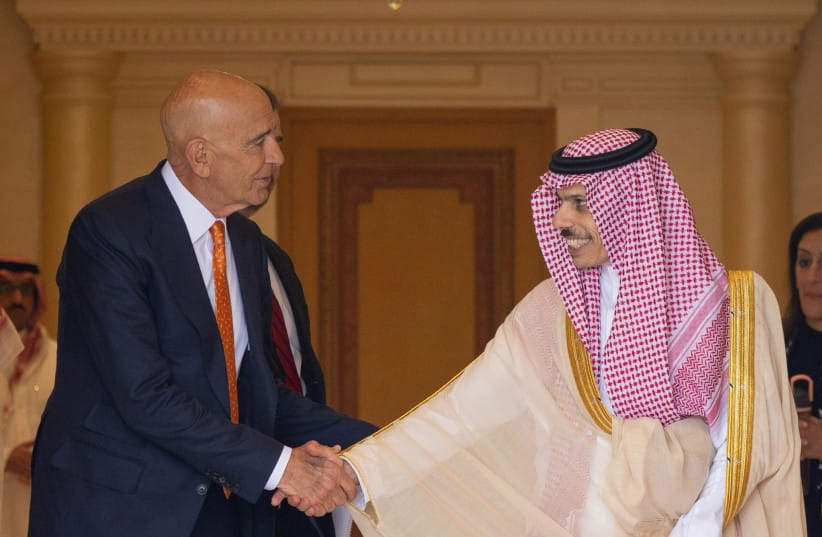
For Riyadh, this is a net gain because it wasn’t so long ago that it had very cold relations with Turkey. Today much has changed. Saudi Arabia can take pride in being a leader of both Arab and Muslim countries in the region – this is a historic role.
The revival of Syria as a state is important to Riyadh. For many years, Syria was controlled by the Assad regime, which was close to Russia and Iran and backed Hezbollah. As such, the regime in Damascus operated outside the traditional Arab state system.
It’s worth recalling some history here.
In the post-colonial Middle East that emerged since the 1940s, there have been several key changes in the region. For instance, there was a revolution in Egypt in 1952 that eventually led to the emergence of the Arab nationalist government led by Gamal Abdel Nasser (1918-1970).
In 1958, Egypt and Syria announced their merger as the United Arab Republic. When Egypt intervened in Yemen, the Yemeni forces it was backing also supported the UAR.
Meanwhile, as the Cold War took shape, the West backed the 1955 Baghdad Pact among Iran, Iraq, Pakistan, Turkey and the United Kingdom. Turkey was a member of NATO. Pakistan remained close with the West and with China. Iraq left the group after a coup in 1959.
Relevant for our purposes is understanding that in the 1950s and 1960s the regimes in Egypt and Syria were backed by the Soviets.
Nasser’s government inspired crises in Lebanon in 1958 and in Jordan between 1956 and 1958. The United States and the UK helped confront these crises, with American forces entering Lebanon and British paratroopers sent to Amman. President Dwight Eisenhower ordered around 5,000 US Marines to land in Beirut in July 1958 to stabilize the pro-Western government.
Fast forward several decades and things began to change.
Egypt switched sides from the Soviets to the Americans and signed a peace deal with Israel. The Islamic Revolution toppled the shah of Iran. The Soviet invasion of Afghanistan led to the US, Pakistan, Saudi Arabia, and others backing the mujahideen rebels.
This also dovetailed with radicalization in the region and the rise of political Islam and eventually al-Qaeda.
Radicalization, political Islam led to groups like Al Qaeda
In 1990, Iraqi dictator Saddam Hussein invaded Kuwait. This led to the US deploying forces in Saudi Arabia and, in turn, to an increase in US bases in the Gulf, such as Kuwait, Qatar, the United Arab Emirates, and Bahrain.
However, the shifts after the 1991 Gulf War led to a weakening of many of the historic Arab states.
Iraq was weakened in the war and invaded by the US in 2003.
The Arab Spring began in Tunisia and then spread to Libya, Egypt, Syria, and other Arab countries. Iranian-backed proxies, such as the Houthis, tried to take over Yemen.
Islamic State was fueled by the Syrian civil war and Iraqi insurgency.
It is only in the last decade that things have shifted toward a re-emergence of Arab states.
The Assad regime fell in 2024. Iraq defeated ISIS in 2017 and now struggles with Iranian-backed militias.
Egypt under Abdel Fattah al-Sisi has tried to return to its historic role in the region.
Saudi Arabia’s role in Syria is an example of how Riyadh is reclaiming its role in the region and helping Arab states return to their former roles. In terms of the historic roles of these states, it is worth recalling that Damascus, Cairo, and Baghdad were centers of Arab and Islamic culture and rule in the past.
It will take time for Syria to return to being a successful country. Its work with Riyadh is one step on that path.