US-Iran talks in Pakistan ended without an agreement after 21 hours on Sunday, an American official told The Jerusalem Post, citing major gaps on nuclear policy, regional influence, and control of the Strait of Hormuz.
An American official told the Post at the conclusion of talks in Pakistan that the gaps between the United States and the Islamic Republic of Iran remained wide. “They were really not close to an agreement,” the official said.
Another source familiar with the details said that members of the Islamic Revolutionary Guard Corps (IRGC), led by its commander, Ahmad Vahidi, refused to allow the delegation to compromise on key issues.
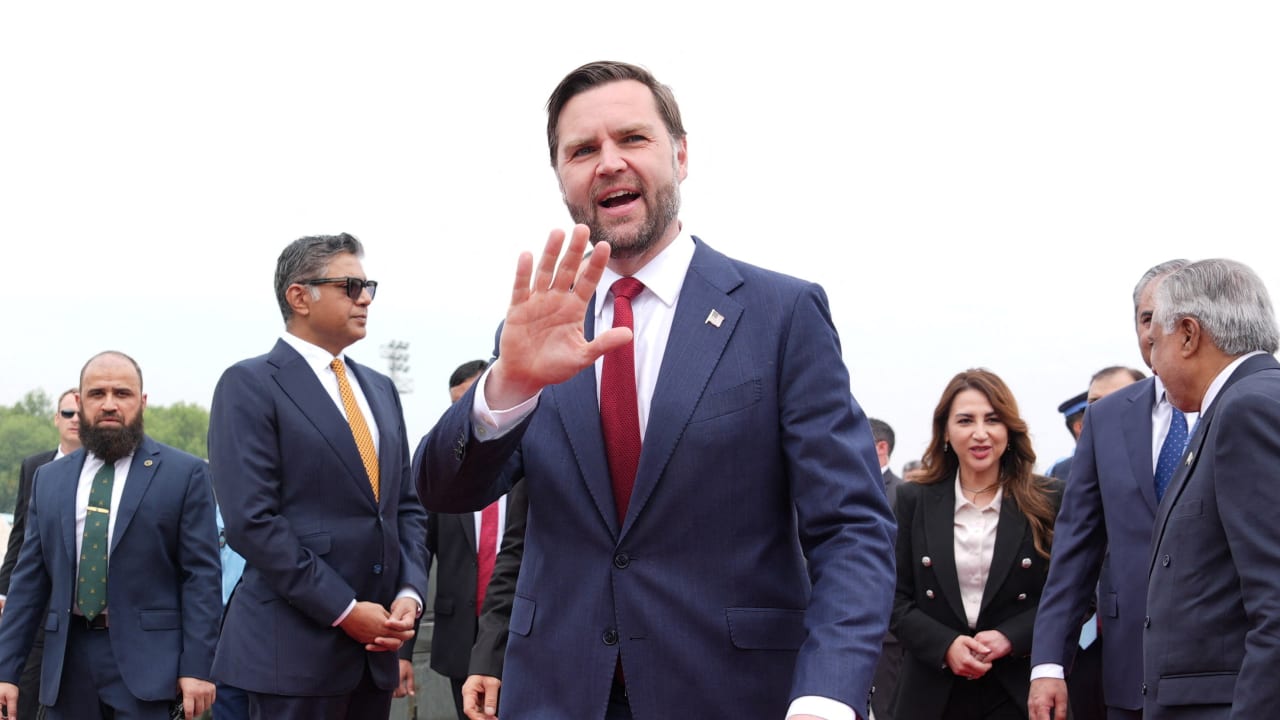
On Sunday morning, US Vice President JD Vance announced that 21 hours of talks with the Iranian delegation – headed by Parliament Speaker Mohammad Bagher Ghalibaf – had ended without an agreement.
“The bad news is that we did not reach a deal, and I think that is much worse news for Iran than it is for the United States,” Vance said.

'It was clear to me that the Iranians would not give up their right to enrich uranium'
The gaps between the sides extended beyond the nuclear issue to include control of the Strait of Hormuz, Iran’s support for proxy groups, and the unfreezing of Iranian funds held abroad. On the nuclear front, disagreements centered on uranium enrichment, dismantling nuclear facilities, and the removal of uranium enriched to 60 percent stored underground.
Israel’s Ambassador to the United States, Yechiel Leiter, said in an interview with CBS that the president had shown a desire to resolve the crisis through negotiations, and avoiding war would be preferable if possible.
“But right now, the Americans sat across from the Iranians and say just how unwilling they are to give up their pursuit of nuclear weapons.”
Raz Zimmt, head of the Iran and Shiite Axis Program at the Institute for National Security Studies (INSS), said, “It was clear to me that the Iranians would not give up their right to enrich uranium.
“Their flexibility on the nuclear issue might extend at most to a temporary suspension for a few years, or perhaps some compromise on diluting the 400 kilograms of uranium enriched to 60%, or even removing part of the material. But I never thought the Iranians intended to dismantle their nuclear program – that is not on the table, and in my view, it will not be.”
Regarding the Strait of Hormuz, Zimmt said Iran views it as both a security and economic asset.
“From a security perspective, they understand they will not receive any American commitment that Iran will not be attacked again, so they need an arrangement that preserves their control over the Strait, allowing them to act if another attack occurs. Equally important is using Hormuz as economic leverage – either in addition to, or instead of, the economic benefits they are demanding from the United States.”
On Sunday, Prime Minister Benjamin Netanyahu convened senior security officials and a small group of ministers to discuss developments following the collapse of the negotiations, as well as US President Donald Trump’s decision to impose a blockade on Iran.
Officials in both the US and Iran said that no additional round of talks had been scheduled. Zimmt said he does not expect a breakthrough in the near term, particularly as senior officials from both sides have returned home. Even if lower-level contacts continue, he expressed doubt that they would produce meaningful progress.
“I think the extent of Iranian flexibility is fairly clear,” he noted. “It may include certain compromises on the nuclear issue, but without giving up the fundamental right to enrich uranium and without dismantling infrastructure as much as possible.
“Secondly, Hormuz is something they cannot back down from, as it is essentially their last remaining card. If, for example, the Americans were to say, ‘You know what? We are willing to allow nuclear infrastructure to remain in Iran,’ in exchange for Iran agreeing to give up transit fees in Hormuz, that might be something they would consider. But in my view, the Iranians will not be willing to concede on both of these core issues.”