
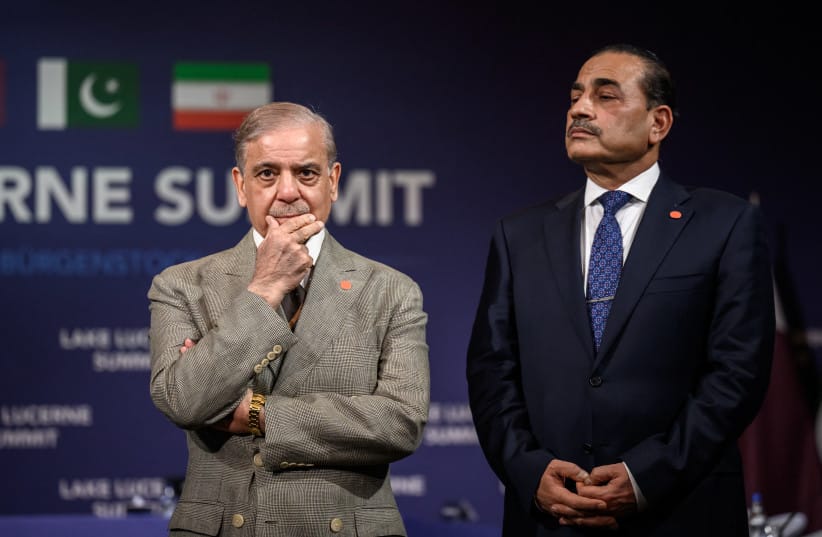
Pakistan’s army chief, Field Marshal Asim Munir, arrived in Iran on Tuesday, accompanied by a delegation. Pakistan, notably, has played a role in US-Iran talks in the past. Pakistan has sought to reduce tensions and end the conflict that began on February 28.
Pakistan has a complicated relationship with Iran. Iran’s southeastern Balochistan region has experienced an insurgency; this matches with Pakistan’s Balochistan region, bordering Iran, which has also seen an insurgency. As such, the two share interests in that region. They may also share interests in Afghanistan and Central Asia.
Munir’s visit follows the arrival of Russia’s foreign minister in Tehran on Monday. It appears that, currently, Iran is hosting several important meetings with international dignitaries.
“Iranian Foreign Ministry spokesperson Esmaeil Baqaei said earlier that the visit was primarily focused on strengthening bilateral relations and cooperation between Tehran and Islamabad,” Turkey’s pro-government Anadolu news agency noted.
Pakistan and Iran have apparently downplayed the chance that the Pakistan visit could lead to a deal with the US. They also appear to have downplayed the possibility of Pakistan delivering a threat from the US.
US, Iran considering new strikes on Iran
Munir’s visit comes as the US appears to be considering new strikes on Iran. Israel is similarly on edge as election day nears. These are among the many factors at play.
Officially, Iran and Pakistan are only talking about “bilateral ties” and ways to expand cooperation.
The Arab Weekly discussed the visit and noted that Islamabad seeks to mediate between Iran and the United States. The visit comes amid continued tensions over the Strait of Hormuz.
According to Tuesday’s report in the Arab Weekly, Munir’s visit is part of Pakistan’s efforts to maintain communications with both the US and Iran. Pakistan has emerged as an important intermediary during the conflict, as it seeks to reduce tensions and prevent further escalation.
Munir previously held talks with Iranian officials over the summer. Those discussions focused on reopening the Strait of Hormuz, reducing military tensions, and finding a way to end the war.
Strait of Hormuz remains key regional piece
The Strait of Hormuz remains a key issue. The Gulf countries had hoped that Russia’s foreign minister would discuss this with Iran. Iran, however, will not budge. Oil prices have steadily climbed over $100 dollars a barrel, worsening an already deteriorating world economy.
Citing Reuters, the Arab Weekly said that Iran has offered to reopen the strait within seven days. However, Washington and Tehran continue to disagree over security guarantees and responsibility for maritime security.
Pakistan’s ability to mediate still exists because it maintains contacts with both sides. However, Pakistan has had trouble getting to the proverbial finish line after it hosted the Islamabad talks in April. After all, Pakistan cannot force either side to accept an agreement.