In August 1973, four hostages were taken during a bank robbery in Stockholm, Sweden. Over the course of six days, something psychiatrists and criminologists would later find extraordinary began to happen: the captives developed an emotional bond with their captors. They sympathized with them, defended them, and in some cases actively resisted rescue. When it was over, one hostage said she felt more afraid of the police than of the men who had held a gun to her head.
The phenomenon now bears the name of that city. Stockholm Syndrome is the psychological mechanism by which the human mind, when faced with a threat it believes it cannot overcome, converts terror into sympathy, helplessness into loyalty, and survival instinct into identification with the aggressor. It is a crucial distinction that this identification is not with whoever holds the most power in any conventional sense. It is specifically with those who are openly threatening you, with those who have made their willingness to do you harm explicit and credible. The captor does not need to be mighty. They need only to be dangerous, and to have made that danger felt.
What happened in Stockholm over six days, the West has been doing, collectively, gradually, and largely without acknowledgement for the better part of three decades.
The psychological mechanics of Stockholm Syndrome are important to understand precisely because they do not look like weakness from the inside. The hostage does not feel afraid. They feel enlightened. They feel that they alone have seen past the hatred and understood the grievance beneath it. They have convinced themselves that empathy is the only honest response, and that anyone who refuses to share it is the real aggressor. This is not weakness performing as courage. It is weakness that has genuinely come to believe it is courage. That distinction matters, because it explains why the syndrome is so resistant to correction. You cannot argue someone out of it by pointing to the gun. They have already reframed the gun.
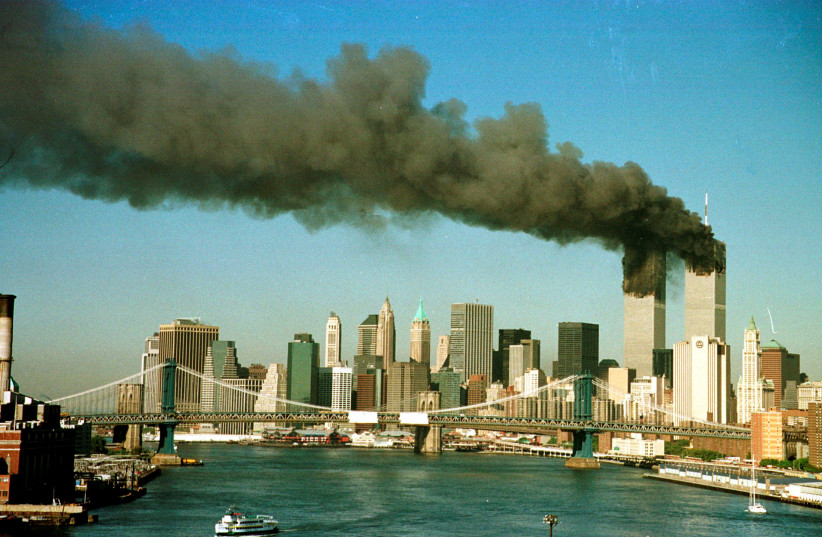
Now scale that psychology across an entire civilization and you begin to understand what has happened to the West in the years since September 11, 2001.
The West, terror, and Stockholm Syndrome
The attacks on that morning did not merely kill nearly three thousand people. They introduced a species of dread into Western consciousness that has never fully left. Not the ordinary, manageable fear of crime or accident or illness, but something far more destabilizing, the fear of an adversary that was ideologically motivated, globally networked, indifferent to death, and explicitly contemptuous of every value Western liberalism holds sacred. The rational response to that kind of threat is to name it, analyze it, and resist it. And for a brief window, the West attempted to do exactly that.
But naming the threat required saying uncomfortable things. It required acknowledging that the attacks were carried out in the name of a specific interpretation of a specific religion. It required distinguishing between that interpretation and the faith of millions who shared none of its violence, while still insisting that the distinction be made honestly rather than weaponized to shut down scrutiny altogether. That is a difficult line to walk. And rather than walk it, the West largely chose not to walk at all.
What followed was not tolerance. Tolerance is a conscious and principled choice to coexist with ideas you find wrong or even repugnant. What the West developed was something quite different: a reflex aversion to any critique that might give offence, backed by a social and institutional apparatus designed to enforce that aversion.
The evolutionary psychologist and author Prof. Gad Saad has a precise and devastating name for this symptom: suicidal empathy. It is empathy so unmoored from self-preservation that it actively enables the destruction of the society practicing it. The West has developed a civilizational immune system that has been tricked into attacking the body it was designed to protect. Criticism of radical Islamism was reframed as Islamophobia. Analysis of the ideological content of jihadist movements was reframed as racism. Those who insisted on the distinction between Islam as a faith and Islamism as a political ideology were accused of drawing false lines to legitimize bigotry.
The tools of liberal discourse, accusations of prejudice, demands for sensitivity, and the machinery of social shame were systematically deployed to prevent liberal societies from defending themselves.
This was not an accident. And it was not, in the main, a conspiracy. It was the aggregate outcome of millions of individual calculations, each one driven by the same underlying impulse: the belief, conscious or otherwise, that the safest thing to do was to avoid provoking the people most likely to respond with violence. The hostage, rationalized across an entire culture.
The consequences of this have been profound and they have been methodical. Radical Islamism, the ideological project of imposing a theocratic political order, through violence or through the patient manipulation of open societies, did not simply persist in the absence of serious Western opposition. It expanded. It found its way into universities, where entire departments became sites of sympathy for movements that would, in their ideal world, abolish the university as an institution. It found its way into media organizations, where editorial cultures developed a consistent asymmetry: the fiercest scrutiny reserved for Western institutions and the gentlest handling extended to the ideologies most hostile to Western values. It found its way into political parties, and into the corridors of governments whose explicit purpose was the security of citizens those governments were increasingly reluctant to protect.
The vehicle for much of this was a political alliance that would, to any honest observer, appear bewildering. The Western left, with a tradition that built its identity on secularism, feminism, gay rights, freedom of speech and the universality of human dignity, found itself in a sustained and largely unexamined partnership with movements explicitly opposed to every one of those commitments.
The Red-Green Alliance, as it has been called in various forms across Europe and North America, is not a coherent ideological project. It is a coalition of convenience, united not by shared values but by a shared adversary: Western liberal democracy itself, and more specifically, the United States and Israel as its most visible embodiments.
From the perspective of the left, the logic has a surface plausibility. If the primary threat is imperialism, capitalism, and Western hegemony, then any force that opposes those things is at least provisionally allied. The fact that Islamist movements are profoundly anti-feminist, explicitly homophobic, and committed to theocratic governance is, in this framework, a secondary concern and a detail to be addressed later, in a future that the alliance somehow never quite reaches.
This is not strategic thinking. It is precisely the Stockholm dynamic operating at scale: the threat has been reframed as a grievance, the grievance has been elevated above all competing moral considerations, and the people raising those competing considerations have been designated the real problem.
There is only one explanation that fully accounts for what we have witnessed, and it runs deeper than politics or ideology. It runs into the psychology of populations that have watched, over a generation, what happens when these movements are confronted directly. They watched the towers fall. They watched Madrid, and Bali, and London, and Paris, and Nice, and Manchester. They watched editorial offices attacked and cartoonists hunted. They watched a teacher beheaded in a Paris suburb for showing his class a cartoon. They processed all of this, and somewhere beneath the level of conscious policy, they drew a conclusion: that the cost of serious resistance was higher than they were prepared to pay.

Appeasement and the Stockholm dynamic
Appeasement, historically, has always presented itself as wisdom. Neville Chamberlain did not believe he was surrendering. He believed he was being pragmatic, buying time, avoiding unnecessary provocation. The citizens of Western democracies who have watched their institutions bend and contort to accommodate demands they would never extend to any other group are not, in most cases, conscious cowards. They are people who have internalized a threat and adapted to it in the only way that felt survivable: by deciding, at some preconscious level, that cooperation was safer than conflict.
But here is where the Stockholm dynamic becomes not merely self-defeating but actively destructive. The hostage who sympathizes with the captor does not thereby become safe. They become useful. They become, in the language of the phenomenon, a resource for the captor, someone who will defend him, argue his case, undermine rescue attempts, and extend his reach.
The West, in its appeasement of radical Islamism, has not purchased security. It has provided infrastructure. Its universities propagate the ideology. Its media launders it. Its political classes legitimate it. Its legal systems protect it from scrutiny under hate speech frameworks that, with a consistency too systematic to be coincidental, are applied asymmetrically.
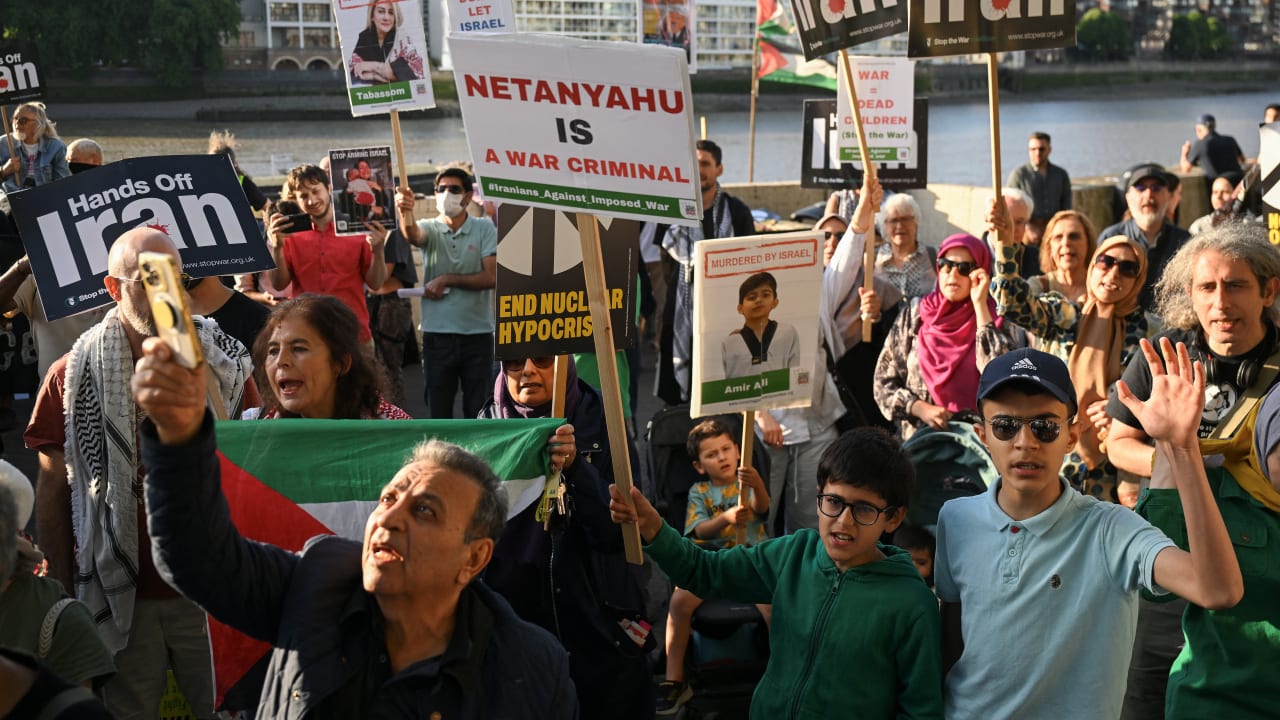
And then there is the question of Israel: the single sharpest test of whether the West's proclaimed values are genuine commitments or situational performances. The state of Israel is a liberal democracy, born in the aftermath of history's most systematic attempt to exterminate a people, surrounded since its founding by adversaries committed to its destruction. It is also, by any honest accounting, the primary target of the same radical Islamist ideology whose penetration of Western institutions this essay describes. One might expect that a West committed to liberal democracy, to women's rights, to the rule of law, and to the security of minorities, would find in Israel a natural ally and in its enemies a natural adversary.
What one observes instead is something close to the opposite. Israel has become, in the dominant discourse of Western academia, media, and activist politics, the designated villain of the modern age. Despite being the prime target of the same bad actors, it’s steadfast refusal to become hostage to it see it held to standards applied to no other state, subjected to a scrutiny from which movements explicitly committed to genocide are routinely exempted, and used as a vehicle through which the broader project of delegitimizing Western liberal order is advanced. The people most loudly calling for the elimination of Israel are, in many cases, the same people most loudly claiming to speak for progressive values. The incoherence is not incidental. It is diagnostic.
To single out the world's only Jewish state for a standard of condemnation applied to no comparable actor, while extending to its most violent enemies either silence or sympathy, is not a political position that emerges from consistent principle. It is a position that emerges from the same underlying calculation that drives the broader syndrome: the belief, unspoken and perhaps unexamined, that the path of least danger lies in appeasing those who have already demonstrated their readiness for violence, not in standing with those they have targeted.
The question that follows from all of this is the hardest one of all, and it deserves to be asked without flinching: how does a civilization extricate itself from a collective, largely subconscious trauma inflicted by those it allowed inside its own walls?
The language of therapy is instructive here, because that is precisely what this is: a civilizational trauma response. Before any group therapy can begin, before the West can sit in a circle and honestly examine what has been done to it and what it has done to itself, it must first escape its hostage status. And that is no simple undertaking. The particular cruelty of this situation is that the captors were not smuggled in under cover of darkness or parachuted behind enemy lines. They were invited. They were welcomed. They arrived through open borders and liberal asylum frameworks and multicultural policies designed, in good faith, to demonstrate that Western societies were better than the nativist alternatives. The welcome mat was not a trap set by the West's enemies. It was woven by the West's own hands, from the very values it is now being strangled with.
You cannot simply remove a captor who has been given a house key, a seat at the table, a platform in the institutions, and, in some cases, a place in the legislatures. Extrication, in these circumstances, is not an event. It is a process, and it begins with something even more psychologically demanding than policy reform: it begins with the willingness to look clearly at what happened and say, without euphemism, that it was a mistake. Not a crime. Not a conspiracy. A self-harming mistake, made by people who believed in openness, and who did not reckon sufficiently with those who would use that openness as a weapon.
What does recovery look like?
The first step, as in any psychological disorder, is recognition. The West needs to be honest. Not performatively honest. Not honest in the narrow ways that attract social approval, but genuinely, rigorously honest about what has happened to its institutions and why. It needs to acknowledge that the aversion to scrutinizing radical Islamism is not a principled stand against bigotry but a conditioned response to threat. It needs to recognize that the Red-Green Alliance is not a coalition of the marginalized but a coalition of the fearful, and that the cause it has served is neither justice nor liberation.
It needs, most of all, to recover the confidence that free societies are worth defending. It requires a strategic re-calculation as a moral conviction.
Stockholm Syndrome is ultimately a failure of self-respect. The hostage who sympathizes with the captor has come, at some level, to believe that their own life and values are not worth the cost of resistance. The cure is not aggression. It is the quiet reacquisition of the belief that you have something worth protecting, and the willingness to say so clearly, without apology, and in the face of whatever disapproval that clarity attracts.
The West was not built by people who confused appeasement with virtue. It will not be saved by them either.
The writer is a business strategist, investor, and commentator with 30 years' experience across financial markets and the technology sector. He writes on geopolitics, finance, the Middle East, and the challenges facing Western democracy.