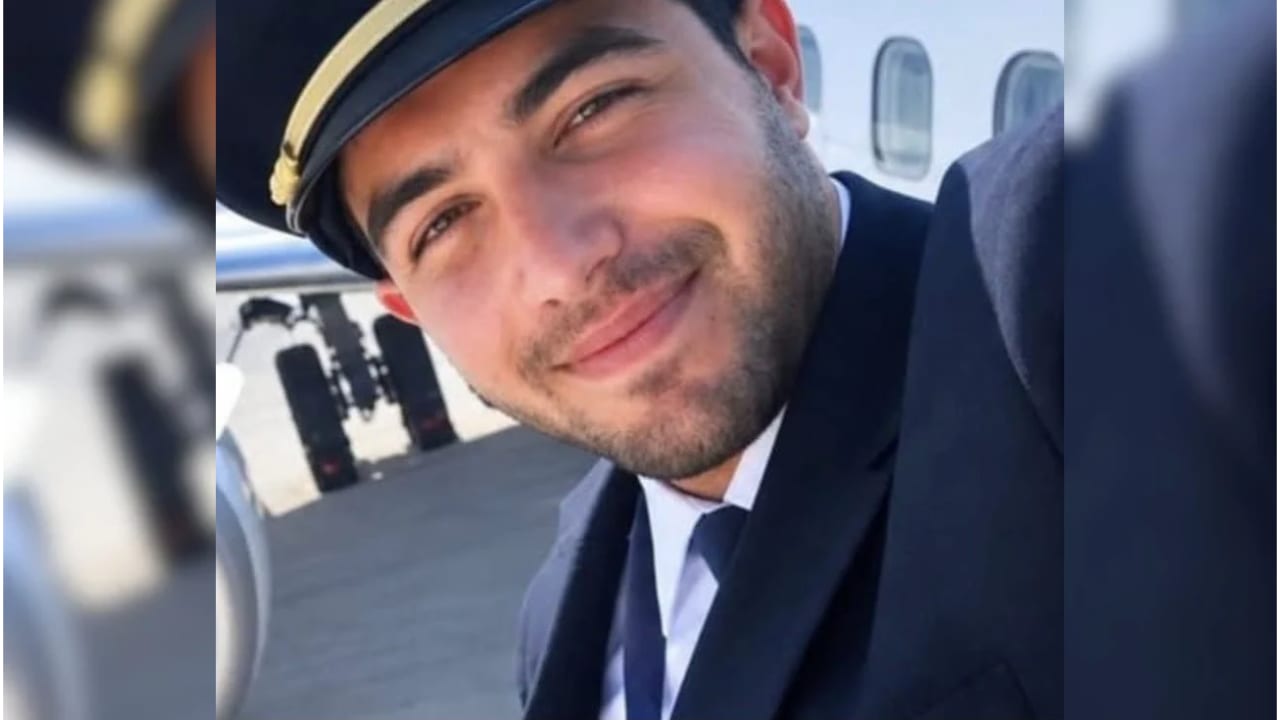
The foiled hijacking of the flydubai flight gave Israelis a temporary dose of national pride as a potential disaster was miraculously averted by the quick action of civilians.
But beneath that sense of relief lies the sobering message that terrorism is never far away, and that the next threat may not always be easy to recognize.
As if to reassure the public, media outlets have been reporting that the hijacker/co-pilot was a “lone wolf,” as though that revelation would make the public feel safer.
But what does “lone wolf” actually mean?
Presumably, that he was not sent, financed, trained, or given logistical support by a known terrorist organization or state.
And why should that be reassuring? Ostensibly because it means that no recognized terrorist actors were directly involved in this attack, and thus one can naively believe that they are curtailing their activities.

“Lone wolf” might mean that he acted truly independently. For example, he had recently lost his job or been spurned by his girlfriend and decided to commit suicide in a grandiose fashion.
Or perhaps he was psychotic and acted uncontrollably because of his condition.
In such cases, he could indeed be viewed as a lone wolf, with no connection to an established terrorist infrastructure or broader ideology. More importantly, such an attack could reasonably be an isolated incident with no portent of future attacks.
But that is not what “lone wolf” means here. In this case, “lone wolf” indicates that the planning and execution of the attack were carried out without outside assistance.
Yet, it is reported that the attacker, Hamam al-Hammami, attended radical mosques, was influenced by extremist imams, was taught that jihad was his path to salvation, came to believe that Jews and Israel should be eradicated, and ultimately acted on those messages.
It may well be that he organized the details of the hijacking on his own, but for years he was influenced by terror organizations. He was not “lone” in his beliefs. He had well absorbed the lessons of a not-insignificant sub-group within Islam.
The distinction between this type of “lone wolf” and a conventionally organized terrorist attack is whether professional terrorists directly instructed and assisted him in this operation, or whether they taught and indoctrinated him so thoroughly that he was inspired to carry it out on his own.
Either way, this is hardly reassuring. In fact, acting as a lone wolf may even be more concerning.
It suggests that indoctrination can be so effective that an individual no longer requires the technical, financial, or operational support of a terrorist organization to carry out a murderous attack.
Such attacks can be at least as dangerous as those carried out by organized terrorist groups, and far more difficult to detect in advance.
THE MORE useful distinction is not between a terrorist who acted alone (the so-called “lone wolf”) and one who did not. Rather, it is between someone who was truly unaffiliated and someone who was operationally alone but ideologically connected.
A terrorist does not need to receive a phone call, a payment, or a set of instructions from an organization to be linked to it. The connection can be having been influenced by their ideology.
If an extremist movement disseminates its ideology and succeeds in motivating individuals to identify targets, plan attacks, and act without direct assistance, that is not a sign of weakness, but quite the opposite.
It may be a sign that the terrorist state/organization has been very successful in transmitting its ideology such that the terrorist acts even without an organizational command structure.
In the flydubai hijacking, the absence of organizational control coexists with the presence of ideological causation, and such acts of terrorism are decidedly not those of an individual acting alone.
The media, by using the term “lone wolf,” is actually aiding the terrorist network by obscuring the true source of the attack: the Islamic radicalization that this miscreant underwent. It is shielding those truly responsible, those who sent him, albeit indirectly.
The absence of a command structure does not mean the absence of influence, encouragement, or ideological infrastructure.
In some cases, decentralized radicalization may actually be an advantage to terrorist movements because it makes both attribution and prevention more difficult.
The media has an important responsibility to examine and report on the source of an attacker’s radicalization. Labeling a terrorist a “lone wolf” without noting the ideas, influences, communities, or propaganda that shaped his worldview can leave the public with a dangerously incomplete picture.
The central question should not be only whether someone received direct orders, advice, or funding from a terrorist organization, but also what convinced him that terrorism was justified in the first place.
Understanding that process means identifying the sources of extremist indoctrination and examining how those ideas reached the individual.
If the public is to understand the threat, and if a sane society is to have any hope of preventing similar attacks, the pathway to radicalization deserves at least as much attention as the mechanics of the attack itself.
In that regard, the media is failing by labeling him a lone wolf.
The writer is a professor of brain science at Bar-Ilan University.