
Some relationships between countries are measured through agreements. Others acquire a face, a voice, and a smile. For Israel, Thailand is both a longstanding partner and the source of heartwarming human connections.
As the countries enter their 73rd year of diplomatic relations, it is worth looking beyond Thailand’s beautiful beaches and popular vacation destinations to recognize the depth of Israel’s relationship with a people whose culture offers an impressive lesson in respect, restraint, and hospitality.
I experienced the spirit of this friendship at a dinner hosted by Thailand’s ambassador to Israel, Boonyarit Vichienpuntu. The dinner honored Ami H Orkaby, dean of the Israeli Consular Corps, and me in my capacity as vice dean and acting dean.
Alongside the warm hospitality and excellent cuisine, the ambassador’s friendly personality stood out. During our conversation, I was impressed by his desire to become better acquainted with Israel, understand its culture and society, and strengthen relations between the two countries through personal familiarity, attentive listening, and mutual respect.
His curiosity was also evident in his interest in Israel’s electoral system and the prospects of forming a coalition between its political blocs. His questions reflected a sincere desire to understand the complexities of Israeli society and the possibilities for cooperation within a country containing many different opinions.
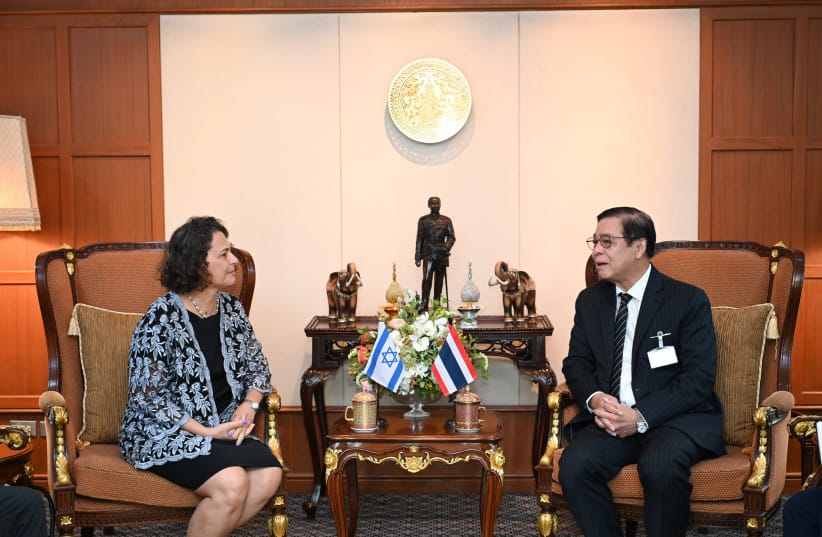
It was a pleasant encounter with a senior diplomat seeking to understand the people behind the headlines. Such a willingness to learn and listen provides an excellent foundation for deepening friendship between nations. This is diplomacy built patiently and through genuine interest in others.
Thai culture possesses a beauty evident in how people address one another, respect their elders, maintain their temples, practice their arts, and attend to detail.
Thai hospitality is not limited to courteous service. It allows guests to feel comfortable without embarrassing them or demanding anything in return. In a loud and impatient world, this approach reflects a human quality from which much can be learned.
One of its most beautiful expressions can be found at the dining table. At a traditional Thai meal, shared dishes are commonly placed in the center alongside each person’s rice, allowing everyone to taste a variety of flavors together.
Curries, soups, vegetables, and fish become part of a shared experience. To me, this conveys a beautiful message. A meal is an invitation to share, show consideration, offer something to another person, and receive something in return with courtesy, generosity, and affection.
Spicy, sweet, sour, and salty flavors come together in Thai cuisine with remarkable balance. Beyond the culinary skill, however, it is moving to see how food connects the people seated around the table.
What people eat matters, but so does the way they share it. A person who waits for someone else, serves that person a dish, and makes sure everyone is enjoying the meal gives real meaning to friendship. In this way, a simple meal becomes a language of closeness.
The bond between Israel and Thailand has also developed over decades in Israel’s fields, orchards, and greenhouses. Thai workers are important partners in Israeli agriculture.
Behind the general label “foreign workers” are individuals with names, families, hopes, and talents. Many have traveled far from home to provide their children with a better future. Their work supports Israeli farms and helps bring food to our tables. It deserves genuine public recognition.
On October 7, this relationship became intertwined with a tragedy: Thai workers employed in southern Israeli communities were murdered by Hamas terrorists, while others were abducted to the Gaza Strip.
People who came to Israel to earn a living found themselves confronting unimaginable cruelty far from their families. Thailand’s pain is part of the story of that day. We have a duty to remember those who were murdered, honor their families, and continue supporting the survivors after the cameras have moved on.
Protecting foreign workers
Our appreciation must find practical expression. Israel already has laws protecting foreign workers and requiring proper employment conditions, medical insurance, and suitable housing. Complementary and focused legislation is nevertheless needed to prevent exploitation, alongside firm enforcement of existing law.
Oversight must be strengthened. Complaint procedures should be made accessible in Thai. Illegal recruitment fees and improper deductions must be prevented, and workers must be able to report mistreatment without fear of retaliation.
Employers who exploit language barriers, economic dependence, or isolation must know they will be held accountable. At the same time, farmers who treat their employees with respect and provide good working conditions deserve recognition.
The requirements are simple: lawful wages, adequate rest, workplace safety, access to protection during emergencies, and humane treatment. This is a moral obligation toward people who work alongside us. It is also the appropriate way to preserve the trust of a friendly country and maintain our relationship with its citizens.
The same principle of reciprocity applies when Israelis visit Thailand. Israelis who enjoy its warm welcome must respect local laws and customs.
Raising one’s voice, shouting, and behaving aggressively are considered crude and impolite in Thailand. Even when a disagreement arises, it is possible to speak quietly, listen, and resolve the matter respectfully. A host’s smile is not permission to treat that person dismissively, and patience is not an invitation to test its limits.
The same applies to real estate. Legal options exist for purchasing apartments in Thailand, subject to conditions and restrictions, while foreign ownership of land is severely limited.
There have been reports of Israelis suspected of using nominee shareholders and corporate structures to circumvent the law. Suspicion is not a conviction, but the fundamental message is clear: anyone who purchases property in violation of the law harms both the host country and Israel’s reputation.
Friendship does not exempt anyone from the laws of the country offering its hospitality.
The misconduct of individuals must not overshadow a broad and positive relationship between people. Precisely because Thailand is so dear to many Israelis, we must cultivate respectful tourism, lawful investment, and direct relationships based on trust.
Cooperation in agriculture, innovation, medicine, and education can deepen further. Alongside official diplomatic meetings, encounters among students, artists, farmers, and families can give this friendship a living and enduring character.
Thailand deserves warm Israeli gratitude that extends beyond polite words. It deserves our efforts to learn about its culture, respect its citizens, and protect the workers who have entrusted part of their lives to us.
From a shared table in Bangkok to a greenhouse in southern Israel, a thread of hard work, generosity, and partnership connects our countries.
If we respond to Thailand’s hospitality with the same generosity and respect, we will give this friendship its most important gift: a better future for both peoples.
The writer is the CEO of Radios 100FM, an Honorary Consul and vice dean of the Consular Diplomatic Corps, president of the Israeli Radio Association, and previously served as a monitor for Israel Army Radio and as a television correspondent for NBC News.