Archaeology
'Nothing quite like it': UK Treasure Act names Roman carriage ornament Essex's first 'treasure'
According to the Act, archaeological finds can be given the status of Treasure if they are deemed to be of historical, archaeological, or cultural importance.

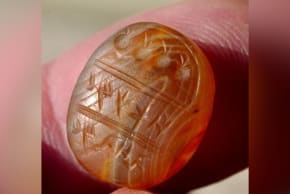
Stone seal from biblical Kingdom of Judea discovered during construction in northern Israel
Archaeologists discover Anglo-Saxon child buried with shield, spear in medieval cemetery in Kent
Researchers discover world’s oldest sewn hide, dated to Ice Age, in Oregon caves - study
In first-ever discovery, archaeologists find ancient Egyptian pleasure boat off Alexandria coast
Archaeologists uncovered the first known thalamegos near Alexandria’s ancient port, a 35-meter pleasure boat matching Strabo’s account and preserved with Greek graffiti and timberwork.

Hasmonean era 'first wall' section revealed at Tower of David museum excavation - interview
Israel’s Heritage Minister, Rabbi Amichai Eliyahu, called the discovery: “tangible and moving evidence of Jerusalem’s might and stature during the Hasmonean period.”

Massive 4,000-year-old pits near Stonehenge were carved by neolithic humans, archaeologists say
Research published in the Internet Archaeology Journal found that the pits are man-made and were constructed during the late Neolithic period, making them over 4,000 years old.

Slaves in Pompeii may have been better fed than many free Romans
The slaves lived on the ground floor, in rat-infested 16-square-meter cells that contained up to three people, but archaeologists think their nutrition was enhanced to keep up their productivity.

Civil Administration recovers dozens of looted artifacts from West Bank site
A targeted operation at "Burj Lasana," in Area B, near Wadi Haramiya, recovered Crusader- and Byzantine-era items from a villa built inside the site.

Ancient magnetite fossils may be remnants of a natural GPS used by marine creatures
Scientists say microscopic magnetite fossils may have enabled an ancient creature to detect Earth’s magnetic field, offering clues to how early species navigated long distances.

Archaeologists find record-size Ming Dynasty cannon at Great Wall of China
Chinese archaeologists uncovered the largest Ming Dynasty cannon ever found during excavations at the Great Wall’s Jiankou section, alongside rare artifacts and ancient structures.

Scientists solve the mystery of the prehistoric 'Burtele Foot'
The Burtele Foot showed that this species was bipedal but still had an opposable big toe, a feature useful for tree climbing - evidence that it walked upright.

Archaeologists uncover 15,000 unexpected artifacts beneath Tulsa cemetery
A routine search for unmarked graves at Oaklawn Cemetery has instead uncovered 15,000 artifacts that reveal a vivid, unexpected picture of early Tulsa.

Are mummies responsible for NJ Devils' string of injuries? Archaeologists, players weigh in
The strange tale of two mummies discovered beneath the Prudential Center collides with the Devils’ run of bad injury luck this season.
