Price: NIS 440,000
Competitors: Audi SQ6, BMW iX3
We liked: Design, ergonomics, spaciousness, performance, comfort, driving behavior, and pricing of base versions
We didn’t like: Range in the sport version
Rating: 8.5/10
The Wright brothers invented the airplane in 1903. But it was the automotive industry that soon tried to adopt ideas from its younger sister - from aerodynamic design, through flying cars, to steering systems without a physical connection to the wheels, based purely on electronics. The latter appeared as a concept in show cars already 20 years ago, but regulators made it clear at the time that it was too early to approve such a system for mass production.
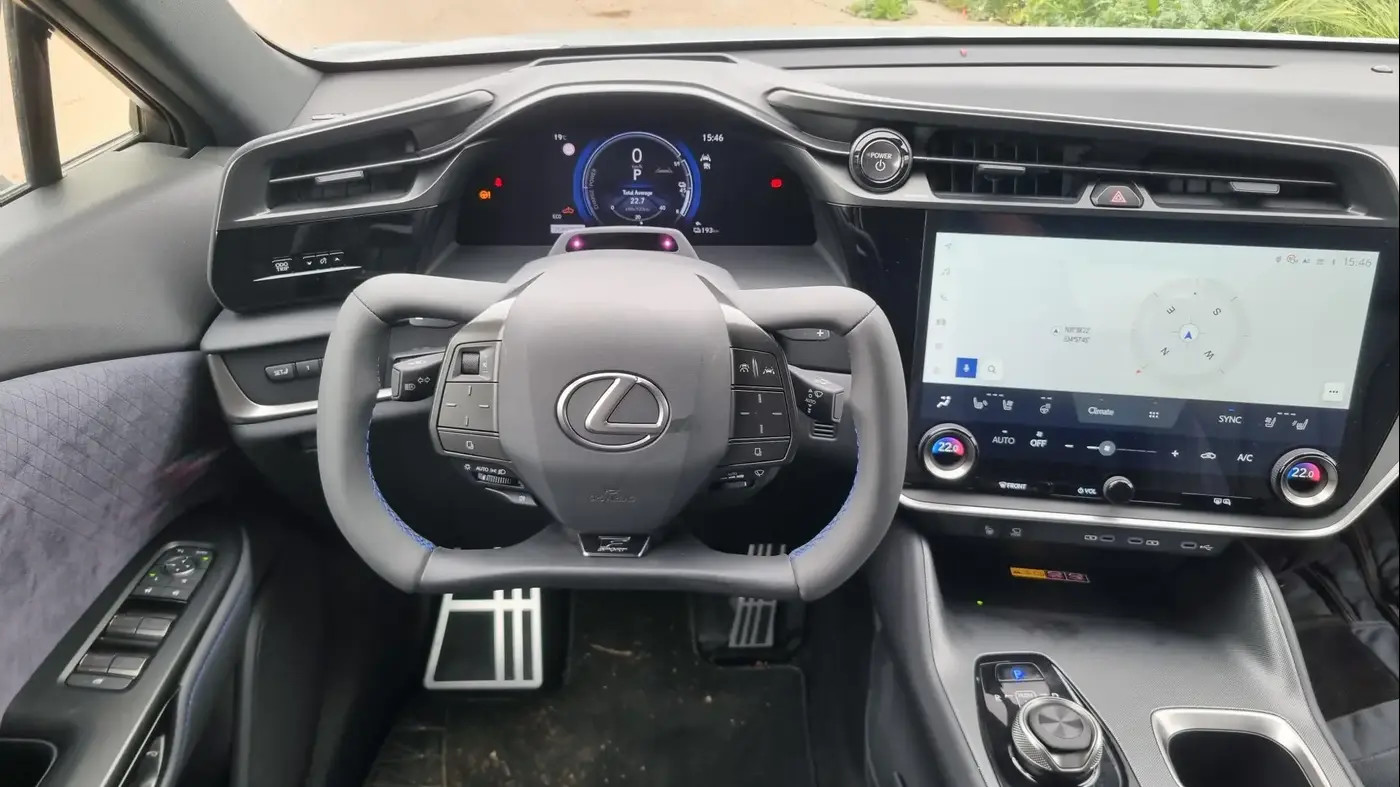
Tesla was the first to break through with such technology in the Cybertruck pickup in 2023. Lexus had already revealed its version when it launched the electric RZ, but only gave us a short drive and promised to implement such a steering system in the future. After additional development time, the future has arrived, and I am now driving the RZ550e with a steering wheel that looks like it was taken from a Boeing 787 - and with no steering column behind it. Life as a PlayStation game.
Ironically, Lexus, Toyota’s conservative luxury division, beat Mercedes, BMW, and Audi to this development. Perhaps because it wanted to prove it is not afraid to innovate, and to give the four-year-old RZ a renewed push as part of its facelift against the new BMW iX3, Mercedes GLC EQ, and Audi Q6 electric models. And all this while a wave of Chinese models proudly wear the “luxury car” label in the background.
Design
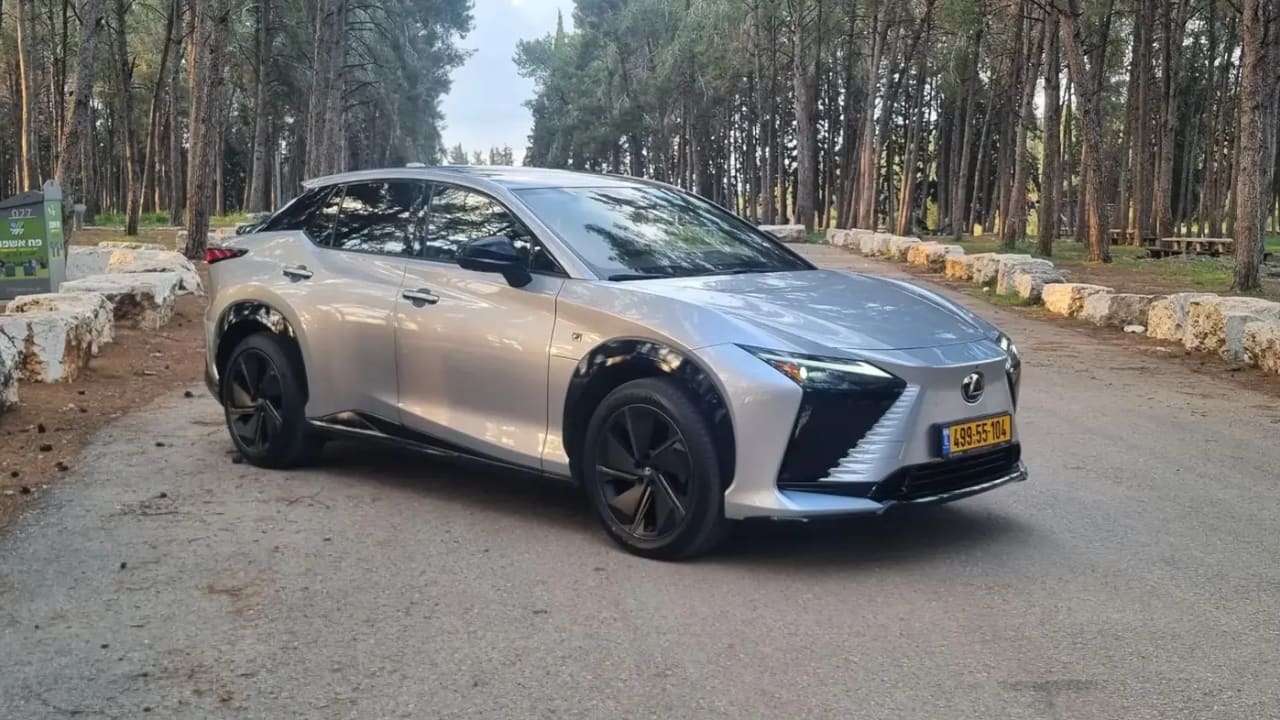
The RZ is based on the platform used by Toyota (bZ4X, C-HR+, and others) and Subaru (Solterra, Uncharted, and others). If within the Volkswagen Group Audi and Skoda can share platforms and components, the Japanese are also allowed to save costs. At 4.80 meters long, 1.895 meters wide, and 1.635 meters high, this is a fairly large vehicle, with a 2.85-meter wheelbase.
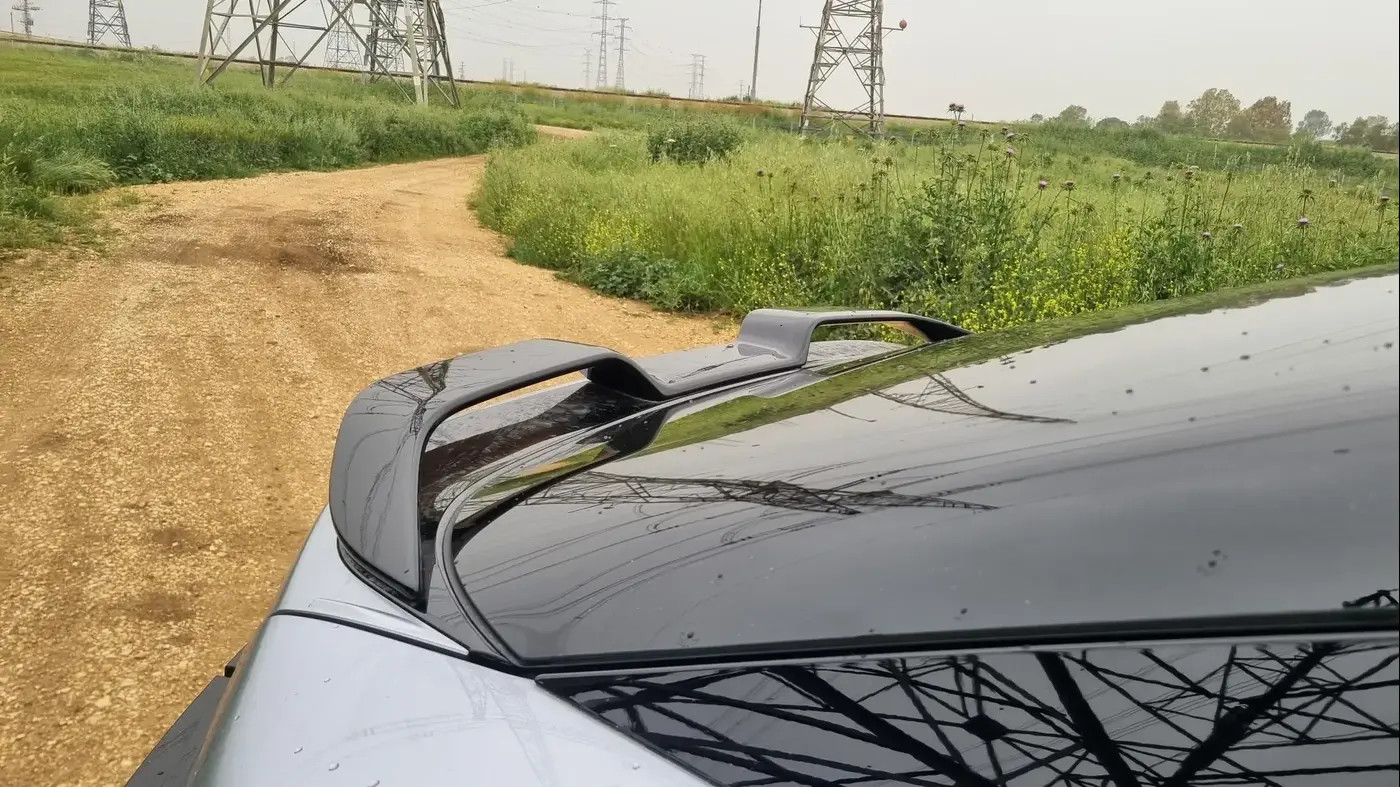
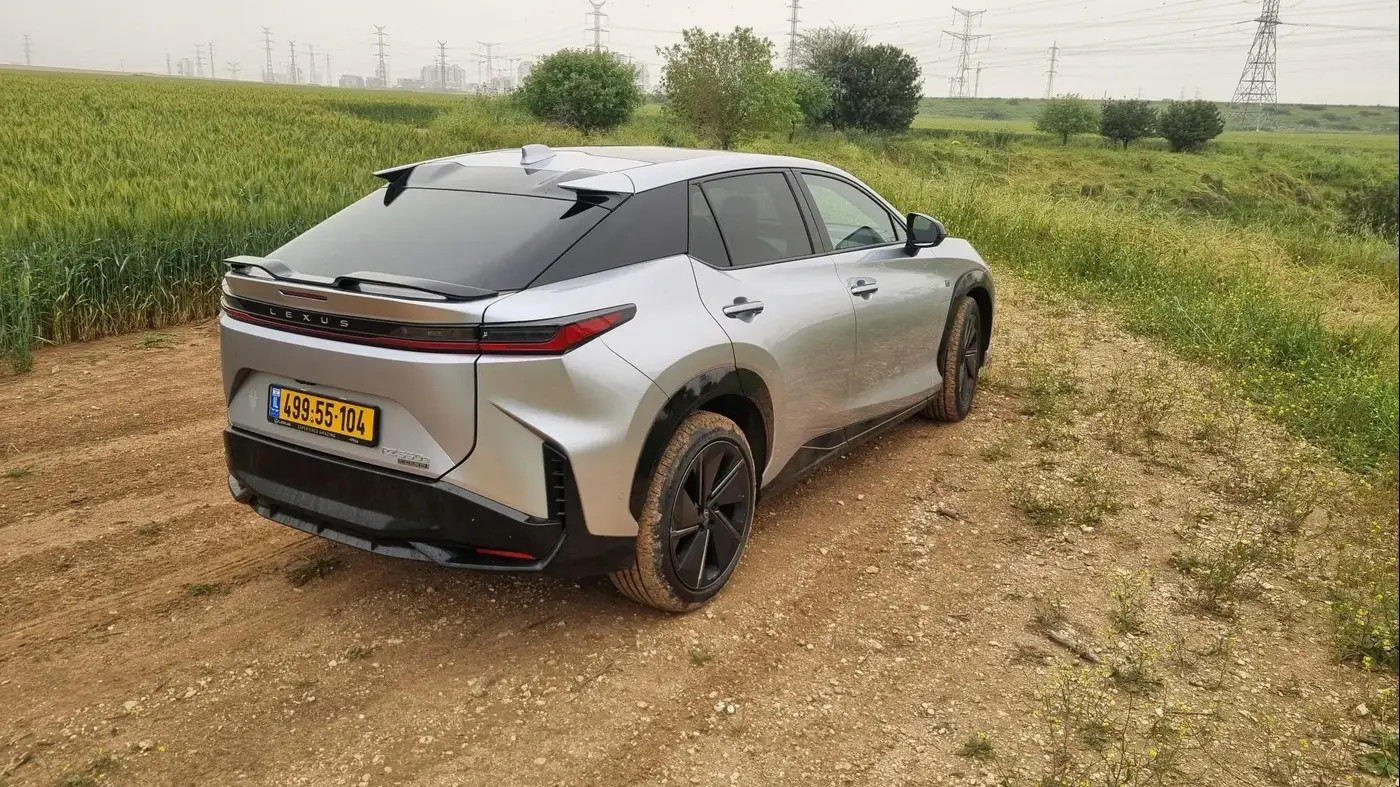
The F Sport version added in the facelift includes many sporty cues, such as wider rear wheels than front ones, a pair of spoilers, and even a rear diffuser. It stands out, but is not flashy.
Interior
Here too, there is no exaggeration. A 14-inch central screen, a 7-inch driver display, and a head-up display. In front of the driver is a yoke-style steering wheel - so not only the unseen technology resembles an aircraft, but the steering wheel itself does too. A Yoke steering system, similar to what Tesla also introduced.
It takes some time to get used to, though Lexus’ execution is better: There are more physical buttons on the wheel, and thanks to drive-by-wire steering, it turns faster at low speeds and slower at cruising speeds. It creates a different driving feel, but it would have been better if Lexus had offered a regular steering wheel as an option, even in the more powerful versions. Mercedes will soon launch its own version, and it won’t be the only one - this gimmick will be with us a lot in the coming years.
There are plenty of physical switches, and you don’t need the screen to adjust airflow direction from the air conditioning, but full climate control still requires using the screen. There is no glove compartment and no sunshade for the panoramic roof; instead, it uses glass that darkens via electrical voltage. It’s not certain that this will be enough to block strong sunlight on a hot day.
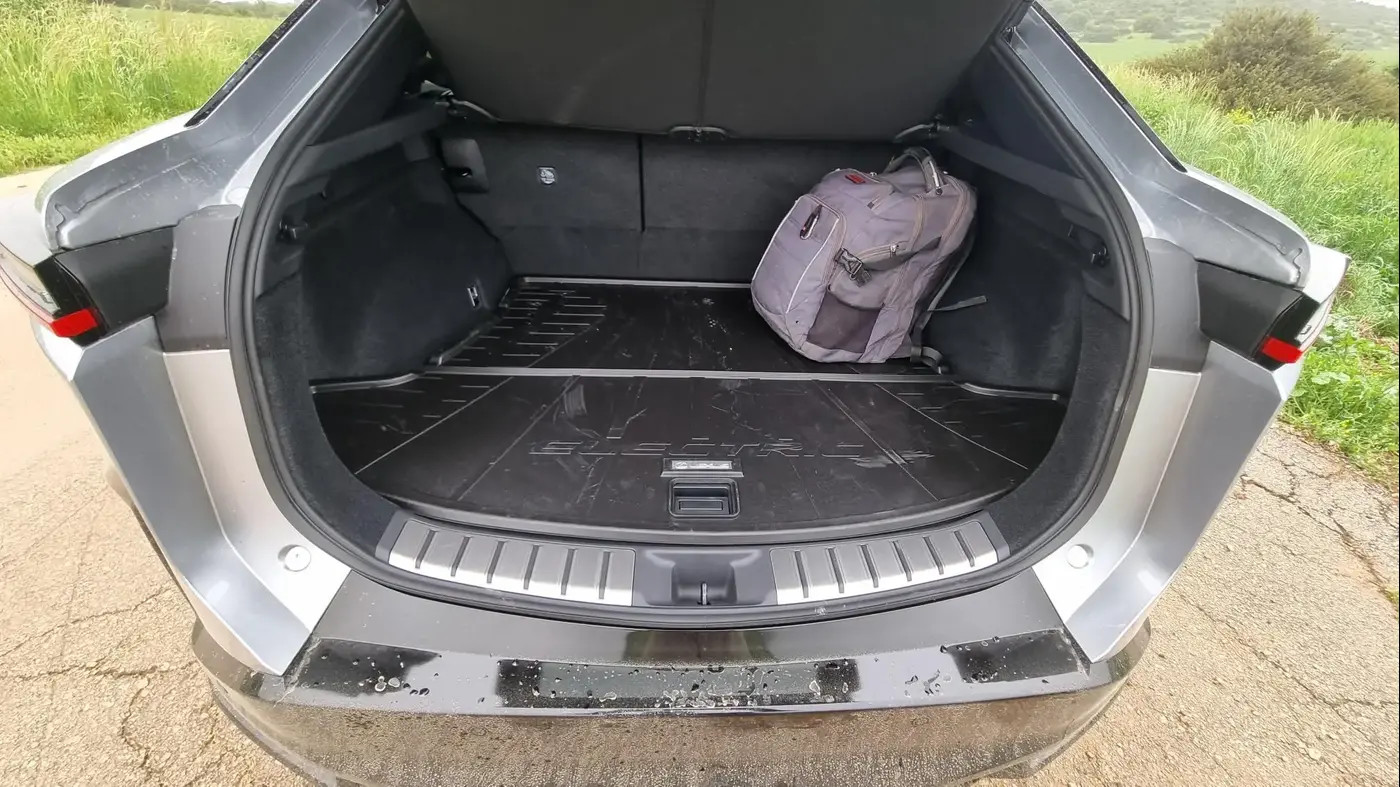
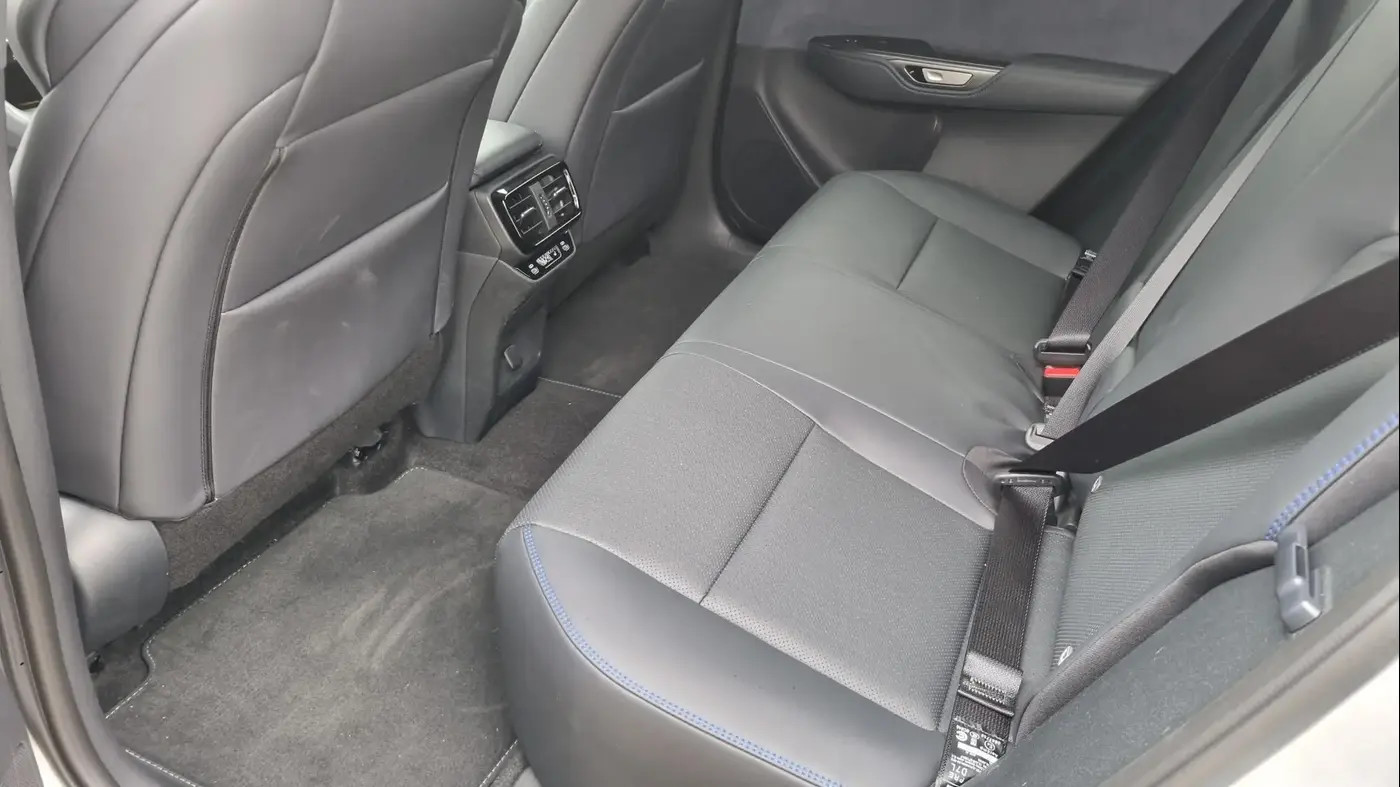
There is plenty of space in the front, and it is easy to find a comfortable seating position thanks to electric seat adjustment. The rear is also very spacious, especially for legroom, and the seatback angle can be adjusted. The seats themselves are deep and comfortable, upholstered in synthetic leather. The trunk offers a generous 522 liters and includes a power tailgate. Beneath it is an additional compartment for the charging cable and inflation kit that replaces the spare wheel.
Powertrain lineup
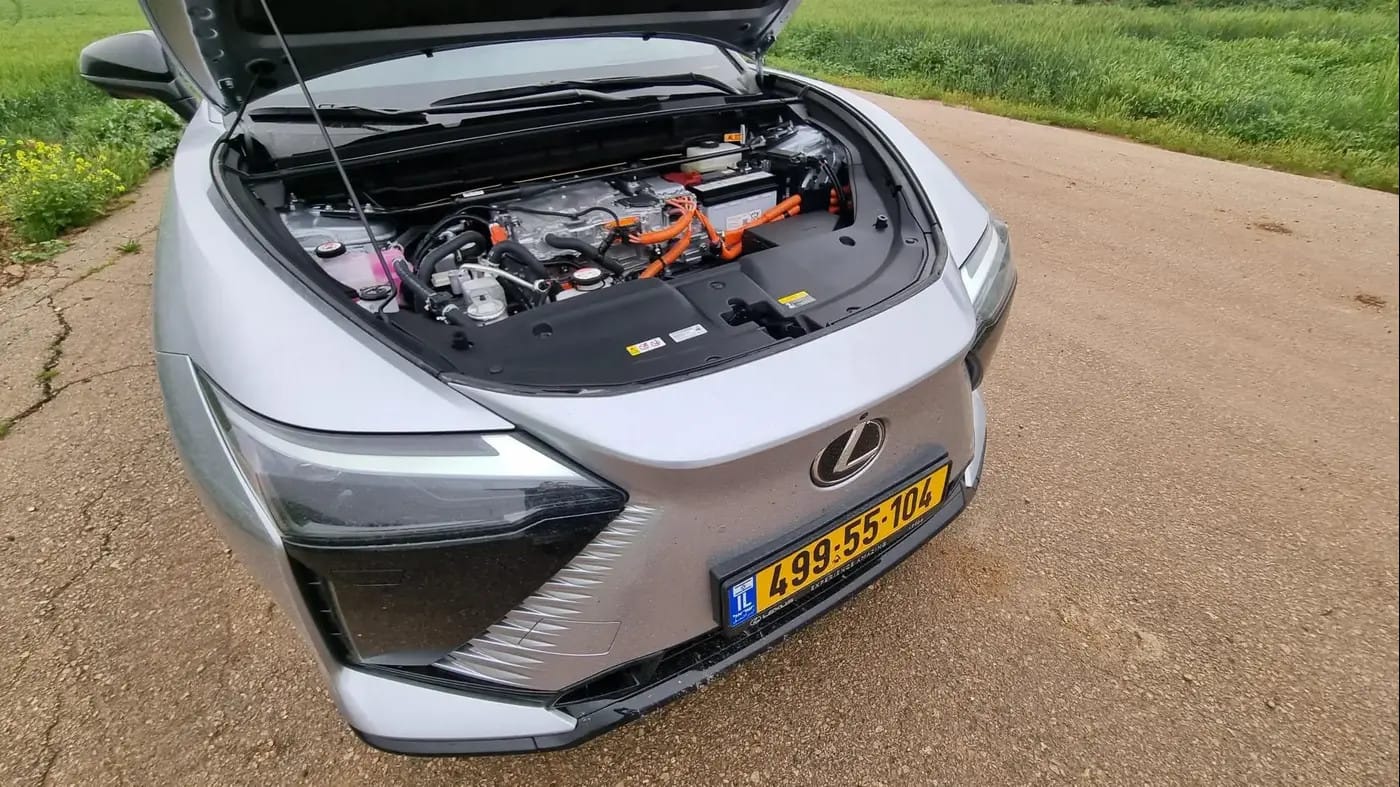
The range includes three power units and four trim levels:
RZ350e Kyushu (from NIS 300,000): Front-wheel drive with 224 hp, 7.5 seconds 0–100 km/h, 160 km/h top speed, and 558 km combined range. Equipment includes 18-inch wheels, 14-inch infotainment screen with Android Auto and Apple CarPlay (not wireless), synthetic leather upholstery, panoramic roof, heated electrically adjustable front seats, power tailgate, and surround cameras.
RZ350e Hodori (from NIS 320,000): Adds head-up display, ventilated front seats, and driver seat memory.
RZ500e Takumi (from NIS 420,000): Upgrades to all-wheel drive with 380 hp, 4.6 seconds 0–100 km/h, 180 km/h top speed, and reduced range of 457 km. Adds 20-inch wheels, upgraded upholstery, electrochromic panoramic roof, Mark Levinson sound system, rear seat heating, and steer-by-wire.
RZ550e F Sport (from NIS 440,000) tested here: Power increases to 408 hp, 4.4 seconds 0–100 km/h, 180 km/h top speed, and range slightly improves to 463 km. Adds rear spoiler, sport seats, automatic parking assist, and simulated gear shifting.
Safety
5-star Euro NCAP rating with 12 airbags. Also includes autonomous emergency braking forward and reverse, adaptive cruise control, lane keeping assist, blind-spot monitoring, driver fatigue monitoring, and alerts for forgotten children or door opening, among others.
Power and performance
To enhance the sporty character, Lexus installed a “manual mode” in this EV: Behind the steering wheel are paddle shifters for “up” and “down” gears, with 8 virtual gears and sound generated through the speakers. Some drivers may find this helps transition to an electric car, but the feeling is artificial and forced.
In the Hyundai Ioniq 5 N the execution is better, but this is a feature that could have been omitted. This electric car doesn’t need these crutches to appeal to drivers - it is good enough on its own. Performance is excellent, with four driving modes available: Eco, Normal, Sport, and a custom mode.
Range and charging
Performance always comes at the expense of range, but here, despite most of the driving being relaxed, the gap between manufacturer figures and reality was relatively large. Real-world range stood at about 350 km only. Fast charging is possible at up to 150 kW, and AC charging at up to 22 kW, which is relatively fast.
Comfort and handling
Comfort is surprisingly good, especially for an EV and even more so for a sporty model. Even in the city, the RZ is fine and always quiet.
Handling is also good. The RZ550e is very quick in corners thanks to AWD, which distributes power between all four wheels, and together with the unique steering system it delivers a different experience compared to other luxury EVs. However, despite its responsiveness, the steering completely lacks feel - like a video game.
Bottom line
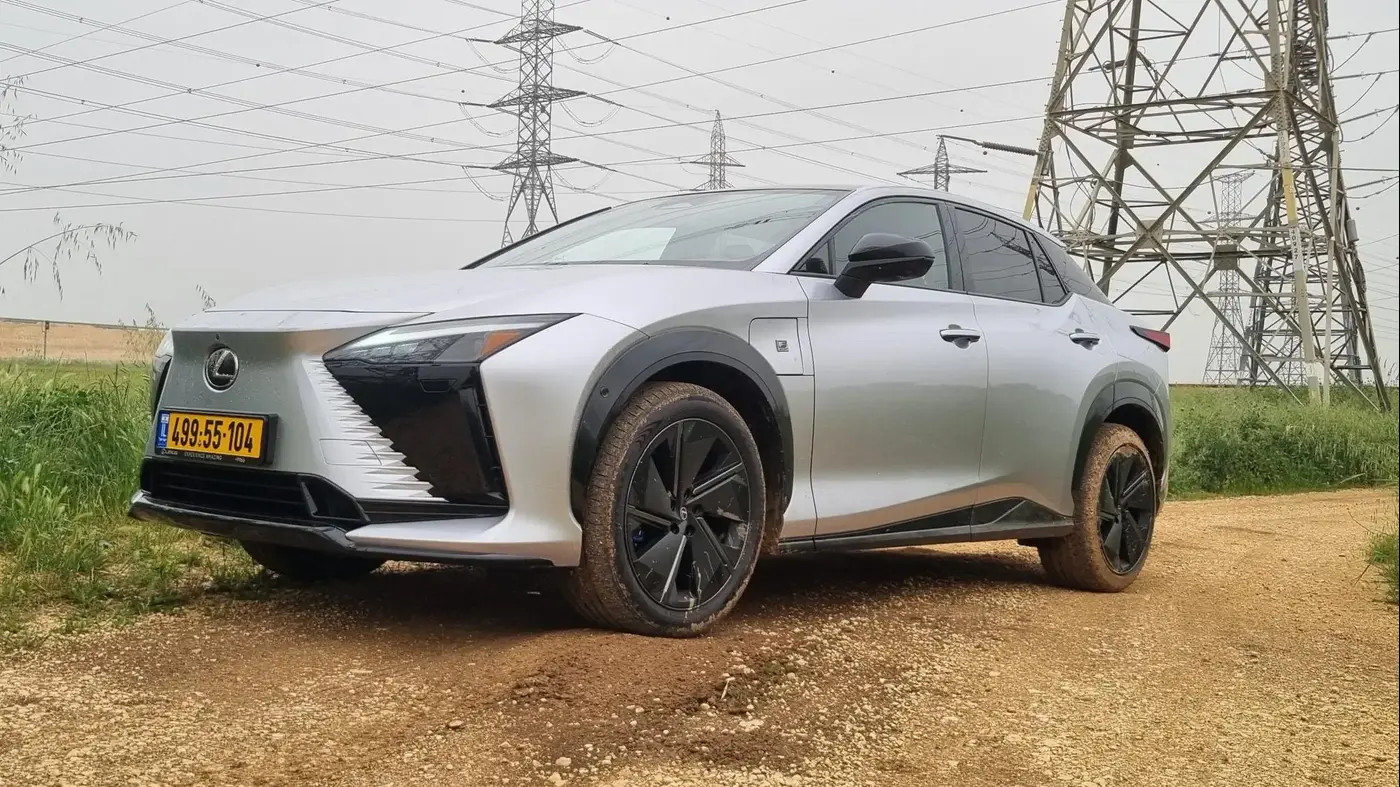
The F-Sport is an interesting attempt by Lexus to do something different, and at a price about NIS 200,000 lower than equivalent German rivals. But it is more sporty in specification and technology than in actual sensation. Real-world range is also disappointing.
So perhaps the base models are actually the best deal here; their price dropped by about 10% after the facelift, bringing them very close to the Xpeng G9 while offering similar dimensions, longer range, excellent ergonomics, and the Lexus badge, which performs strongly in the used market. A Japanese car at Chinese prices? Lexus proves it is already possible.
In any case, even if the steering and performance create the feeling of a car that could “attack Iran on the way to the office,” the base models are the real victory over oil producers and terror regimes. Every electric RZ that hits the road is another small blow to the ayatollahs and their ability to cause harm to the world.
Lexus RZ 550e F-Sport: Specification sheet
Engine: Two electric motors, 408 hp
Transmission: Automatic, direct drive, 8 artificial gears in manual mode, all-wheel drive
Electric system:
Battery capacity: 77 kWh
AC charging: 22 kW
DC fast charging: 150 kW
Performance (manufacturer):
0–100 km/h: 4.4 seconds
Top speed: 180 km/h
Combined range (claimed): 463 km
Combined range (tested): 350 km
Dimensions:
Length: 4.80 m
Width: 1.90 m
Height: 1.64 m
Wheelbase: 2.85 m
Cargo capacity: 522 liters
Curb weight: 2,200 kg
Safety:
Euro NCAP: 5/5 stars
Active safety: Autonomous emergency braking (front and rear), adaptive cruise control, lane keeping assist, blind-spot detection, driver fatigue monitoring, and more
Warranty:
3 years or 100,000 km, 8 years or 160,000 km for the battery. Battery warranty can be extended for NIS 1,000 per year up to 1 million km or 10 years.