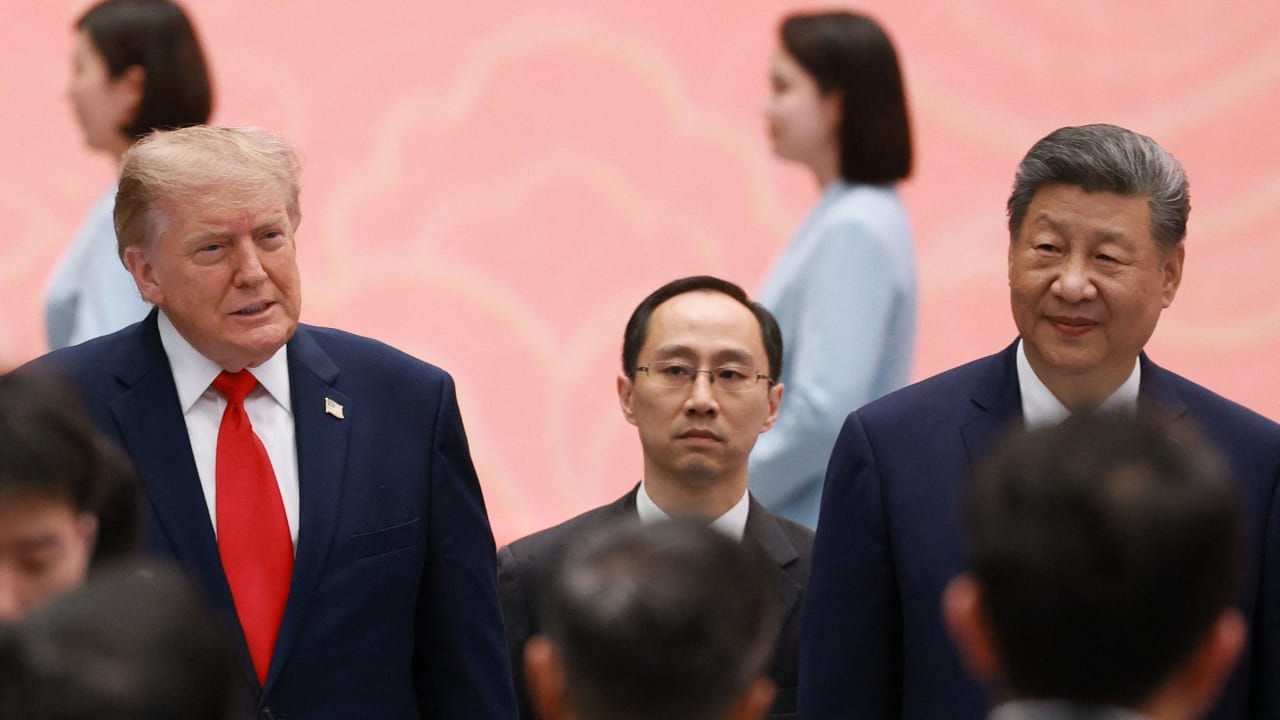
The leaders of the United States, China, and Russia are preparing for a historic trilateral summit in Shenzhen on Thursday, a meeting that could have important implications for the future of the international order.
US President Donald Trump, Chinese President Xi Jinping, and Russian President Vladimir Putin are expected to discuss nuclear weapons, the wars in Iran and Ukraine, and the broader balance of power among the world’s leading countries.
Trump’s visit to China is symbolic and is part of a tradition of US-China talks that date back to the last century. US President Richard Nixon visited the People’s Republic of China for a week in February 1972. His visit came against the backdrop of the Cold War and détente.
Nixon was the first sitting US president to travel to mainland China, ending over two decades of diplomatic isolation between Washington and Beijing. His national security advisor, Henry Kissinger, made a secret trip to Beijing in July 1971 to meet with premier Zhou Enlai.
Since then, more US presidents have visited China: Gerald Ford in 1975, Ronald Reagan in 1984, George H.W. Bush in 1989, and Bill Clinton in 1998.
China seeks greater global influence amid wars and shifting power dynamics
George W. Bush traveled to China numerous times as US-China ties appeared to be growing even more important. He went at least four times from 2001-2008. This was followed by several visits by Barack Obama and also two previous trips by Trump, one in his first term and one this past May.
China has changed immensely in that time. It has gone far beyond a doctrine of “hide your strength, bide your time,” a feature of Deng Xiaoping’s reform era in the 1980s and early 1990s and of his successor, Jiang Zemin.
That has been replaced by what some see as China’s more aggressive policies these days, as it seeks to take up the mantle of global leadership.
China’s rapidly expanding navy is a sign of its growing power. Like the Royal Navy and then the US Navy in the early 20th Century, China is becoming a global naval power with a trend that could upend the US-led global order.
The current summit in China is taking place alongside the Asia-Pacific Economic Cooperation (APEC) meetings, which China is also hosting in Shenzhen. The gathering provides Beijing with an opportunity to present itself as a central player in international diplomacy and economic cooperation.
Chinese state media has emphasized the importance of the occasion. The three leaders would hold an in-depth exchange of views on important issues concerning global peace, Chinese Foreign Ministry spokesperson Guo Jiakun said Wednesday, China’s official Xinhua News Agency reported.
The meeting comes at a time when the international system is under increasing strain. The war involving the US, Israel, and Iran has disrupted energy markets and maritime trade.
Russia’s war in Ukraine continues to divide Moscow and Western countries, while tensions between Washington and Beijing have raised questions about the future of trade, technology, and security in the Indo-Pacific.
China sees these wars as accelerating global change. This is not just about a multipolar world order. This is about how China believes it can step into the power vacuum that may be left by a decline of the US or Russia.
For Trump, the summit offers an opportunity to pursue agreements with two of America’s principal strategic competitors. For Xi, it is a chance to demonstrate China’s growing international influence. Putin, meanwhile, can use the meeting to reinforce Russia’s status as a major power whose interests must be considered in discussions about global security.
China presents its vision of international cooperation. It has sought to frame the Shenzhen meetings around openness, innovation, and economic integration.
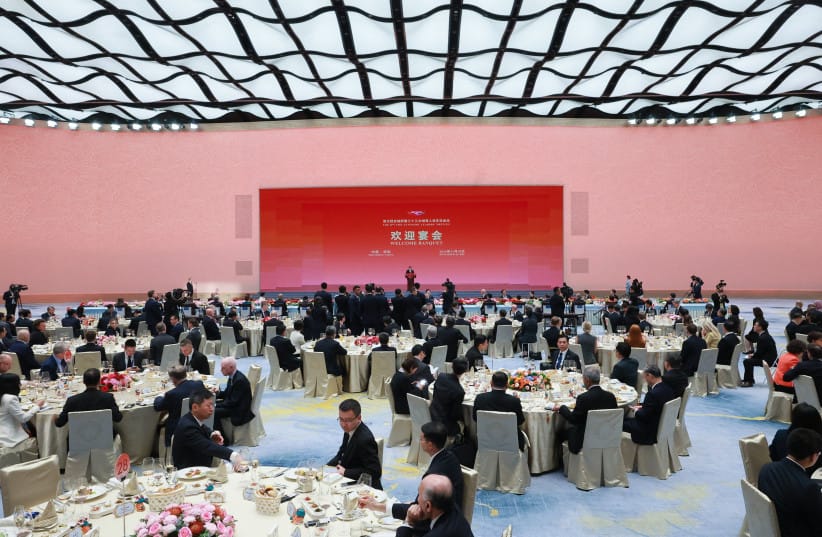
On Wednesday, Xi and his wife, Peng Liyuan, hosted a banquet welcoming international leaders attending APEC. He described Shenzhen as an example of China’s economic transformation and its engagement with the wider world, Xinhua reported. Openness was deeply rooted in the city’s identity, while innovation and cooperation had contributed to its success, he said.
APEC had helped make the Asia-Pacific one of the world’s most dynamic economic regions, Xi said at the APEC Summit. He called for greater regional integration and cooperation among governments and businesses.
The APEC gathering brought together more than 2,000 representatives from more than 30 economies, including Britain, France, Germany, and Switzerland, Xinhua reported.
The economic importance of the region is substantial. APEC economies account for about 40% of the world’s population, more than 60% of global GDP, and nearly half of international trade.
These figures illustrate why the summit matters beyond the relationship among Washington, Beijing, and Moscow. Decisions affecting trade, investment, technology, and security in the Asia-Pacific can have consequences for the global economy.
Xi, Putin promote multipolar world order ahead of trilateral summit
China and Russia are also promoting a multipolar world. Xi met with Putin in Shenzhen on Wednesday, ahead of the trilateral summit. He said China-Russia relations had brought greater stability and certainty to a world experiencing turbulence and transformation, Xinhua reported.
Xi highlighted two anniversaries: 30 years since the establishment of the China-Russia strategic partnership of coordination; and 25 years since the signing of their Treaty of Good-Neighborliness and Friendly Cooperation.
The relationship was an example of cooperation between major powers based on equality, mutual respect, and shared interests, he said.
Xi also called on China and Russia to deepen cooperation and promote a multipolar world and what Beijing describes as the democratization of international relations.
This language is significant because China and Russia have increasingly advocated an international system in which American influence is balanced by other major powers.
Their vision contrasts with the US-led international order that emerged after the Cold War. China and Russia also have different interests, however, and their cooperation does not eliminate competition or disagreements between them.
Xi personally welcomed Trump at Shenzhen Bao’an International Airport on Wednesday. They was an elaborate reception involving military honors, national anthems, and Chinese fighter jets flying overhead, Xinhua reported. It was a reprise of the flyover when XI visited the US this past September.
At Joint Base Andrews during Xi’s arrival, two B-1B Lancer bombers flew overhead during the arrival ceremony and national anthem after Trump and First Lady Melania Trump greeted Xi and his wife on the tarmac. The overflight made a huge roar.
On Wednesday, Xi recalled his visit to the US and said he hoped to discuss bilateral relations, Asia-Pacific cooperation, and the wider international landscape. He appeared to be quietly referencing the flyover as well, Xinhua reported.
Trump thanked Xi for the reception and praised China and its leader, the report said.
Nuclear arms control expected to dominate Trump, Xi, Putin summit
An issue expected to dominate Thursday’s trilateral summit is nuclear arms control. Trump has expressed interest in reducing nuclear weapons and potentially establishing new restrictions involving the world’s three leading nuclear powers, UAE-based news site Al-Ain News reported.
The wars in Iran and Ukraine illustrate why the summit will impact the international order. China is a major consumer of Middle Eastern energy trade, including from Iran in the past, and has a direct economic interest in restoring stability to the Gulf and protecting maritime trade. Russia also has a history of involvement in negotiations concerning Iran’s nuclear program.
Trump has indicated that the wars in Iran and Ukraine could both be raised during the summit, despite earlier indications from American officials that Ukraine would not be on the formal agenda, Al-Ain News reported.
What if China seeks a role in diplomatic efforts involving both conflicts? This remains to be seen.
European officials were worried Trump might make concessions concerning Ukraine, the Al-Ain News report said, citing US news site Axios. European governments fear that decisions affecting their security could be discussed without their direct participation, the report said.
The significance of the Shenzhen summit will be seen in the months ahead.
For decades since the end of the Cold War, the US has led the international system. China’s economic and military rise, Russia’s confrontation with the West, and the growing importance of regional powers have challenged that arrangement.
Xi and Putin are explicitly promoting a multipolar order. Trump, meanwhile, has demonstrated an interest in negotiating directly with other powerful leaders on nuclear weapons, regional conflicts, and other pressing issues.
The three countries do not share a common vision of international security. The summit could establish a precedent for regular consultations among them.
For China, hosting the meeting reinforces its claim to a central role in global diplomacy. For Russia, participation demonstrates that Moscow remains an important player in decisions affecting international security. For Trump, the summit offers an opportunity to pursue agreements that could reshape relations among the world’s leading powers.
The question is whether the meeting will become the beginning of a more stable international framework or simply another encounter between leaders whose strategic interests remain fundamentally opposed. As the three presidents prepare to meet, the future of international order is at stake.