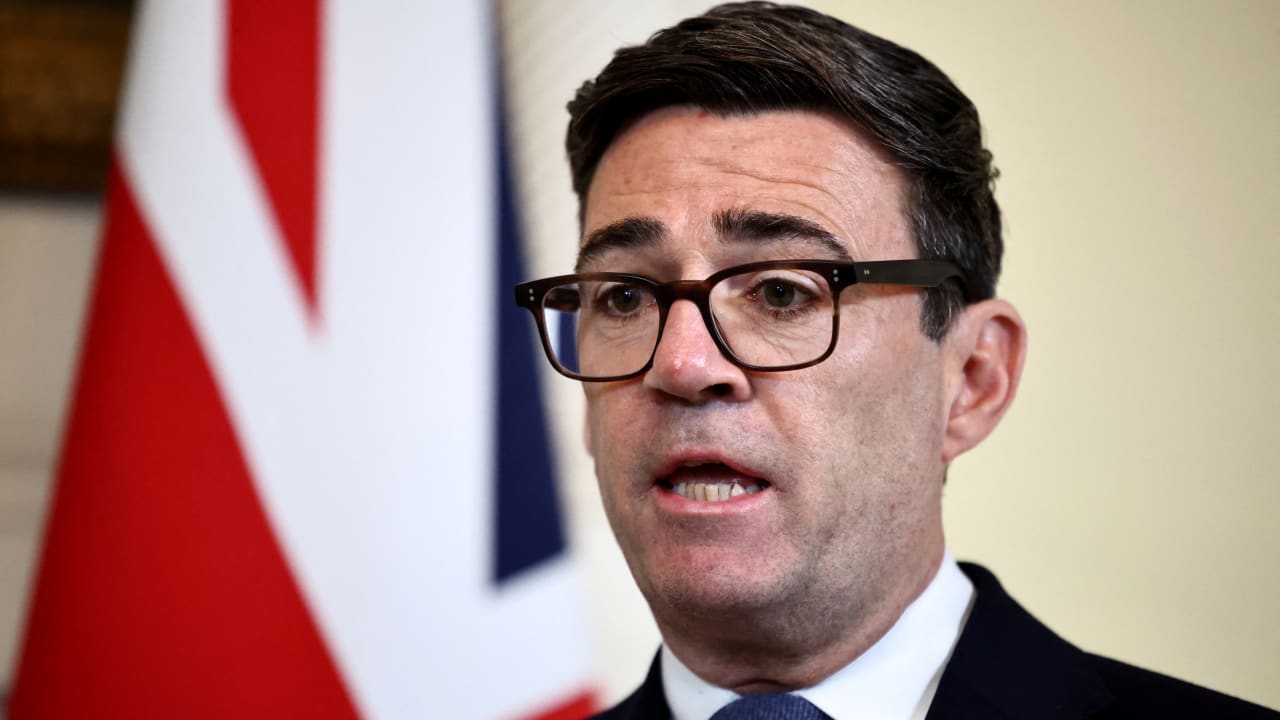
Britain and the European Union (EU) have agreed a reset deal and concluded negotiations on Friday, Prime Minister Andy Burnham's office said.
Downing Street said both sides had agreed timelines for implementing a youth mobility scheme, a sanitary and phytosanitary agreement, food export deal, and a link between their emissions trading systems, with details due to be published in a joint statement later on Friday.
Burnham said that the UK will continue to discuss possible options for closer ties with the EU, following the announcement of the "reset deal" he had reached with EU leaders.
"Ten years on from Brexit, today we open a new chapter. Repairing a broken status quo with a Britain that is closer to Europe," Burnham wrote in an official statement from Downing Street.
"This deal is a win-win - and it cuts costs for business, helps with the cost of the weekly shop, and creates opportunities for young people," he said.

"The world has changed dramatically since 2016. We’re dealing with war on our continent and a more hostile global economy. But because of this deal, the UK is stronger, and so is Europe. This is Britain believing itself again."
Burnham, who replaced Sir Keir Starmer as the UK's prime minister in July 2026, first brought the Brexit debate back to the table two months later. He has long expressed a desire to rejoin the EU, including in his 2024 book.
Key points in 'reset' deal
The deal aims to cut costs and reduce pressure on shop prices, making it easier for British producers to export goods to Europe and vice versa. It will also reduce the paperwork and checks on produce moving from Great Britain to Northern Ireland, which the UK government says will "reduce friction within the UK internal market and strengthening our Union."
"This food and drink deal will ease the pressure on supermarket prices, and could add up to £5.1 billion a year to the UK economy by 2040."
It also includes points about protecting the industrial heartlands of the UK, and making it possible for young people to live, work, study, or travel in Europe for up to three years without needing a prior job offer or having to meet language or salary requirements.
The last points are related to border security and coordinated responses to shared threats.
Joint EU-UK security initiatives
"Europe’s security is Britain’s security. Smuggling gangs work across borders, and the only way to beat them is to work with our neighbours," the statement explained.
"The UK and EU today also agreed to work closely together under the Channel Action Plan. That means joining forces to stop people smuggling and human trafficking, breaking up the criminal networks behind them, stopping people from abusing legal routes to come here, and working more closely with countries along the routes migrants take."
Additionally, the UK and EU have "committed to a new shared ambition across peace, security, and defence, recognising the exceptional breadth and depth of our partnership."
"Both sides will consult more regularly, connect their capabilities more effectively and coordinate rapidly in response to serious security challenges."
Providing support to Ukraine will remain a top priority for the UK, Burnham said. The UK and EU will also "crack down on Russia's 'shadow fleet' - the ships it uses to get around sanctions - by sharing intelligence and taking joint action."
They will take joint efforts to defend against cyber attacks and hostile activity, and start new talks on protecting our democracies, including keeping elections free and fair.