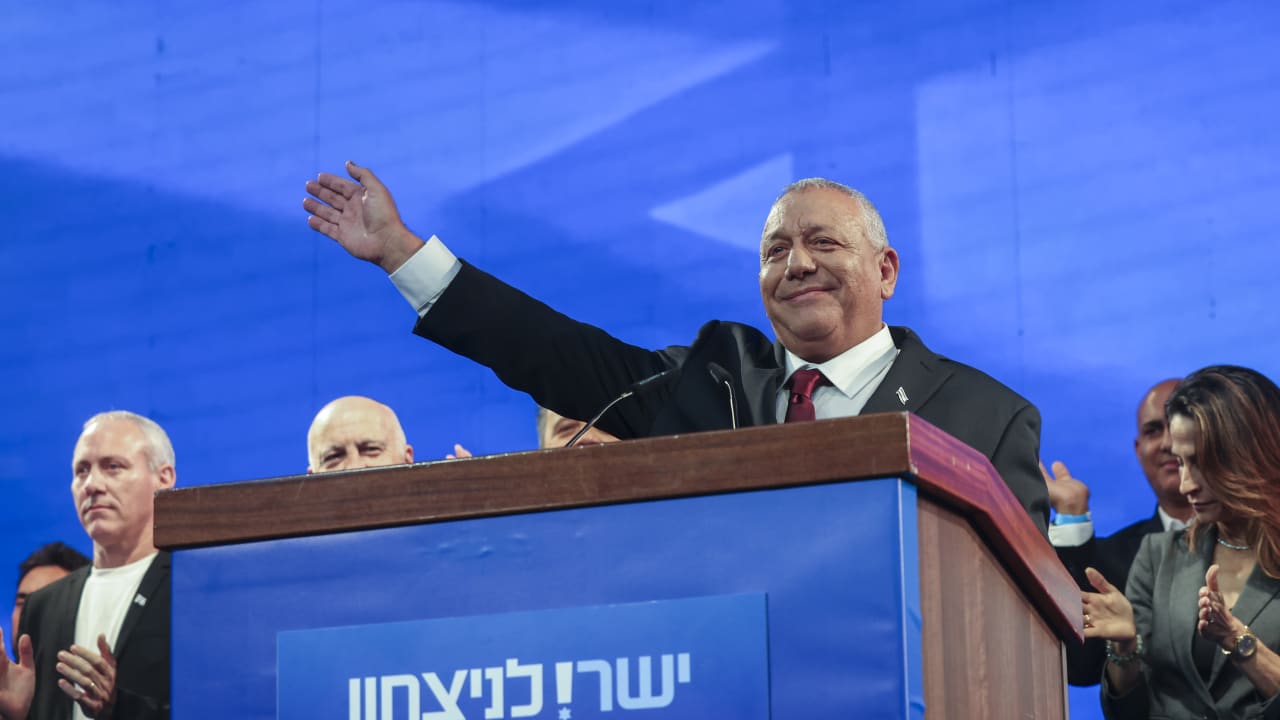
Yashar chairman Gadi Eisenkot laid out four principles for joining his proposed coalition on Saturday, saying that “any MK” willing to accept them could become a partner in forming the next government.
Election Day results saw Yashar win 21 seats in the Knesset, with the Eisenkot bloc at 48 total; the Likud won 27 seats, with Prime Minister Benjamin Netanyahu’s bloc at 53 overall; and the Arab parties won 19 seats.
After the completion of the vote count, Eisenkot said he intended to establish the broadest possible Zionist, statesmanlike government, bringing together elected representatives who agree on Israel’s fundamental character, national service obligations, and the need to eliminate Hamas’s military and governing capabilities in the Gaza Strip.
“Any MK willing to sign on to these principles is a potential partner in establishing a new government that will be good for Israel,” Eisenkot said. “The door to the government we establish will be open to any elected official who accepts these principles and is prepared to rise to the occasion.”
Eisenkot’s conditions for any prospective coalition partner are: The recognition of Israel as a Jewish, democratic, liberal, and egalitarian state; a commitment to the values of the Declaration of Independence; mandatory military, national, or civilian service for all Israeli citizens; and recognition of Hamas as a terrorist organization and acknowledgment of the obligation to destroy its military and governing power in the Gaza Strip.
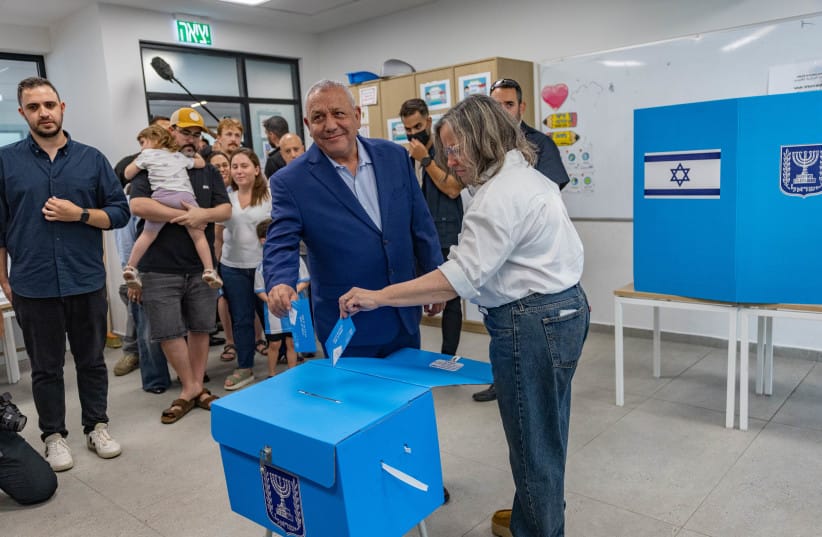
Eisenkot said the principles would serve as the foundation for a broad government based on national consensus, rather than one seeking to impose the will of one political camp on another.
This latest development came amid a demonstration in Tel Aviv calling for a government of Arab and Jewish parties.
What did Eisenkot promise during his campaign?
During the election campaign, Eisenkot pledged to establish a government capable of healing divisions and fundamentally changing Israel’s direction.
“I promised to reconnect Israel and put an end to the culture of lies led by Netanyahu that has torn us apart from within,” Eisenkot said. “I promised that under my leadership, one side would not defeat the other, and that the era of ‘us’ and ‘them’ was over.”
He said he would continue pursuing those commitments in the coming weeks while coordinating with his political partners to broaden the potential coalition.
“Based on these principles, I intend to establish the broadest possible Zionist, statesmanlike government,” Eisenkot said, adding that he aimed to fulfill the voters’ wishes and immediately improve Israel’s domestic and international standing.
Liberman denies reports he is interested in becoming Knesset speaker
Meanwhile, Yisrael Beytenu leader Avigdor Liberman denied reports that he was interested in becoming Knesset speaker in a post on X/Twitter on Saturday.
“The wicked never rest. I have received several inquiries regarding demands for the position of Knesset speaker. I have no desire and no intention of becoming Knesset speaker,” he wrote.