
President Isaac Herzog does not plan to pardon Prime Minister Benjamin Netanyahu in the near future, according to a New York Times report on Sunday.
Citing two senior Israeli officials with direct knowledge of the issue, the NYT said that Herzog will instead attempt to begin mediation to reach a plea deal.
According to the NYT, officials who wish to remain anonymous stated that Herzog does not wish to address Netanyahu's pardon at the moment, as his (the President's) primary goal is to foster unity, preferring instead to deal with the problem through negotiations.
The Jerusalem Post reached out to the President's office, which responded, “As President Isaac Herzog has stated on several occasions, President Isaac Herzog regards reaching an agreement between the parties in the cases against Prime Minister Netanyahu as a proper and appropriate resolution.
"Negotiations toward such an agreement are a necessary part of any effort to reach a consensus between the parties," the response continued.
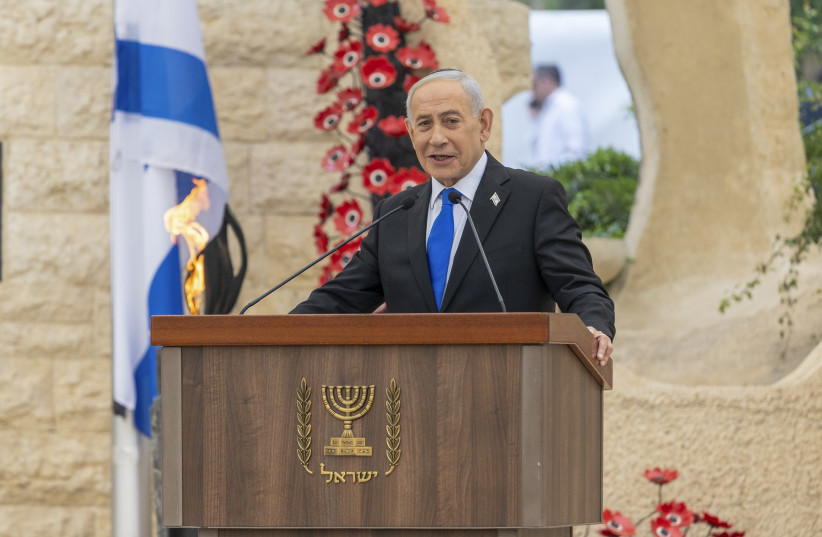
“The President, therefore, believes that before addressing the pardon request itself, efforts should first be exhausted to reach an agreement between the parties, outside the courtroom,” concluded the response.
Netanyahu has been on trial for nearly six years, having been charged with bribery, fraud, and breach of trust.
Herzog to 'Post': 'Fully welcome' talks with Netanyahu
Herzog’s reported preference for a negotiated plea deal is not new. For months, he has spoken about Netanyahu’s trial less as a narrow legal proceeding and more as one of the open wounds in Israeli public life - a case that, in his view, both sides should try to resolve if they can do so without tearing further at the country’s already-frayed civic fabric.
In an interview with the Post last year, Herzog said he would “fully welcome” the sides sitting down to work through the issue, framing a plea bargain as a possible way to address “yet another painful issue in the Israeli public arena.”
That position also helps explain the line Herzog has tried to walk since Netanyahu formally submitted his pardon request in November. The President’s Office described the request as extraordinary and said it carried “significant implications,” while Herzog himself said the matter was “shaking many people in the country” and that his only consideration would be “the good of the state.”
The legal and political complication is that a pardon and a plea bargain are not the same thing. Herzog has the power to grant pardons, but the standard route for such a step usually depends on a completed legal process or at least a request that meets clear legal conditions; a plea bargain, by contrast, would require agreement between Netanyahu and the prosecution.
That is why previous pressure campaigns aimed at Herzog - including letters from ministers urging him to use his office to “move the needle” - have repeatedly run into the same basic problem: the president may be central to the political drama, but he cannot unilaterally manufacture the kind of legal resolution that only the parties themselves can sign.