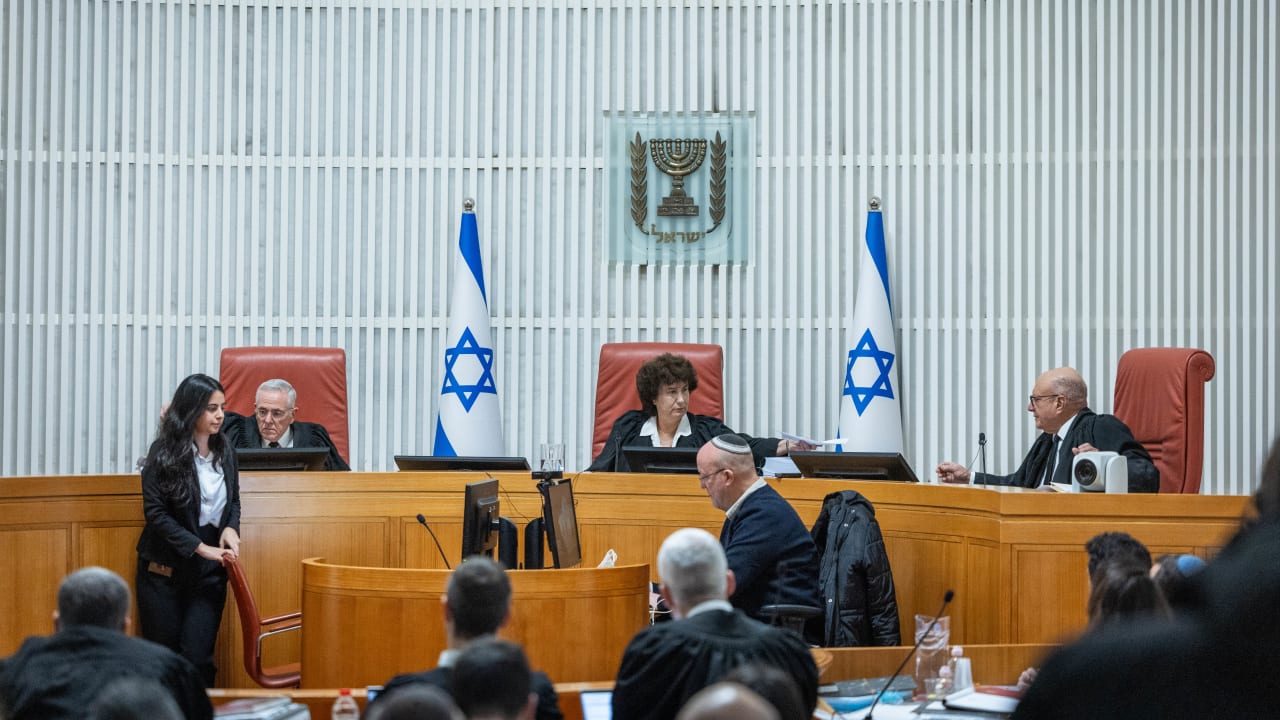
The High Court of Justice released the NIS 78 million spending transfer for the Religious Services Ministry from a freeze on disputed government funding on Friday but left the other transfers blocked.
The freeze stems from a petition challenging an August 4 Knesset Finance Committee meeting held during the election recess. The transdenominational non-profit Hiddush and Democrats MK Naama Lazimi argued that the committee was convened unlawfully and the disputed transfers approved through the meeting should therefore not take effect.
The court has not yet ruled on that underlying question. Friday’s decision was narrower: It removed the immediate pressure facing the Religious Services Ministry while leaving the broader freeze intact.
Among the transfers that remain blocked are funding packages involving ultra-Orthodox (haredi) and religious-Zionist education programs and the National Missions Ministry. Civil emergency expenses had already been excluded from the original freeze.

High Court judge declines to stop committee session before transfer approval
The Religious Services Ministry received broader relief than the state had initially requested.
In a filing ahead of Friday’s decision, the state asked the court to exempt funding needed for the rabbinical courts, warning that the freeze would begin affecting their computer and support systems starting Sunday.
Religious Services Ministry director-general Yehuda Avidan then told the court that the problem extended beyond the rabbinical courts. He said the frozen transfer was also needed for salaries, supplier payments, security and cleaning at holy sites, insurance, rent, and outsourced computer services.
Avidan warned that without the money, the ministry would have to begin closing 125 holy sites, including Mount Meron, Rachel’s Tomb, and the Cave of the Patriarchs, and would struggle to pay suppliers and maintain computer systems.
He also said the ministry could not meaningfully separate the urgent components of the transfer because it had already shifted funds internally in recent months while waiting for the additional budget.
The court ultimately exempted the entire Religious Services Ministry transfer rather than only the funding connected to the rabbinical courts, although the petitioners maintain that the legality of the broader transfer still needs to be examined.
The decision followed a dispute over whether some of the frozen funds should be released before the court rules on the petition itself.
At a hearing on Tuesday, the High Court instructed the Finance Ministry to identify sufficiently urgent funding that could be released in the interim.
Finance Minister Bezalel Smotrich opposed dividing the transfers according to urgency. In the state’s subsequent filing, the ministry said that it considered all of the August 4 transfers important for implementing government decisions and providing public services and argued that the court should instead decide the petition as quickly as possible.
The ministry also warned that if the freeze remained in place after September 1, it could begin affecting the work of some bodies intended to receive the funds.
On Sunday, the petitioners themselves asked the court to narrow the freeze further, seeking the release of several other transfers they said were urgent while keeping disputed coalition funding blocked.
Their request included funding connected to rehabilitation and security needs in northern and southern communities, as well as some Education Ministry payments to local authorities. They asked the court to leave the freeze in place on other education and National Missions Ministry funding that they argue is political or coalition spending.
The Knesset and Finance Ministry were asked to file their responses on Monday.
The dispute began after the Finance Committee met on August 4 during the Knesset election recess. Lazimi and Hiddush argue that another committee session required approval from the coalition-opposition Agreements Committee, which they say was not given.
Justice Alex Stein initially declined to stop the meeting before it took place. After the committee approved the transfers, however, he issued a temporary order on August 5 blocking their implementation, except for civil emergency expenditures.
The Knesset disputes the petitioners’ interpretation. It has argued that Knesset Speaker Amir Ohana had authority under parliamentary rules to approve the meeting and that similar approvals have been given during previous election recesses.
The Finance Ministry has separately argued that the budget requests stemmed from government decisions adopted before the election recess and that advancing the coalition funding they contained did not violate the rules requiring government restraint during an election period.
The High Court has not yet either accepted or rejected those arguments. For now, the Religious Services Ministry can use the additional funding, while the substantially larger dispute over the remaining transfers awaits a ruling.