
Prime Minister Benjamin Netanyahu will submit the appointment of Foreign Minister Gideon Sa’ar as the new interior minister to the cabinet for approval on Wednesday, Likud announced on Tuesday. Likud has moved to fill the position after more than a year without a serving minister – and only after the election, as efforts to form the government are underway.
The appointment would allow a minister to make decisions left pending during the vacancy, affecting both citizens and local authorities. But it comes as the outgoing government awaits its replacement, with no certainty over how long Sa’ar would serve as Yashar leader Gadi Eisenkot seeks to assemble a new coalition.
Sa’ar is expected to retain the foreign affairs portfolio alongside the Interior Ministry. He previously served as interior minister from 2013 to 2014.
The ministry has had no permanent minister since Shas’s Moshe Arbel resigned in July 2025 amid the ultra-Orthodox parties’ dispute with the government over military conscription. Justice Minister Yariv Levin served as acting interior minister until October 22, 2025, when the three-month legal limit on his temporary appointment expired.
If approved, Sa’ar’s appointment would end nearly 13 months without an interior minister, and almost 16 months without a permanent appointment.
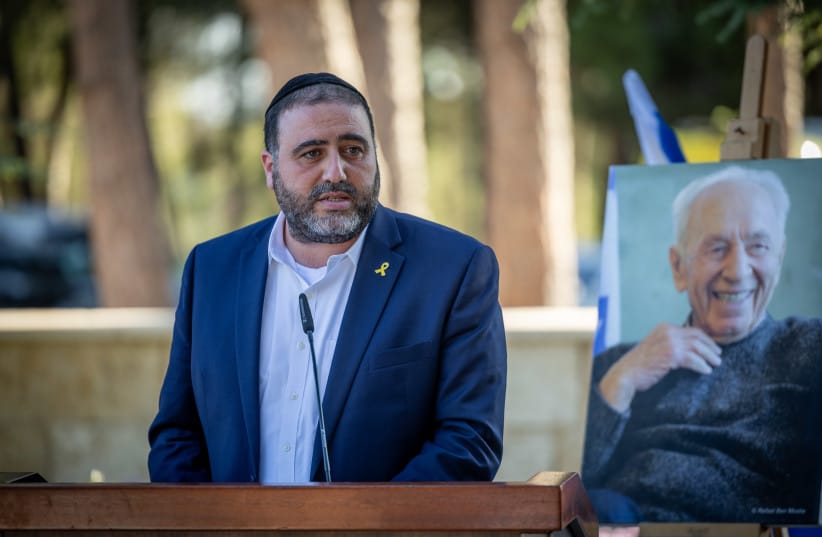
Netanyahu fills vacant Interior Ministry as Eisenkot pushes to form gov't
During the vacancy, the government repeatedly transferred individual powers to Netanyahu to address urgent needs. Other decisions remained without anyone legally authorized to make them.
The ministry’s staff and agencies continued working. But officials could not make every decision reserved by law for the minister, and the ministry lacked a minister to set policy and represent it during cabinet and budget discussions.
The consequences appear in government documents submitted during proceedings before the High Court of Justice: urgent humanitarian residency applications awaiting decisions, difficulties approving foreign caregivers, trained personnel unable to begin their duties, and municipal decisions requiring special arrangements.
Documents accompanying Netanyahu’s December 2025 proposal to transfer certain interior minister powers to himself described the difficulties facing people who needed foreign caregivers. Approving exceptional humanitarian applications, setting permit quotas, and renewing the committee that examined requests all required ministerial authority.
A temporary wartime measure also allowed some previously rejected caregiver applications to be reconsidered, but only within specified deadlines. Without someone authorized to decide, the time available to use that measure was running out.
Other urgent applications concerned permission to live or remain in Israel on humanitarian grounds, including cases involving domestic violence or abuse by a spouse or parent. Some applicants had already turned to the courts, which were demanding answers.
The December documents also recorded that 16 border-control officials and 64 inspectors had completed training but could not begin exercising their powers without ministerial authorization. The Knesset approved transferring the relevant powers to Netanyahu on January 14, 2026.
Local authorities face delays in loans, tax changes, and funding decisions
Local authorities faced similar obstacles over permission to take out loans, make certain changes to municipal taxes, and distribute funding. The government had to transfer the relevant powers before those decisions could be made.
In August, lawyers representing the government acknowledged that some gaps remained. No one held the minister’s authority to issue orders that allowed municipalities to share revenues, and officials were examining whether that power, along with the authority to change municipal boundaries, could be transferred.
The vacancy also prevented the government from meeting a court deadline on municipal-tax discounts for people who had not complied with military-service requirements.