
Prime Minister Benjamin Netanyahu is considering announcing that he is willing to serve as second prime minister in a rotation with Yashar Chairman Gadi Eisenkot to form a unity government, sources told The Jerusalem Post on Friday.
He is expected to say that the decision is "for the security of Israel," the sources added, with one of the sources adding that the announcement could even be made during the weekend.
Also on Friday, Eisenkot said that the Likud didn't show real intentions to form a unity government under the framework that he had proposed.
"Two weeks and five meetings constitute a sufficient timeframe in which an agreement could have already been reached, had there been a genuine desire to do so," Eisenkot wrote. "Unity is not a discussion about seats or who gets to go first; it is a discussion about substance and values. Yet, to date, the Likud has shown no willingness to make progress on any substantive issue."
He also wrote that "if the Likud truly and sincerely wishes to change its course and is prepared to make bold, leadership-driven decisions, the door remains open."
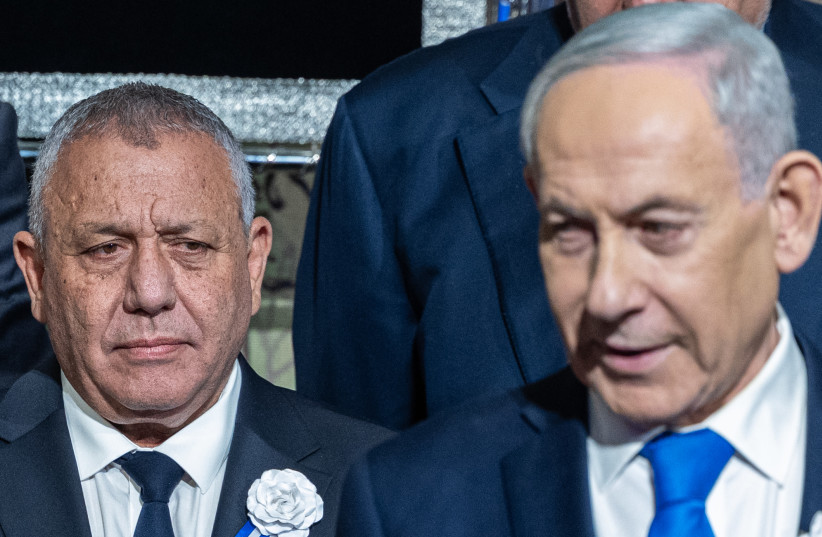
Eisenkot says talks reaching 'critical juncture'
"Is the Likud heading toward serious negotiations and a partnership that entails compromise, or is it merely maintaining a facade while employing a strategy to stall for time?" Eisenkot asked in his statement.
He also said that he was listening to the people asking for a unity government, but insisted that serving "as a mere rubber stamp for another Netanyahu-led government - especially following October 7th and the events of the past four years, and as if no elections had taken place or public trust had not been lost - constitutes a betrayal of a public that is demanding change."
"To be clear: we were prepared to make compromises - real, substantive compromises - even though we were under no obligation to do so," he added.
Netanyahu's push to form unity gov't
Netanyahu has repeatedly called for a unity government after his bloc lost its parliamentary majority to the Eisenkot-led bloc following the October 27 election.
On Wednesday, negotiating teams representing Eisenkot's Yashar and Netanyahu’s Likud met to continue talks on a potential unity government between the two blocs.
Eisenkot's bloc is aiming to finalize, sign, and submit all coalition agreements to the Knesset by Tuesday, December 1, or Wednesday at the latest, Maariv understands.
The timetable, which gives the parties less than a week to complete negotiations, also includes a coalition agreement with United Torah Judaism (UTJ), with discussions continuing alongside negotiations among the bloc's other parties.
Despite progress in coalition talks, officials within the change bloc fear that Prime Minister Benjamin Netanyahu could use the remaining days to prevent the formation of the prospective government.
Keshet Neev and Anna Barsky contributed to this report.