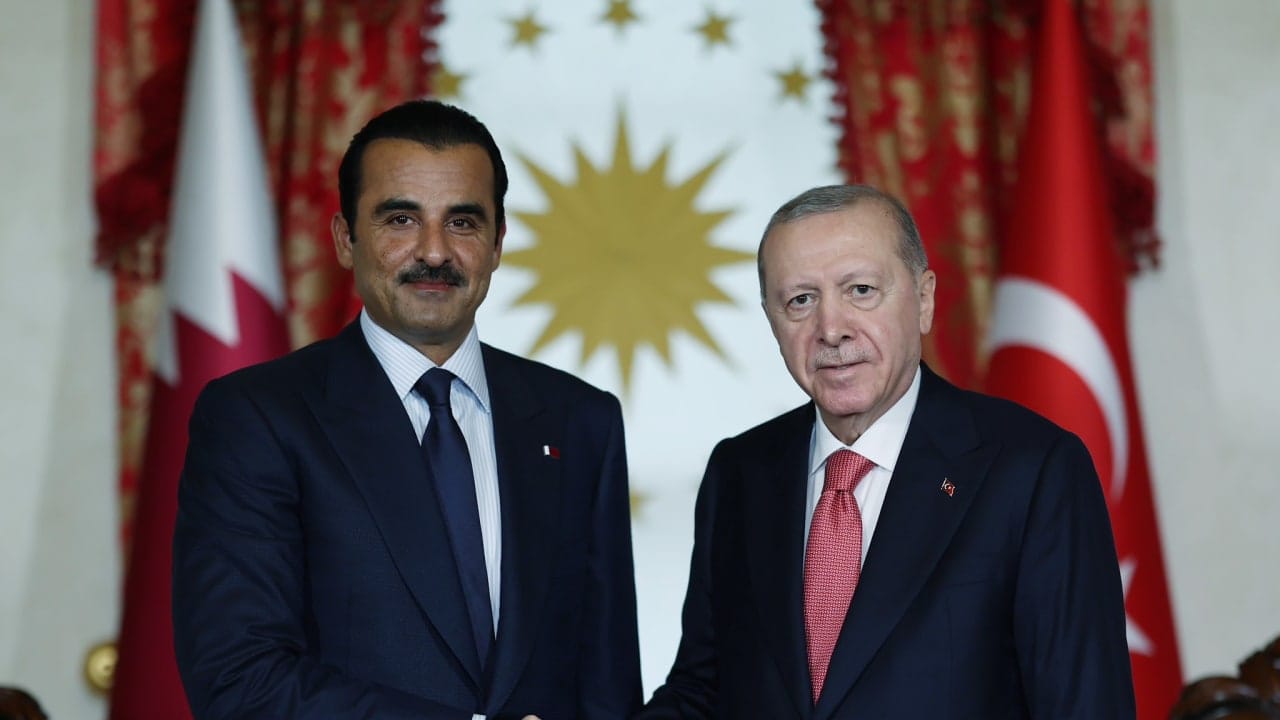
Turkey and Qatar signed a mutual defense agreement on Friday, the office of President Recep Tayyip Erdogan said, as the Turkish leader met the Qatari Emir Sheikh Tamim bin Hamad al-Thani in Istanbul.
"President Erdogan stated that we would continue working together to prevent the resurgence of war in the Gulf region and establish a basis for dialog and achieve peace," the presidency said in a statement on X/Twitter, which did not provide details on the defense accord.
The statement cited him as saying that Turkey and Qatar were working to develop and diversify their energy partnership, and that their cooperation in the defense industry would continue to grow.
"President Erdogan stated that the Mutual Defence Agreement signed today by Turkey and Qatar would add another dimension to our brotherhood," it added.
Turkish defense agreements throughout the Middle East
In August, Turkey, Saudi Arabia and Pakistan signed a joint defense agreement in Mecca, bringing together the Sunni Muslim US allies at a time of conflict across the region.
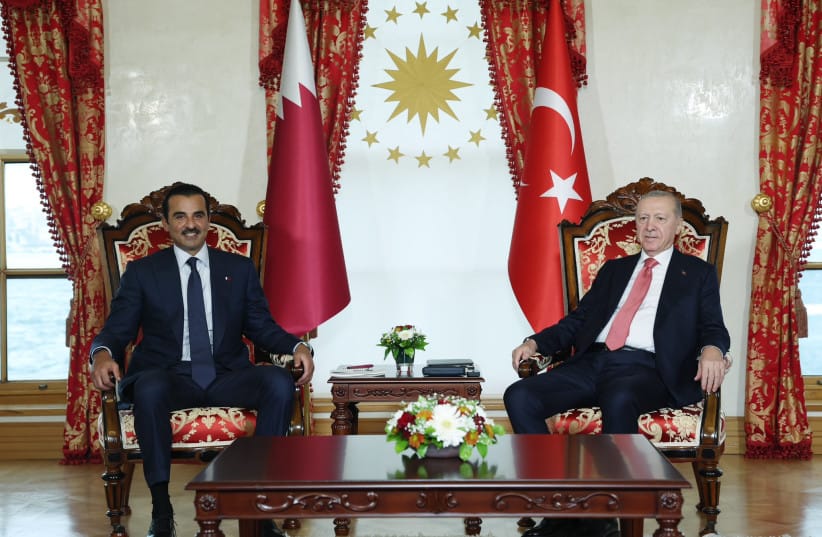
Turkey's parliament ratified the so-called Mecca Joint Defence Agreement last week, clearing the way for Ankara to send military support to Saudi Arabia, which has been struggling to fend off attacks by Yemen's Iran-backed Houthi militants.
Under the agreement, signed by the three regional powers in August, an attack on one party constitutes an attack on all.
Qatar, Turkey commit to 'unified stance' against attacks
In a statement posted to X, Qatar's Foreign Ministry said that the two countries were committed to "strengthening collective defense and promoting regional security and stability, and a unified stance in confronting any external armed attack targeting either party or both of them."
"Both parties agreed to consult on, threats to their security as well as regional and global security issues and defense policies, and to enhance cooperation through joint military exercises, defense industry cooperation and personnel training exchanges."
"The two sides reaffirmed that the Agreement reflects not only the commitment of its signatories to safeguarding their sovereignty and territorial integrity, but also their shared vision of contributing to a more secure and stable regional order," Qatar added.
Outside of the defense aspects, the deal also includes cultural, economic, humanitarian, and educational collaboration, the Foreign Ministry explained.
Qatar accuses Israel of violating Gaza peace plan
Speaking about the humanitarian aspect, the Foreign Ministry called for "full, safe and unhindered humanitarian access in Gaza, and agreed to cooperate closely to scale up shelter and humanitarian assistance in Gaza,"
"The two sides agreed to coordinate their support for the early recovery and reconstruction of Gaza as well as the humanitarian aid efforts for Gaza," the post explained. "Both sides also underscore the urgent need for action, as the first flash floods of the winter season have struck Palestinians in Gaza, further exacerbating their already dire living conditions and rendering them increasingly unbearable.
The statement went on to accuse Israel of violating the peace plan in Gaza. "As mediating countries, in close cooperation with the brotherly Arab Republic of Egypt, both sides expressed deep concern regarding the ongoing Israeli violations in Gaza that undermine the implementation of the Comprehensive Plan to End the Gaza Conflict, endorsed by UN Security Council Resolution 2803 (2025), including its second phase, following the Palestinian factions’ acceptance of the relevant implementation roadmap."
The Foreign Ministry called on Israel "to comply fully with all its obligations under the ceasefire agreement and international law, and stressed the importance of protecting civilians and ensuring unhindered humanitarian access."
The post then said that the parties "strongly condemned Israel’s illegal settlement activities, settler violence and terrorism, land confiscation and forced displacement in the West Bank."