
Jordanian authorities said on Monday that they will block the Telegram social media app in the kingdom over national security concerns.
Jordanian Telegram users reported disruptions on Monday, according to Jordanian news outlet Roya News. Shortly after, Jordan's Public Security Directorate (PSD) announced it had blocked the messaging app nationwide.
Telegram, a Dubai-based cloud messaging app for mobile and desktop, describes itself on its website as focused on security and speed. It supports end-to-end encrypted chats with self-destruct timers for sensitive messages.
Jordan cites crime, extremism
The PSD said the move was meant to stop the platform from being used for cybercrime, threats, extortion, and the spread of illegal content, including extremist material, according to the Jordanian state news agency Petra.
The decision comes after a rare deadly church attack last month killed nine people and prompted airstrikes on neighboring Syria that Jordan said killed 20 Islamic State terrorists. On November 5, Jordan said one security officer had been killed and another wounded in what it called a terrorist stabbing attack in Amman.
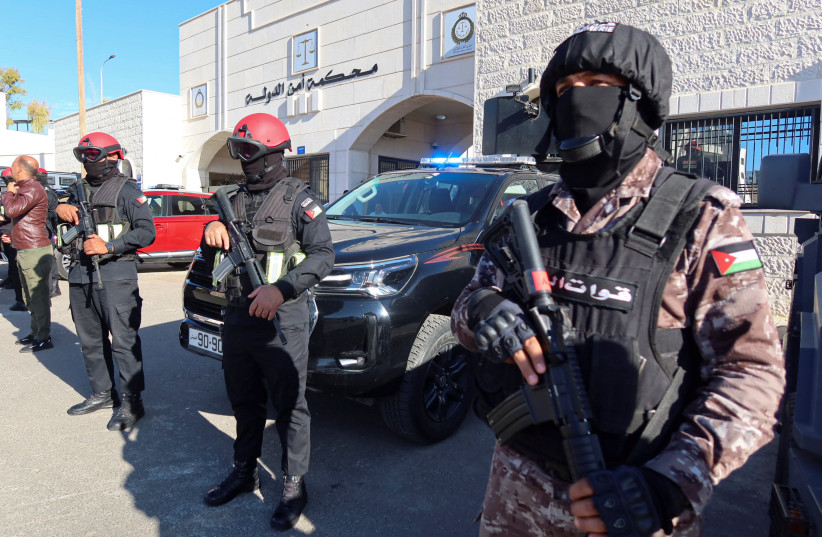
Blocking Telegram is one of several measures aimed specifically at combating Islamist terrorism, Prof. Ronen Yitzhak, an expert on Jordan and head of Bar-Ilan University’s Department of Multidisciplinary Studies in the Humanities, told The Jerusalem Post on Monday.
Jordan has intensified its war on terror, Yitzhak said, not only through counterterrorism operations, such as strikes on Islamic State strongholds in southern Syria, but also by taking the fight to social media. The move is also meant to give Jordanian citizens a renewed sense of security, he added.
Barak Gonen, a cybersecurity expert and lecturer at the Jerusalem College of Technology, was more skeptical. Blocking Telegram because it was presumably used to facilitate terrorist attacks is “equivalent [to] stopping all the train transportation in the country because some terrorists are known to be on a train,” he told the Post on Monday.
The move is legitimate, Gonen said, but “very extreme.”
“I certainly do hope that in [Israel, the Shin Bet] has the capabilities of stopping the specific train without stopping all of the train activity in the country,” he said.
Directorate encourages parents to monitor children's online activity
Blocking the Telegram app aligns with Jordan's existing legislation to "protect society from the risks associated with the misuse of digital platforms," the PSD claimed, according to Petra.
The directorate also urged citizens to use social media with caution, avoid interacting with suspicious accounts or unknown users, and report illegal activity. It called on parents to monitor their children’s internet use, use parental controls on internet-connected devices, and “encourage safe and responsible use of technology.”
Asked about the use of the platform for terrorist activity, Telegram told The Jerusalem Post on Monday that its “extensive efforts to combat terrorism are publicly documented and go far beyond legal requirements to protect its billion-plus users.”
“Advanced automated systems and moderators empowered with AI tools proactively monitor public parts of the platform to systematically remove terrorist content,” the company said. “Telegram does this without compromising its commitment to protecting free speech, peaceful protest, and investigative journalism.”
Jordan, a US partner in the fight against extremism, is regarded as a relatively stable state in the Middle East. Its security services have foiled plots by Islamist terrorists in the past, including suspected Islamic State supporters.
Over the years, Islamic State militants have used the mobile messaging service, created by Pavel Durov, who is in exile from Russia, to issue statements.
Durov faces investigations in several countries. In July, Russia said it had charged him with facilitating terrorist activity, alleging that his app was being used by Ukrainian spies to organize attacks inside Russia.
Durov denies wrongdoing and says Telegram has exceeded its obligations to moderate content and cooperate with authorities to fight crime.
Iraq also moves to block Telegram
Later on Monday, Iraq’s Communications and Media Commission (CMC) announced that Telegram would be blocked across the country, “due to the company’s failure to comply with the applicable legal and regulatory requirements.”
The move is meant to push the company to review Iraqi content on the app, prevent violations, and cooperate with the commission, the CMC said, as part of wider efforts to curb the use of social media to spread extremism, incite sedition, violence, and hatred, commit cybercrime, and threaten national security.
According to the CMC, Telegram did not take adequate action to combat the dissemination of content that violates Iraqi law. The commission gave Telegram a 30-day grace period to rectify the situation, although it did not specify what would happen if Telegram failed to do so.
The ban comes six months after the commission lifted a week-long ban on the messaging app in May, after the company complied with the regulator’s rules, according to Kurdistan Region-based news channel Rudaw Media Network. The commission had cited national security concerns then as well.
The app has found a range of uses in Iraq, including by channels affiliated with pro-Iran armed groups, some of which decried Monday’s decision, Rudaw reported.
It also comes nearly a month after Iraq’s Communications Ministry banned the navigation app Waze, citing the presence of the company’s data centers in Israel, Rudaw reported.
Reuters contributed to this report.