
Yemen's Iran-aligned Houthi group has repeatedly targeted Saudi Arabia in an intensifying campaign of drone and missile strikes on its airports, oil facilities and office buildings.
Here are some of the attacks that it has claimed to have carried out and what Saudi Arabia has said.
Airports
Houthi attacks on Saudi airports have been deadly as well as disruptive, repeatedly grounding flights in the kingdom.
Riyadh has been the most heavily targeted airport. The Houthis first said they targeted it on September 19. They subsequently claimed attacks there on eight days in October and six in November.
Saudi authorities acknowledged at least four attacks on Riyadh airport in the week starting October 5. They said one person was killed in an attack on October 7, three on October 8, 13 on October 10 and one on October 11.
Dammam airport in Eastern Province, home to Saudi Arabia's biggest energy resources, has also been a repeated target. The Houthis said they attacked it twice in October and twice in November. Saudi authorities later confirmed at least one of the attacks.
The first Houthi airport attack came on July 13 when they said they attacked Abha airport in southern Saudi Arabia with ballistic missiles. They said they targeted Abha airport again twice in October, including in an attack Saudi authorities said killed two people.
They said they targeted Najran airport, near the Yemeni border, twice in August and once in October. Also in southern Saudi Arabia they said they targeted Khamis Mushait air base on October 8 and a military plane at Jazan airport on November 2.
Saudi authorities have repeatedly issued missile alert warnings to citizens in southern districts and announced interceptions of projectiles.
Oil targets
The East-West Pipeline that links Saudi Arabia's oil-producing areas in the Gulf to the Red Sea was shut down on September 11 after what Saudi authorities said was a drone attack carried out not by the Houthis but by pro-Iranian militias in Iraq.
But the Houthis later claimed responsibility for several attacks on the pipeline, which has become particularly important this year as an alternative export route since Iran shut the Strait of Hormuz. The Houthis have said they targeted the pipeline or associated pumping stations twice in October and four times in November.
Amin Nasser, head of the Saudi state oil company Aramco, told Reuters in October that the company had adapted to respond quickly to security incidents with special teams and expanded emergency stockpiles, without disclosing details of attacks.
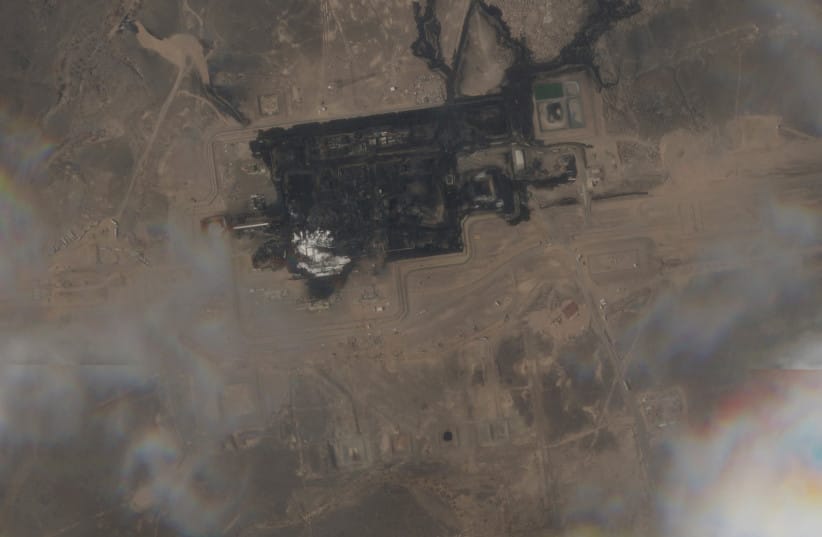
Other oil targets the Houthis have claimed to have struck include Jazan refinery in the south, hit twice in August, Ras Tanura refinery in Eastern Province, hit twice in October, and a refinery near Riyadh, hit in October. Saudi authorities have not confirmed any attacks on refineries.
Office buildings
On October 14 the Houthis said they had struck Aramco's headquarters in Dhahran, Saudi Arabia's main eastern oil city. Three people with knowledge of the matter said that attack caused extensive damage.
On November 8, the Houthis said they had hit the Aramco building in Riyadh's financial district. The attack caused visible damage to several floors of the tower. Saudi authorities said the damage came after they intercepted a projectile.
A strike on November 19 hit a tower belonging to the Public Investment Fund, Saudi Arabia's sovereign wealth fund. The Houthis did not immediately claim responsibility for the attack. Three people familiar with the matter said the strike was caused by a Houthi missile. Saudi authorities said they had dealt with a missile threat and that debris and material damage had been reported.