February 11 is meant to be the Islamic Republic’s annual display of legitimacy. It is a day when the state floods Iran’s streets with flags, slogans, and choreographed crowds to commemorate the fall of the shah, the rise of Ruhollah Khomeini and the Islamic Revolution of 1979.
This year, with everything on the line for the republic’s future, the regime’s messaging makes clear how much it needs the performance.
State-aligned Tasnim News Agency reported that “extensive arrangements” have been made for mass rallies across the country, beginning simultaneously at 9:30 a.m. It cited plans for more than 7,700 journalists to cover the events, including 200 foreign reporters stationed along the march routes. More than 2,000 “service and cultural booths” will line Tehran’s streets.
Military and aerospace organizations, Tasnim said, will unveil “their latest equipment and achievements” along the routes to showcase Iran’s “scientific strength and military expertise alongside the people.”
The presence of “adoring” crowds and the cheering are meant to symbolize the strength and legitimacy of the Islamic Republic, but it is strength and legitimacy with excellent production values.
In a separate report, published Monday evening by Iran International, a second form of mobilization was shared. According to sources close to families of some of those detained during the ongoing anti-regime protests, Islamic Revolutionary Guards Corps (IRGC) intelligence officers and the Intelligence Ministry have pressured families of those arrested during nationwide protests to attend the February 11 rally. Their presence, the report said, must be “verifiable.” Families have been told to take photos and videos of themselves at the march and send them to security bodies. Those demands are coupled with threats and psychological pressure.
A country’s anniversaries are supposed to commemorate a founding myth. When a government begins attaching conditions to someone’s attendance at a rally, it signals how deeply the regime is hated by the public.
For a ruling authority that has watched millions of its citizens take to the streets over the past two months demanding its demise, it is no surprise that the regime has gone to such lengths to try to put a positive spin on it.
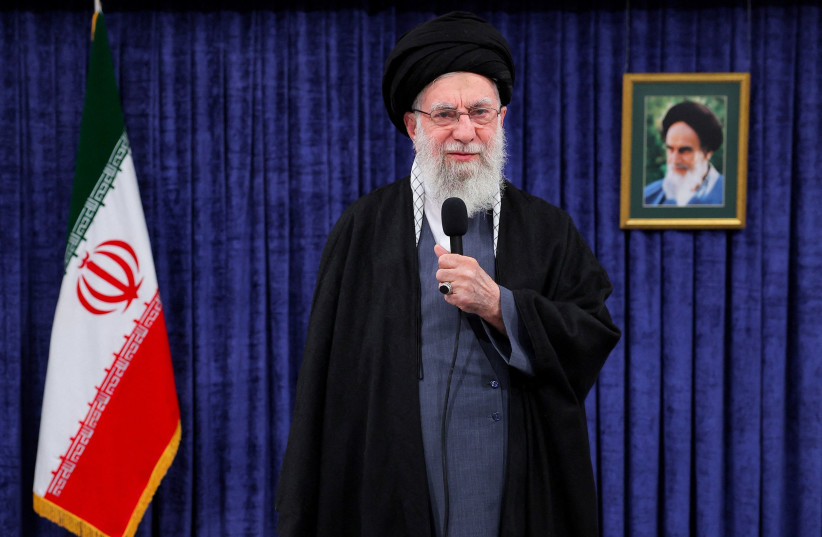
In a televised message on Monday, Supreme Leader Ali Khamenei described the date as the day the “power and dignity of the Iranian nation are unveiled every year,” calling the rallies “unparalleled in the world.” He framed participation as a kind of national weapon. By taking to the streets, he said, Iranians compel those who “covet” the Islamic Republic to retreat.
But Iranian identity has always been larger than any regime, or any governing body, and it is precisely that longevity that makes the regime’s anxious choreography so telling. There is a civilizational continuity in Iran – an instinct for nationhood that predates the modern state by centuries. Over 2,000 years of nationhood is a concept dear to many Iranians, and many see their history as a story rooted in their homeland. They experience their nation through the idea of Iran rather than through any specific ideology.
In contrast, Khamenei’s worldview – and by extension that of the Islamic Republic – has often prioritized the regime’s ideological project and regional posture over the daily sustenance and prosperity of Iran’s citizens. Its people have gone through economic turmoil, environmental disasters, and other hardships, with the country’s wealth siphoned off to fund regional terror proxies such as Hamas, Hezbollah, and the Houthis.
Islamic Regime attempts to control the narrative
“We are hopeful that, God willing, this 22nd of Bahman (in the Iranian calendar), like every 22nd Bahman of past years, will further magnify the grandeur of the Iranian nation,” Khamenei stated in his message to the people.
But Khamenei has nothing but contempt for Iranians, the people he has ruled for 36 years.
Despite serving as the country’s president and then its supreme leader, he has never served the people. He cares more about his ummah of Islamists than he has ever cared about the Iranian people.
Compare that to the former shah, Mohammad Reza Pahlavi, who, in his Nowruz (Iranian New Year) address of 1976, said, “We, the Pahlavi dynasty, nurse no love but that for Iran, and no zeal but for the dignity of Iranians; recognize no duty but that of serving our state and nation.”
That is why the revolution’s anniversary has become so loaded.
It is the regime’s attempt to control a narrative, when it has been clear to Iran-watchers for months that the Islamic Republic no longer represents the people. The people want it gone.
The Islamic Republic can still stage a march. It can still fill streets with banners and unveil military weaponry. It can still manufacture the appearance of unity.
But this year, with Israeli Prime Minister Benjamin Netanyahu meeting US President Donald Trump on February 11 itself, to discuss what action can be taken against Iran, the state’s grandiose performance rings hollow.
Legitimacy that is enforced upon the people is no longer legitimate.
Though February 11 will again be presented as a national celebration, it could well be the last time it is celebrated as a national holiday in the Islamic Republic.