Adi Himelbloy and Bar Zomer are not alone: Following testimonies from young people who contracted shingles and the increase in public discourse surrounding the disease, the question arises whether this is a new phenomenon – or simply a matter of higher awareness.
Dr. Ian Miskin, an infectious disease specialist, member of the Israel Association of Family Physicians, and head of the Department of Family Medicine at the Hebrew University, makes sense of the phenomenon, explains what actually happens in the body, and for whom the vaccine is relevant today.
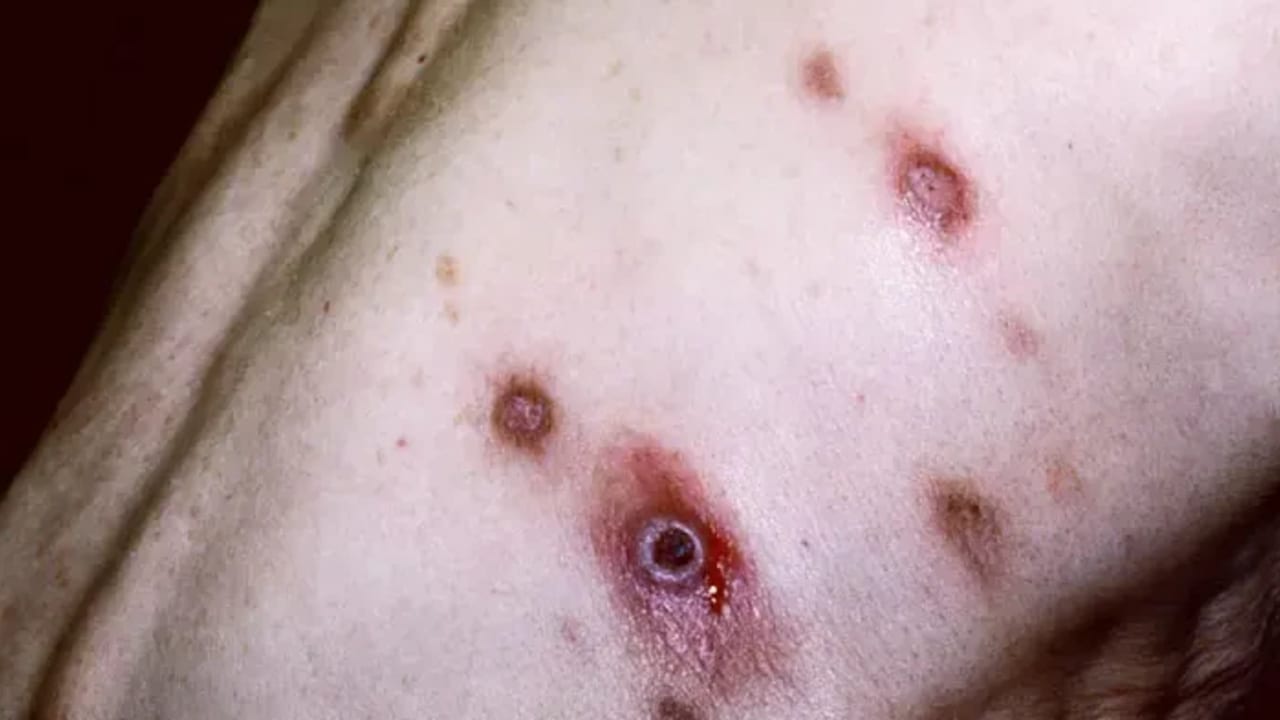
"Shingles is actually a recurrence of the chickenpox virus," explains Dr. Miskin. "The virus does not disappear from the body after the initial infection – it remains dormant within nerve cells near the spine, and occasionally, when the immune system weakens, it reawakens."
When it erupts, it usually appears along a specific nerve: "It generally looks like a semi–circular distribution in the area that receives innervation from that nerve – usually on the back or on one side of the body."
Why does it seem like more young people are getting sick?
According to Miskin, this is not necessarily a dramatic increase – but rather a combination of several factors: "Since children aged 5–7 have been vaccinated against chickenpox, we see fewer cases of childhood chickenpox, and this changes the overall picture. It is possible that because of this, we are seeing more cases of shingles at later ages."
Additionally, there is also a matter of immunity: "Someone who had chickenpox in the past has more antibodies. Someone who was only vaccinated is sometimes less protected in the long term." And alongside this, there are also everyday factors: "Stress, mental or physical strain – all of these can weaken the immune system and allow the virus to erupt."
Is it a mild disease or is there cause for concern?
"In most cases, it is a relatively mild disease," says Miskin, "There is itching, a rash, and pain, and it passes within a few days," but he emphasizes that one should not be complacent: "In certain cases, bacteria can penetrate through the damaged skin, reach the bloodstream, and cause severe infections – even life–threatening ones."
Who is at higher risk?
"The risk increases with age because the immune system weakens, but young people can also fall ill, especially in states of immunosuppression, whether as a result of diseases or medications."
What about a vaccine – who is it intended for today?
This is where the vaccination briefing comes into play. This is an official document that determines which vaccines enter the "Health Basket," meaning, what the state funds and for whom. "The briefing requires that recommendations be coordinated with the Supreme Committee for Infectious Diseases, and therefore vaccines are given according to defined risk groups," explains Dr. Miskin.
The primary vaccine today for shingles is "Shingrix," "A vaccine given in two doses, with an efficacy of over 90% in preventing the disease and its complications."
The current recommendations:
- For those aged 50 and over
- People with a weakened immune system – starting from age 18
"Recently (about a year ago), the basket was also amended so that people receiving medications that suppress the immune system can receive the vaccine from age 18 up to age 65."
Why not expand the vaccine to the general population?
"It is mainly a matter of cost," explains Dr. Miskin. "It was clear that an expansion to the entire young population would not pass, but including younger risk groups – that is already significant progress."
How common is the disease?
"Data shows that more than 95% of the population either had chickenpox or was vaccinated. "This is a very contagious disease, and therefore most people have been exposed to the virus. Unlike measles, which disappeared and returned – chickenpox and shingles have always been here. The virus simply stays in the body and waits for an opportunity to erupt."
Does the disease erupt only once?
"There is a debate on the subject. Usually, it is a one–time event, but there are people who experience more than one outbreak, and that already indicates a certain tendency."
How can you know if you were vaccinated or exposed to the virus?
"A simple blood test can identify antibodies for chickenpox. This is particularly important, for example, for pregnant women – because an initial infection could harm the fetus."
The bottom line: To vaccinate or not?
Dr. Miskin is unequivocal on this question: "The recommendation is indeed to get vaccinated – especially in risk groups. This is a long–standing vaccine, present in Israel since 2017, with a great deal of knowledge and experience. It is considered very safe and effective, with only mild side effects, usually on the day the vaccine is received."
In conclusion, he emphasizes an important point: "The childhood vaccine against chickenpox does not necessarily prevent shingles at an older age, and therefore it is important to understand the difference and act accordingly."