Parents of children in kindergartens and nursery schools where there are youngsters with food allergies (FA) are often forbidden to send their kids to class with a large variety of allergenic foods, from dairy to peanuts, thus limiting what they can take with them to class.
Mothers and fathers of children with such allergies often fear that just accidental skin contact with allergenic foods – and not only eating them by mistake – can trigger a severe systemic allergic reaction.
However, findings from a recent study by experts at Rambam Health Care Campus in Haifa offer reassuring, evidence-based guidance that can help ease unnecessary anxiety.
The large multicenter Israeli study led by Dr. Idit Lachover-Roth, director of the hospital’s allergy and clinical immunology unit, aimed to evaluate the risk of systemic allergic reactions following controlled skin exposure to common food allergens in children with confirmed FA.
According to Lachover-Roth, the study was motivated by a desire to better understand what actually triggers significant allergic reactions in children with FA.

The study is one of the largest prospective studies of its kind to evaluate a broad range of allergenic foods under controlled conditions.
The study was conducted at Meir Medical Center in Kfar Saba and Schneider Children’s Medical Center in Petah Tikva, which are both operated by Clalit Health Services.
A total of 293 children and youths aged one to 18 were recruited from the allergy clinics at the two hospitals: 192 (65.5%) with confirmed FA comprised the study group, while 101 (34.5%) served as the control group.
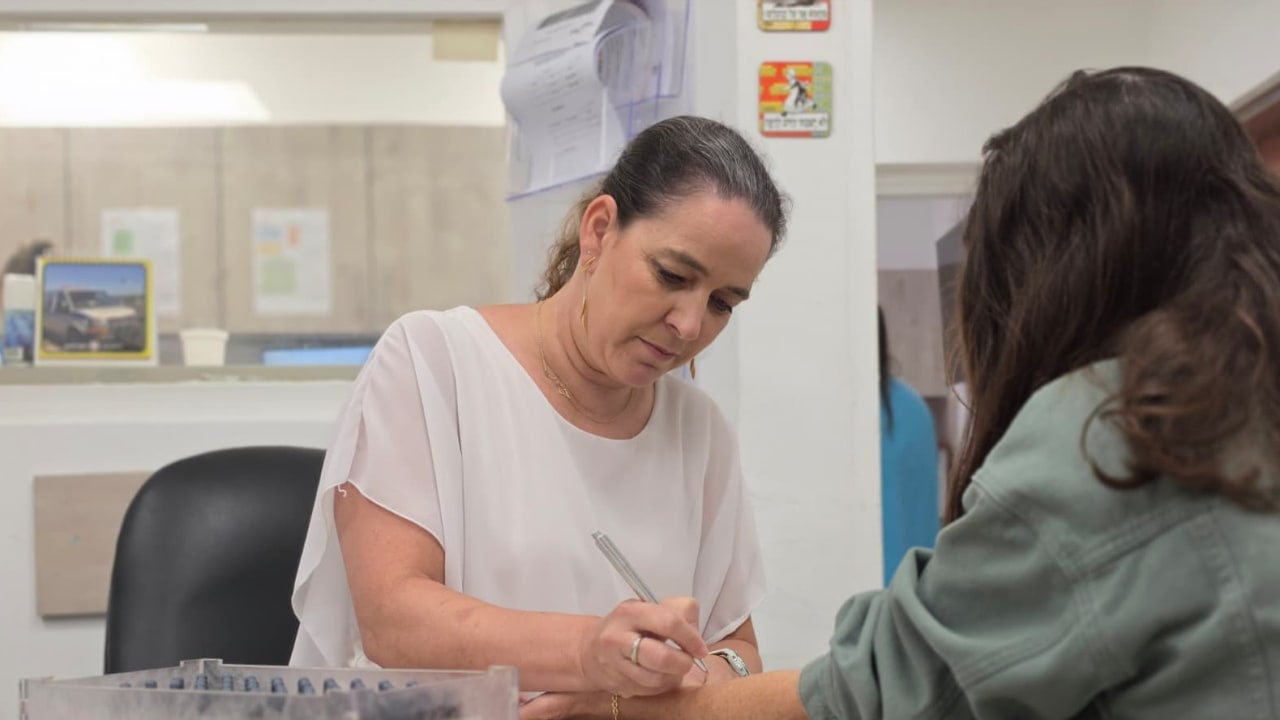
Participants underwent patch testing in which the allergenic foods milk, peanuts, eggs, sesame, or tree nuts were applied to the forearm for 15 minutes. A total of 465 patch tests were performed: 263 in the FA group and 202 in the control group.
The study is about skin contact, not eating the food, and not necessarily about food residues ending up on hands, toys, or tables and then being transferred to the mouth.
Many kindergarten restrictions are intended to prevent accidental ingestion, which remains the major risk for anaphylaxis – a sudden, severe, and life-threatening allergic reaction characterized by breathing trouble, a drop in blood pressure, and swelling that demands immediate emergency care.
The findings, recently published in the international journal Acta Paediatrica under the title “Accidental skin contact with food allergens does not trigger anaphylaxis in children: A prospective multicenter study,” were both consistent and reassuring.
In 83.7% of exposures, no reaction occurred – not even at the site of contact.
Just 15% of children developed only a mild localized skin reaction, such as redness or slight swelling at the contact site, and only three children had a somewhat more extensive skin reaction limited to the tested arm that cleared up after treatment with an antihistamine.
Most importantly, not a single child experienced anaphylaxis or any systemic allergic reaction.
Younger age was the strongest predictor of skin reactivity, with younger children more likely to develop a mild localized skin reaction. Children with milk allergies also had a slightly higher rate of localized reactions.
Even in these cases, however, no episodes of anaphylaxis were observed.
“Many families live in a constant state of vigilance because they fear that even accidental skin contact with an allergenic food could lead to anaphylaxis,” Lachover-Roth told The Jerusalem Post.
“Although a few previous studies have examined the effects of skin exposure, the question has never been investigated on this scale,” she continued.
“Our findings, the result of three years of work, show that when allergenic food comes into contact with intact skin – even in children with confirmed food allergies – the risk of a serious reaction is extremely low, approaching zero.
“These results allow us to provide families with evidence-based guidance and help reduce fears that are not supported by scientific data.”
Reducing unnecessary anxiety
The single most important message that parents should take away from the study, Lachover-Roth added, “is that kids have to be kids. Touching allergenic foods is unpleasant for the children and their parents, but it’s not dangerous if the skin is normal.
“If it happens, they just have to wash it with water. Some parents go to extremes, not allowing their children to go to friends’ birthday parties, social activities, or restaurants because of their fears. Some don’t even bring any allergenic food into their homes.”
The researchers couldn’t explain why younger children were more likely to develop mild skin reactions, said the BGU researcher. “We will study this in the future.”
Milk apparently produces more local skin reactions than other allergens because it’s a liquid, and so the molecules penetrate the skin more easily, she suggested.
“School policy is problematic,” said Lachover-Roth. “They set down unreasonable limitations. There are almost no cases of severe allergic reactions in Israeli kindergartens and nurseries. Most are in restaurants and at home.
“We have tried to persuade the Health and Education Ministries on this, but they have not changed policies.”
The researchers emphasize that the study does not change current medical recommendations.
Children with FA should continue to avoid eating foods to which they are allergic, carry an epinephrine auto-injector (EpiPen) when prescribed, and prevent oral exposure.
Furthermore, the study did not examine contact with broken skin or mucous membranes, where the risk may be different.
“Many teachers don’t know what to do with an EpiPen, or they refuse to take the responsibility for injection. Their assistants are supposed to do it, but many of them are reluctant as well,” Lachover-Roth said.
“Parents are supposed to inform the teachers at the beginning of the school year if their child is allergic to any kind of food.”
The average rate of food allergies in children in Western countries is 5-10%. Fortunately, it’s only two or three percent in Israel, thanks to the fact that children here are given Bamba peanut butter snacks even before their first birthday, Lachover-Roth noted.
“The fear of accidental contact with allergenic foods often leads to persistent anxiety and significantly affects the quality of life of both children and their families,” she concluded.
“Our findings demonstrate that accidental exposure of intact skin to allergenic foods carries a very low risk of a clinically significant reaction.
“As long as standard safety precautions are followed, families can reduce unnecessary anxiety about accidental skin contact with allergenic foods.”