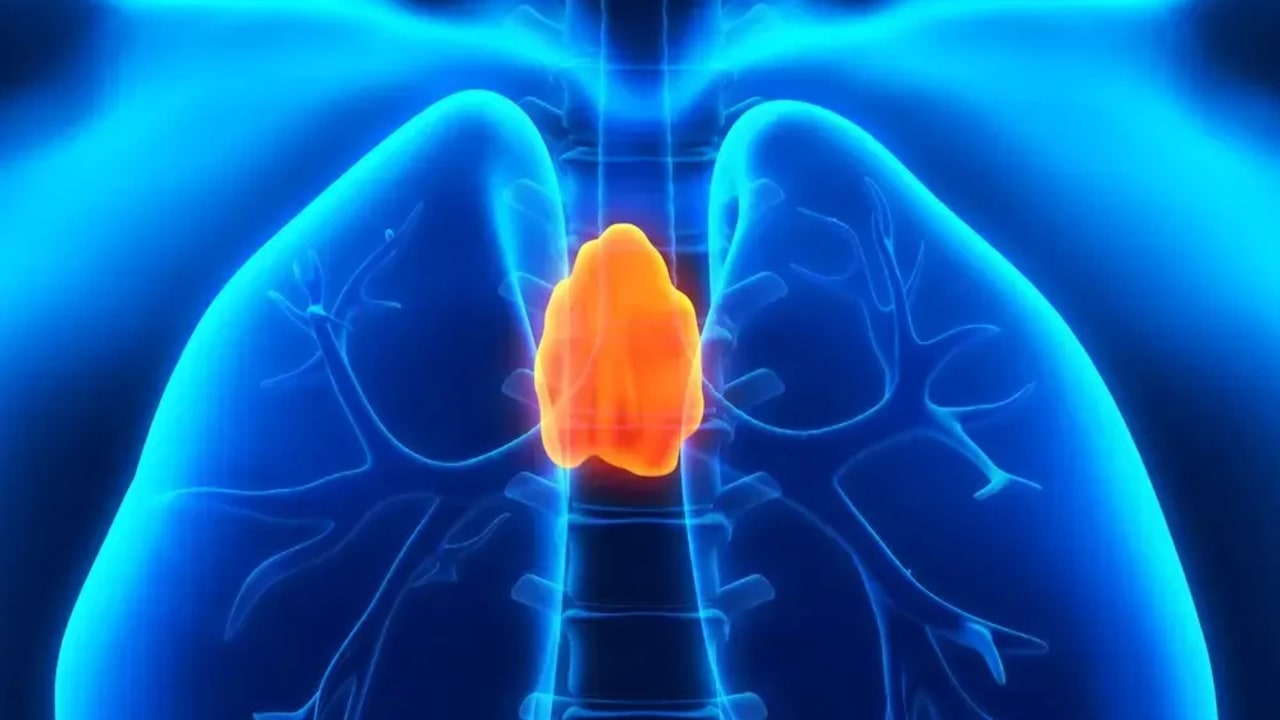
For decades, one of the most mysterious organs in the human body was considered marginal and even redundant. This is the thymus, a small organ located behind the breastbone, which for many years was perceived as a meaningless biological remnant.
In the distant past, it was even attributed philosophical meanings, but in the twentieth century, its status gradually diminished to the point that some researchers defined it as a sort of burial chamber for useless cells. However, now, a new wave of studies suggests a completely different picture.
The thymus, as it turns out, may be one of the most significant factors in the health of the immune system and even influence aging processes and severe illnesses.
What the thymus does and why it is important
The thymus plays an especially critical role in the first years of life. It is responsible for "educating" immune system cells, and primarily T cells, which protect the body against infections and diseases.
This process also includes an important mechanism that prevents the immune system from attacking the body itself, a phenomenon known as autoimmune diseases.
In fact, without a functioning thymus, the immune system does not develop properly, and children born without this organ are at a very high risk for serious immune problems.

So why did they think it was useless?
Despite its important role in childhood, the thymus undergoes a dramatic change during life. Already during adolescence, it begins to shrink and gradually turn into fatty tissue.
This process led many to think that after childhood it has no significant role, and therefore its removal in certain surgeries was not perceived as a problem.
However, today, it turns out that even if its activity decreases, its effect on the body does not disappear completely.
An accidental discovery that changed the picture
One of the central studies that brought the thymus back to center stage began almost by accident. Researchers who sought to examine medical data of patients who underwent surgeries found a surprising pattern.
People who underwent removal of the thymus were at a higher risk of death from any cause within five years, compared to people who underwent similar surgeries but kept the organ.
In addition, it was found that their risk of developing cancer was higher, and an increase in autoimmune diseases was also observed among those who did not suffer from them previously.
These findings aroused great interest in the scientific community and led to a re-examination of the role of the thymus in the body.
The connection between the thymus and general health
Additional studies used advanced tools such as artificial intelligence to analyze large-scale medical data. Through CT scans and medical information over years, the researchers were able to assess the condition of the thymus in thousands of people.
The results pointed to a clear connection between a healthy thymus and a lower risk for diseases such as lung cancer and heart disease.
In addition, people with a more functional thymus tended to respond better to innovative treatments such as immunotherapy, which is based on activating the immune system against cancer.
Is the thymus the cause or just a sign
Despite the impressive findings, the researchers emphasize that it is still not possible to determine with certainty that the thymus is the direct cause of improved health.
It is possible that it serves as an indicator of the general health status of the body, and not necessarily as a factor that leads the change.
The central questions that remain open include why the rate of degeneration of the thymus differs between people, and whether it is possible to slow down or stop the process.
Hope for rehabilitation and renewal
The renewed interest in the thymus also leads to attempts to develop ways to rehabilitate its activity. Researchers are examining various options, including the use of stem cells and biological engineering to create a new thymus in the laboratory.
One of the future goals is to allow patients undergoing organ transplants to receive a matched thymus, which will help the body accept the new organ without needing powerful drugs to suppress the immune system. In addition, improving thymus function may assist in increasing the effectiveness of vaccines, especially among older adults.
The thymus demonstrates how a relatively small organ can influence complex systems in the body. Its ability to renew itself, alongside its rapid maturation rate, makes it one of the most intriguing organs for research.
The fact that it contains stem cells with high regenerative capacity raises questions regarding its potential to serve as a key to understanding aging processes.