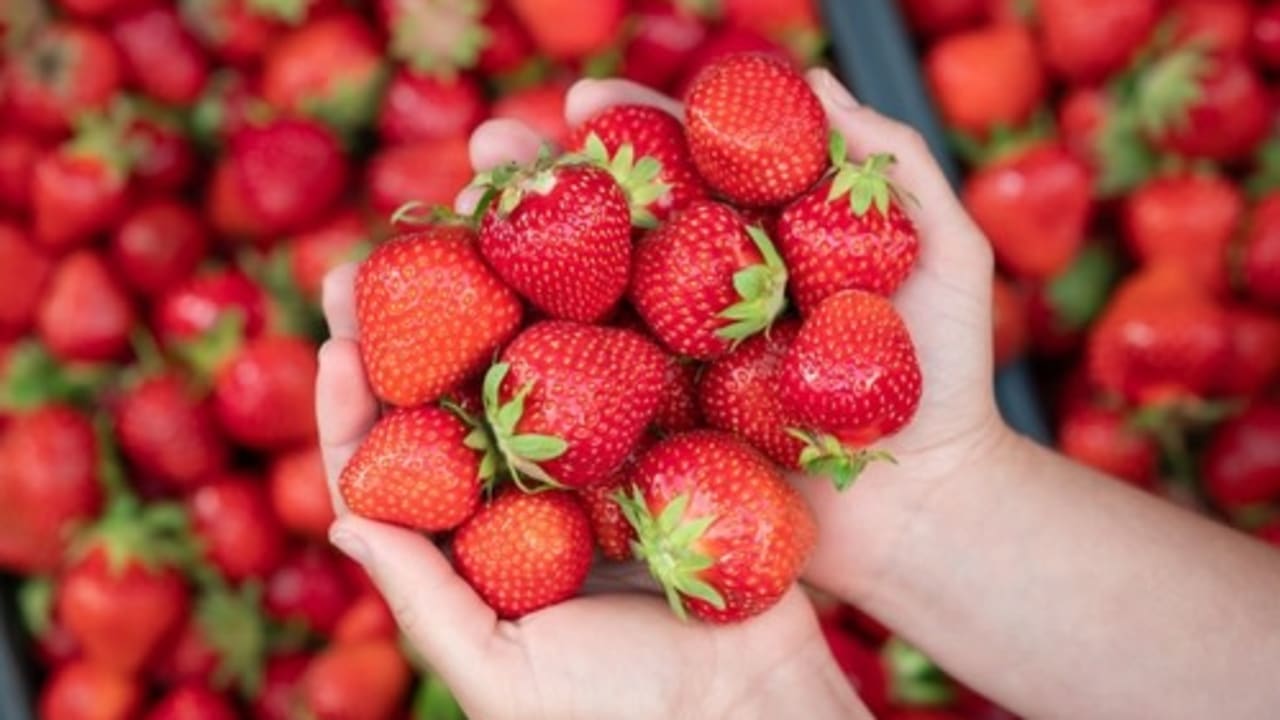
Not just the fruit, also the leaves: When we wash strawberries before eating, the action is almost automatic. We remove the leaves and the stem, throw them in the trash, and eat only the fruit itself. But it turns out that this habit causes us to miss a part that is no less interesting and even healthy.
Although this may sound surprising, strawberry leaves are completely edible. In fact, all parts of the strawberry, including the leaves and the stem, are safe for consumption.
So why don’t we eat them? According to nutritionists, the reason is mainly a matter of habit and culture. In many countries, including the United States, it is customary to remove the top part of the strawberry as part of the cleaning process, so most people do not even think about the possibility of eating it.
This is an automatic action that has become the norm, even though there is no real nutritional justification for it.

What is in strawberry leaves
The interesting news is that the leaves are not only edible, but also rich in important nutritional components. They contain a nice amount of vitamin C, although the fruit itself has a higher concentration.
Beyond that, the leaves contain a particularly high amount of polyphenols. These are powerful antioxidants, known for their ability to help reduce inflammation in the body and protect against various diseases.
Polyphenols have been linked in studies to a reduced risk of heart disease, diabetes, and even certain types of cancer. In addition, they contribute to balancing various systems in the body and maintaining overall health.
Studies also indicate that strawberry leaves have antibacterial and antifungal activity, as well as an anti-inflammatory effect. In other words, this is a part of the fruit that can provide additional health benefits beyond what is obtained from the fruit itself.
Despite this, it is important to remember that this is not a superfood, but rather a nutritional addition that can be incorporated as part of a balanced diet.
How to eat the leaves
If you decide to try, there are a few basic rules worth knowing. First of all, like the fruit itself, the leaves should also be washed thoroughly before eating. It is recommended to remove leaves that look damaged or brown, and to choose green and fresh leaves.
The simplest way to consume them is simply not to remove them from the strawberry and to eat the fruit whole. Alternatively, they can be incorporated into smoothies or drinks, where they blend in easily and are not particularly noticeable.
In terms of taste, the leaves are not as sweet as the fruit. Many describe them as having a slightly earthy or green taste, similar to other leaves that we are used to eating.
Therefore, those who prefer can incorporate them into foods or drinks where the taste is less prominent.
Is it safe to eat strawberry leaves?
One of the common questions is whether the leaves are safe for consumption. The answer is yes. Strawberry leaves are not toxic and there is no reason to fear eating them, as long as they are washed thoroughly.
Like any vegetable or fruit, it is important to maintain cleanliness to remove dirt or pesticide residues.
In conclusion, the habit of throwing away strawberry leaves is ingrained in many of us, but it may be worth reconsidering. This is an edible, safe part that even has nutritional benefits.
This does not mean you have to completely change the way you eat strawberries, but the next time you prepare a bowl of strawberries, it might be worth trying to leave the leaves and discover for yourself whether this is an addition worth getting to know.