
Carrot juice sounds like the healthiest choice at a cafe. It is orange, natural, freshly squeezed, comes alongside a breakfast labeled "healthy," and has an image of a light, diet-friendly drink. But this is precisely where the problem begins. Many people treat carrot juice as if it were "free vegetables," while in practice it is a concentrated drink with a lot of natural sugar, almost no dietary fiber, and quite a few calories. A whole carrot and carrot juice come from the same vegetable, but nutritionally they do not behave the same way in the body.
Why is carrot juice perceived as diet-friendly?
The reason is simple: Carrot is a vegetable. Vegetables are considered low-calorie foods, rich in fiber, suitable for a diet, contributing to satiety, and recommended on almost every health menu. Therefore, when we hear "carrot juice," the brain automatically translates it into "vegetable drink." But juice is not a whole vegetable. When squeezing a carrot, the liquids and natural sugar are separated from the fiber. What remains in the glass is mainly water, sugar, color, some vitamins, and some minerals. What remains in the machine is the part largely responsible for satiety and digestive health: The fiber.
How much carrot is in one glass?
To make a medium glass of carrot juice, a large amount of carrots is needed, sometimes more than half a kilogram. This is an important point, because almost no one would sit in a cafe and eat half a kilogram of carrots at once. But to drink it? Very easy. Within a few minutes, the glass is empty. This is one of the biggest problems with natural juices: They allow us to consume a very large amount of fruit or vegetable in a short time, without chewing work, without real volume in the stomach, and without a sense of satiety that matches the amount of calories consumed.
Where did the fiber go?
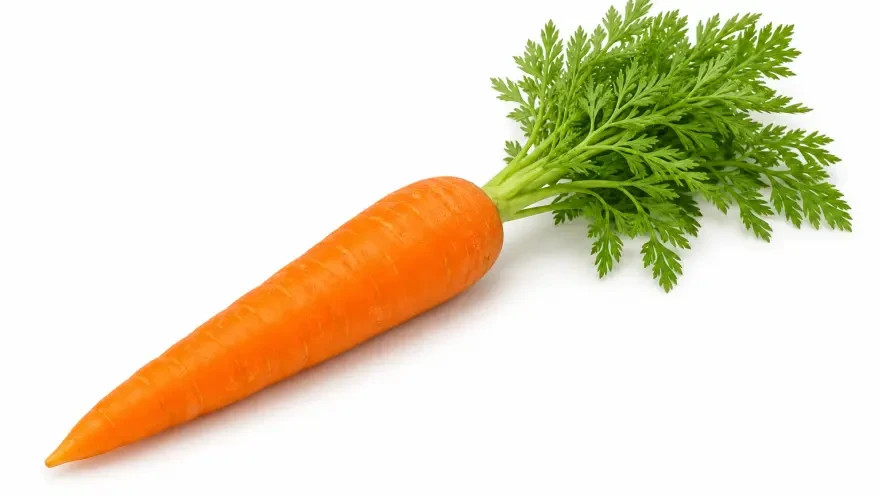
A whole carrot contains dietary fiber. Fiber slows down eating, requires chewing, adds volume, contributes to a sense of fullness, positively affects bowel activity, and along the way slows down the rate of sugar absorption. In carrot juice, most of the fiber remains in the juicer. Therefore, the body receives the natural sugar in a much more available and fast form, without that same "packaging" of the whole vegetable. This is not the same metabolic experience nor the same satiety experience.
How much sugar is in carrot juice?
Carrots contain natural sugar, and that is perfectly fine when eaten as a whole vegetable. But when the structure of the vegetable is softened and a glass of juice is squeezed from it, the sugar concentrates. A small glass of carrot juice can contain about two and a half teaspoons of sugar, and a large glass at a cafe can even reach more than six teaspoons of sugar. This is not white sugar added from the outside, but in terms of total sugar and calories, the body still receives a significant amount of liquid carbohydrates.
What about the calories?
A glass of carrot juice at a cafe can reach about 170 calories, depending on the size of the glass and the amount of carrots squeezed into it. This might not sound dramatic, but compared to the degree of satiety, it is a lot. 170 calories could be a light pita with a slice of yellow cheese and vegetables, or yogurt with a small fruit, or a small meal that actually needs to be chewed. Carrot juice, on the other hand, is drunk quickly, does not require chewing, and usually does not maintain satiety over time. Therefore, during a diet, the mistake is not the act of drinking juice occasionally, but the thought that it "does not count."
Is there an advantage to carrot juice?
Yes, there is also an advantage. Carrot juice contains a good amount of beta-carotene, a substance the body can convert into vitamin A as needed. Beta-carotene is important for vision, the immune system, skin, and normal cell function. When the carrot is crushed or squeezed, some of its components are more available for absorption compared to a hard, whole carrot. If a little fat is added to the meal, such as olive oil in a salad or tahini, the absorption of carotenoids can improve, because these are fat-soluble substances.
But does this make juice preferable?
Not necessarily. Better absorption of some components does not mean the juice is healthier than the whole vegetable. In nutrition, we do not look at just one vitamin. We look at the whole food: Fiber, satiety, calories, eating pace, impact on hunger later in the day, and habits. A whole carrot provides beta-carotene, fiber, chewing, volume, and much less concentrated sugar in the amount actually consumed. Therefore, in most cases, in terms of health and diet, it is better to eat a carrot than to drink it.
Carrot juice versus cappuccino
Many people avoid a large cappuccino because it is "fattening," but order carrot juice thinking it is light and healthy. In practice, a large glass of carrot juice can have more calories than a large cappuccino, depending on the type of milk and size of the glass. The difference is that coffee is perceived as a treat, and juice is perceived as health. This is precisely the point: A healthy image does not always equal a low caloric value.
Is carrot juice forbidden on a diet?
Absolutely not. There is no need to make it an enemy. Anyone who likes carrot juice can drink it occasionally, especially if it is part of a meal rather than in addition to a large meal. But it is important to count it like any snack or calorie-containing drink. It is not water, not tea, and not "free vegetables." During a diet, carrot juice can fit into the menu, but one must understand that it contributes calories and natural sugar, without providing the same satiety as the whole vegetable.
Orange smoothie with carrot
If you want to drink something orange and healthier, a smoothie where the whole carrot is blended is preferable to filtered juice, because at least a larger part of the fiber remains inside the drink. Still, even a smoothie is easy to drink faster than eating whole vegetables, so it should not become a habit of huge glasses either. But in terms of preserving fiber, blending is better than squeezing.
The bottom line
Carrot juice is a beverage with nutritional value, mainly thanks to beta-carotene, but it is not as diet-friendly as it seems. One glass contains a high concentration of carrots, quite a bit of natural sugar, sometimes around 170 calories, and almost none of the fiber present in the original vegetable. A whole carrot is more filling, contributes more to digestive system health, requires chewing, and provides nutritional value within real food rather than as a concentrated drink. Therefore, the conclusion is simple: Carrot juice can be drunk occasionally, but should not be treated as free vegetables. In daily health and diet, in most cases, it is better to eat the carrot rather than drink it.